

Audio By Carbonatix
The Monetary Policy Committee (MPC) of the Bank of Ghana has kept its policy rate unchanged at 29.5%.
It cited a slowdown in inflation as the main reason to the unchanged rate, which is the rate at which it lends to commercial banks.
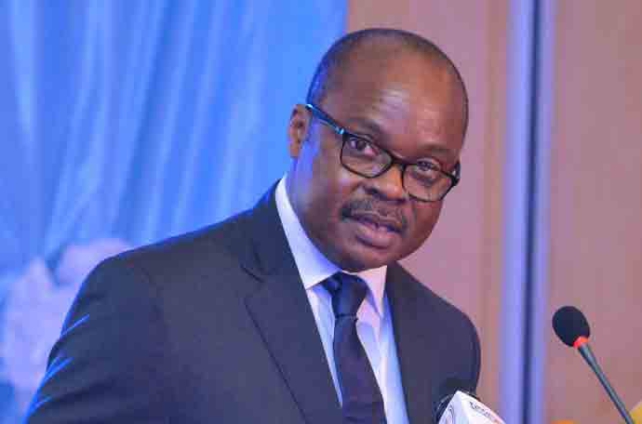
"The Committee noted the significant decline in headline inflation from the beginning of the year of more than 12.0%. The percentage of items in the CPI basket with inflation of more than 50% and above is receding, an indication of a strong return to the disinflation path", Governor of the Bank of Ghana, Dr. Ernest Addison said at a press briefing.
He explained that the tight monetary policy through additional liquidity management operations to address excess liquidity conditions in the market, relative stability in the local currency, and easing of ex-pump petroleum prices have supported the disinflation process.
He added that the Bank of Ghana has signed the Memorandum of Understanding on zero financing to the budget to eliminate fiscal dominance and allow for a faster ease in inflation towards the target band.
"These policies should provide the much-needed anchor to reinforce the disinflation process and reset the economy on the path of recovery," he expressed optimism.
Implications of unchanged rate
By this, the cost of credit is expected to remain high with the average lending rate going for about 31.5%.
The International Monetary Fund (IMF) had revealed last week that the Bank of Ghana will continue tightening monetary policy until inflation is on a firmly declining path.
According to the Fund, monetary and exchange rate policies under the programme will focus on reining in inflation and rebuilding foreign reserve buffers.
Since July 2022, the policy rate has gone up by 10.5%.
Banking sector performance
Dr. Addison announced that the performance of the banking sector broadly reflected the general macroeconomic operating environment as well as the impact of the Domestic Debt Exchange Programme as indicated in the 2022 audited financial statements.
He, however, stated that the prudential returns for the first four months of 2023 have shown signs of recovery in the profitability of banks and a gradual improvement in the solvency positions.
This, he said is supported by the regulatory reliefs issued to safeguard stability of the financial sector
Interest rates trended upward
On the money market, interest rates broadly trended upward in April 2023 at the short end of the yield curve, consistent with the tightening policy stance.
The 91-day and 182-day Treasury bill rates increased to 19.67% and 22.29% respectively, in April 2023, from 16.22% and 16.72% respectively, in April 2022.
Similarly, the rate on the 364-day instrument increased to 27.04% in April 2023, from 18.93% in April 2022.
Latest Stories
-
Stronger GTA-private sector partnership needed to grow tourism – GHATOF
7 minutes -
Amazon eyes Ghana for broadband expansion after talks with Mahama
51 minutes -
National Investment Quiz 2026: Six schools qualify for quarter-finals
1 hour -
‘Do not let Russia pay for its madness with lives of your people’ – Zelensky to Ghana, 46 other countries
1 hour -
6,079 promotion cases fully processed and paid – CAGD says amid nationwide teachers’ strike
2 hours -
Teacher unions to meet government Monday over nationwide strike
2 hours -
Photo story: Republic Bank-JoyNews Habitat Fair clinic wraps up after three days of housing solutions, expert engagement
2 hours -
National Peace Council urges investment in youth to sustain Ghana’s peace
2 hours -
Afenyo-Markin urges youth to speak up against injustice
3 hours -
CAF annuls Edo Queens victory, orders WAFU B final to resume from extra time
3 hours -
Interior Minister urges traditional authorities to enforce anti-bushfire bye-laws
3 hours -
3rd Republic Bank-JoyNews Habitat Fair Clinic ends on a high note after three days of strong patronage
3 hours -
Ten climbers missing after avalanche hits Himalayan base camp
4 hours -
NPP had more permanent fuel relief measures than current GH¢2 diesel cut – Amin Adam
4 hours -
Photos from the 3rd Republic Bank-JoyNews Habitat Fair Clinic
4 hours