

Audio By Carbonatix
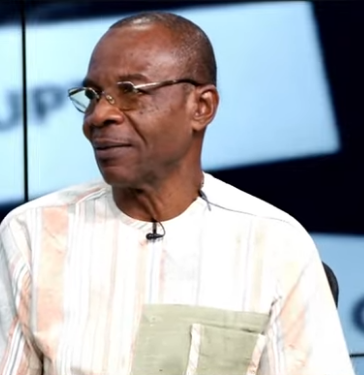
Former President of the Ghana Journalists Association (GJA), Roland Affail Monney, has attributed the persistent incidence of bribery and corruption in Ghana's public sector to cumbersome bureaucratic procedures, calling for sweeping reforms to simplify service delivery and strengthen accountability.
Speaking on JoyNews' AM Show on Wednesday, August 5, Mr Monney said while bribery and corruption have existed for generations, the causes of the problem are well known. What has been lacking, he argued, is the political will to confront the issue decisively.
His comments come on the back of a Ghana Statistical Service (GSS) report which revealed that public officials demanded unofficial payments from nearly seven in every 10 Ghanaians who encountered bribery situations in the second half of 2025.
Mr Monney observed that corruption cuts across all public institutions, stressing that no sector is immune from the problem.
"No public sector is immune from bribery and corruption. As has been said, bribery has existed since Adam. The causal factors are well known, but what is lacking is the action to deal squarely with the problem of bribery and corruption."
'Reset Broom' must sweep the public sector
Mr Monney said the GSS report should serve as a wake-up call for the government to intensify efforts to tackle corruption within state institutions.
Referring to the National Democratic Congress (NDC) government's Reset Broom agenda, he said the findings indicate that more work remains to be done in cleansing the public sector of corrupt practices.
"The Reset Broom, according to this report, is yet to sweep effectively in the public sector because what we are discussing is a report covering 2025. There is a need for this broom to sweep every corner of the public sector. I know this is a herculean task, but once there is the political will, it can be done."
While acknowledging that corruption may never be completely eradicated, he stressed that government must sustain a vigorous and uncompromising fight against the practice.
"Corruption and bribery cannot be eliminated altogether, but there should be a frontal, ferocious, relentless, and intensified attack against corruption."
Bureaucratic bottlenecks encourage bribery
Mr Monney identified excessive bureaucracy in public service delivery as one of the principal drivers of corruption.
According to him, the numerous administrative procedures citizens are required to go through to access even basic public services often create opportunities for public officials to solicit bribes.
"This is really the issue of bureaucratic complexity. A simple service will take so many steps—do this, bring this, do that. We need to simplify the processes involved in rendering public services."
He argued that the country's ongoing digital transformation provides the government with the tools needed to reduce unnecessary bureaucracy.
"We are in the AI and digital era. We have AI tools and digital tools, so we need to simplify these processes. Once we make them less complex, we reduce the room for bribery and corruption."
Mr Monney maintained that simplifying public sector procedures should become a continuous exercise.
Asset declaration should cover all public servants
The former GJA president also called for a significant expansion of Ghana's asset declaration regime.
Describing the proposal as potentially "radical," he argued that mandatory asset declaration and verification should not be limited to politicians but should also apply to public servants.
"Asset declaration and verification should not be confined to politics. Public servants should also be subjected to the same discipline. You need to declare your assets and verify them."
He further suggested that law enforcement agencies should investigate public officials whose lifestyles appear inconsistent with their legitimate sources of income.
"Those who live above their means should be questioned by the law," he added.
Media has a critical watchdog role
Mr Monney also challenged the media to play a more active role in exposing corruption, while admitting that sections of the media fraternity also face integrity challenges.
Despite this, he said journalists must sharpen their focus on exposing bribery and corruption in the public sector by identifying those responsible.
"Let's sharpen our focus on happenings in the public sector. Let's sharpen our focus on naming and shaming perpetrators of bribery and corruption."
According to him, public exposure often serves as a stronger deterrent than financial penalties.
"Naming and shaming is more punitive than slapping the heaviest fine on offenders. Once people become the subject of public discussion, it affects them more than a court fine."
He therefore encouraged the media to continue occupying the public space through investigative journalism and exposing corrupt practices wherever they occur.
Public officials urged to lead by example
Mr Monney concluded by urging public officials to demonstrate integrity in the discharge of their duties, arguing that ethical leadership would have a ripple effect throughout the public service.
He said when leaders consistently uphold high standards of honesty and accountability, it encourages similar conduct among subordinates, ultimately helping to reduce bribery and corruption.
"Public officials need to exemplify integrity. Once they do that, it will create a cascading effect that will result in a reduction in the bribery and corruption cases we are facing now."
Latest Stories
-
Mr President, Ghana was mentioned at the UN; why aren’t we talking about it?
60 minutes -
Accra to convene Africa’s regulators and markets on tokenisation at AVAS 2026
1 hour -
The Paradox of Plenty — When every smartphone becomes a newsroom
2 hours -
GTA sensitises taxi drivers in ‘Know Ghana’ tourism campaign
3 hours -
Archbishop Agyinasare calls for responsible speech amid growing social media abuse
3 hours -
‘It will be inexcusable for gov’t not to honour payment of teachers’ arrears by 30th October’ – Haruna Iddrisu
3 hours -
Forbes’ World’s Best Employers 2026: No Ghanaian firm ranked among 900 companies
3 hours -
Electronic processing of teachers’ data: ‘The decision is the Controller’s’ – GES boss
3 hours -
Teachers’ Strike: Haruna Iddrisu questions paper-based processing of promoted teachers’ data
3 hours -
Savannah Region: Kunfusi bridge collapses again, leaving nearly 4,000 residents cut off
3 hours -
Teachers’ strike: GES targets Monday deadline to submit promotion data to Controller
3 hours -
Inflation to average 11.3% in 2027 – Fitch Solutions
4 hours -
‘I didn’t campaign for NDC to come and do this nonsense’ – Kpebu on EOCO’s conduct
4 hours -
Fitch Solutions maintains policy rate forecast of 14% by December 2026
4 hours -
Diaspora Nasara Caucus congratulates Mohammed Ali Suraj, new NPP executives
6 hours