

Audio By Carbonatix
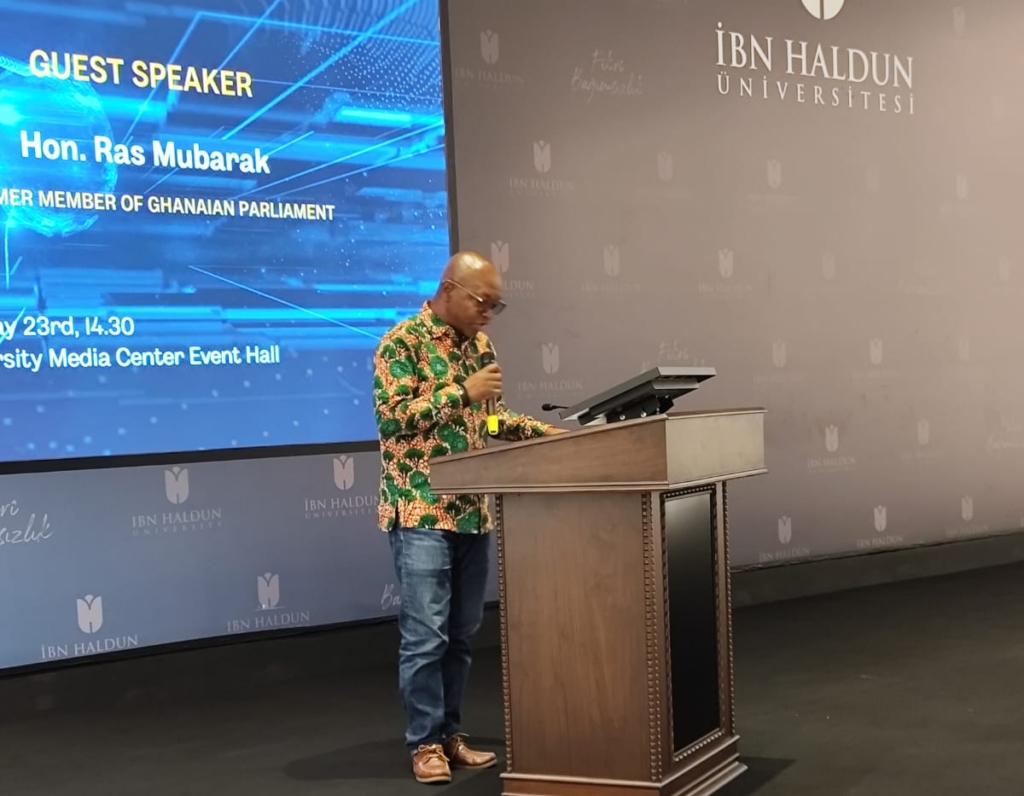
Former Ghanaian lawmaker and journalist Ras Mubarak has praised the political shift underway in Burkina Faso, describing it as a “psychological awakening” that could catalyse a continental rebirth for Africa.
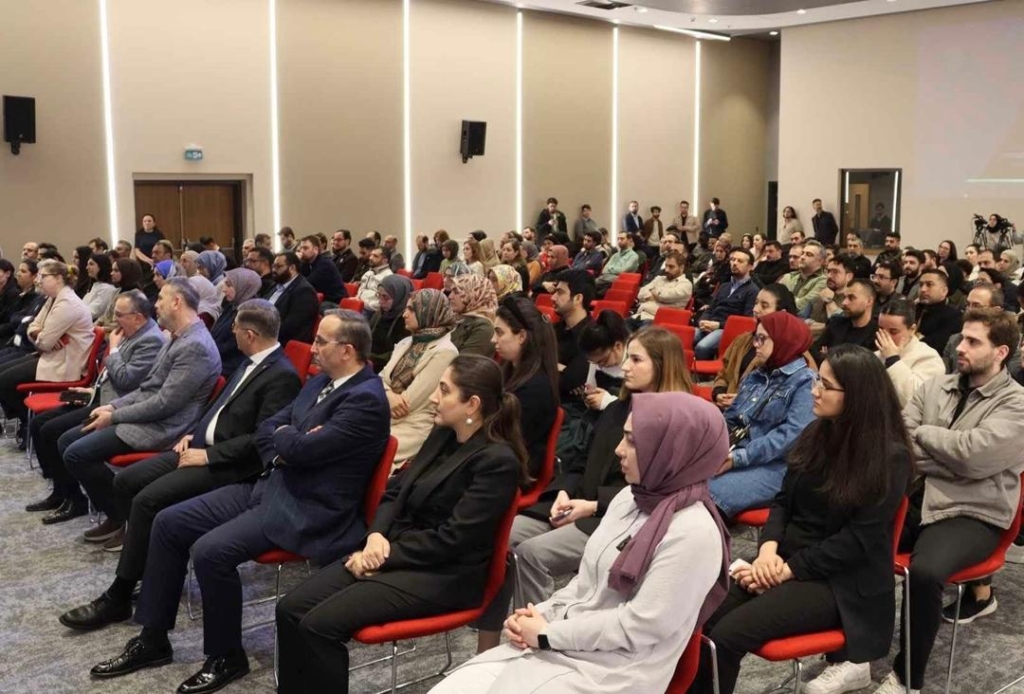
Addressing African students at Ibn Haldun University in Istanbul on the occasion of African Union Day, Mubarak pointed to the recent developments in the Sahel as signs that a new era of African self-determination is emerging.
“This Sahelian wave is not instability – it is clarity. It is not a rebellion; it is a rebirth,” Mubarak told the audience to rousing applause.
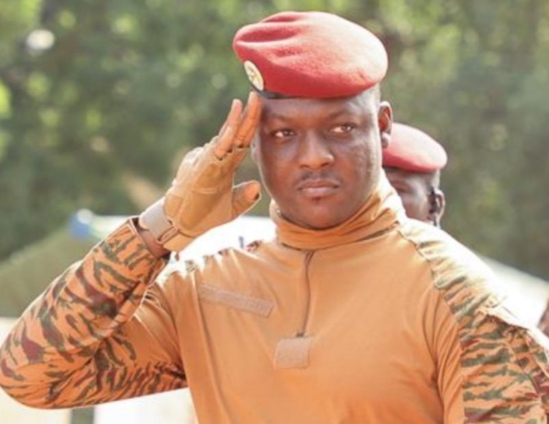
He singled out Burkina Faso’s young military leader, Captain Ibrahim Traoré, as a symbol of resistance to the failures of post-independence governance that, in his view, delivered little more than “cosmetic democracy and elite complicity.”
“Traoré is not democratically elected. But he is confronting the failures of decades of so-called democracy that delivered no dignity. He is using power to serve, not to submit.”
According to Mubarak, countries like Burkina Faso, Mali, and Niger are beginning to reclaim their sovereignty by expelling foreign troops, rejecting exploitative economic arrangements, and challenging decades of neo-colonial subjugation masked as development aid.
“For years, they were told that salvation lay in hosting foreign military bases, signing unequal trade deals, and borrowing endlessly from institutions that prescribe austerity but never prosperity. Now, we are seeing a new generation of African leaders breaking that cycle,” he said.
Mubarak’s speech came against the backdrop of growing youth frustration across Africa, with many questioning whether traditional democratic processes have truly served the needs of the people. He argued that Africa’s transformation will not come from external approval but from bold, indigenous leadership that reflects the will and dignity of its people.
“The next phase of African liberation will not come with approval from Paris or Washington. It will come from a generation that dares to believe we can govern ourselves, protect ourselves, and empower ourselves without permission.”
Ras Mubarak did not suggest abandoning democracy altogether, but insisted that it must be redefined to prioritise the needs of African people, not just the formalities of electoral cycles.
“Democracy must deliver dignity, political and economic independence – not just regular elections.”
He linked the continental stagnation in economic and political integration to leadership that is beholden to foreign interests, lamenting the failure of projects like ECOWAS’s long-promised single currency.
“I was a teenager when talk of the Eco began. I’ll be 46 next month, and we’re still talking,” he remarked. “Our leaders too often dance to the tune of puppet masters in Washington, Brussels, London, and Paris.”
Mubarak urged young Africans, particularly those studying abroad, to become the drivers of the continent’s transformation, insisting they must challenge the status quo and reimagine African unity through action. “You are not the leaders of tomorrow. You are the leaders of now. If you don’t lead, others will keep misleading.”
He denounced continued colonial-era trade routes and visa regimes that frustrate intra-African cooperation, stating that the current system benefits former colonial powers more than African citizens.
“It is outrageous that goods from Ghana must first go to Europe before reaching nearby Liberia. What’s the point of African unity if we can’t move freely among ourselves?”
Beyond his praise for the Sahelian shift, Mubarak called for stronger ties with the Global South – countries that, he argued, understand Africa’s challenges and are more willing to collaborate on equal footing.
“We must stop looking to the West for solutions and validation. It is time to turn to the East and the Global South – China, Russia, Brazil – where partnership doesn’t mean domination.” He concluded his powerful address with a fiery condemnation of Israel’s military aggression in Palestine, urging African solidarity with the Palestinian people.
“Africans, who’ve been through slavery, colonialism and neo-colonialism, should understand better the oppression of Palestinians. Israel is a gangster terrorist entity whose leaders must face justice.”
Ras Mubarak’s speech was ultimately a rousing call to action, urging a new generation of Africans to look within, lead boldly, and reject the systems that continue to hold the continent back.
“There is hope, my friends. If we are all Traoré, Nkrumah, Lumumba and Acheampong – we can bring hope to places where there is resignation and despair.”
Latest Stories
-
UN housing expert urges Ghana to strengthen Rent Control Department amid housing affordability concerns
7 minutes -
Delta-BCI partnership reaches 166,000 people with breast cancer education
16 minutes -
Power restoration fault suspected in Kumasi Central Market fire
5 hours -
The 7-foot giant of Ngleshie Amanfro: Seven-foot Ghanaian Ephraim Saawa dreams of joining the national basketball team
6 hours -
Government promises support for Kumasi Central Market fire victims
6 hours -
Vibes The Movie: Big Ghun’s Ghanaian film earns five nominations at 2026 REFFA
7 hours -
‘I’m a fulfilled man’—Justice Korbieh on missing out on Supreme Court despite two nominations
7 hours -
MamaCare CEO warns unresolved conflicts among health workers could undermine maternal and neonatal care
7 hours -
Health professionals urged to translate medical knowledge into practice to save mothers
7 hours -
Retired judge Justice Francis Korbieh charges 1,568 new lawyers to uphold integrity
9 hours -
Conflicts among care providers linked to maternal, neonatal deaths – Expert
9 hours -
GIS marks 10th TIME conference, champions improved teaching practices
9 hours -
BRICS Or Balance? What Ghana’s bid really means
9 hours -
Adamus Resources launches breast cancer awareness campaign in Nzema
9 hours -
GPRTU wants full TRAFFITECH-GH implementation to start in 2027
10 hours