

Audio By Carbonatix
The International Monetary Fund is forecasting a worrying 76.7% of debt-to-Gross Domestic Product ratio for the country this year, according to its Sub Saharan Africa Regional Economic Outlook report released today.
This put the nation in the high risk of debt distress country category.
The debt-to-GDP ratio will however drop slightly to 74.7 percent of GDP in 2021.
The Bretton Wood institution said the rising debt posses a threat to both the fiscal and monetary economy, particularly revenue mobilization, exchange rate and inflation.
The nation’s debt-to-GDP ratio has been growing sharply, from 44% in 2016 to 58.3% in 2017and subsequently to 59.1% in 2018.
In 2019, the natio’s debt stood at 62.8% of GDP, about GHS217.9 billion.
The report said 11 sub-Saharan African countries are currently at high risk of debt distress, and six are in debt distress.
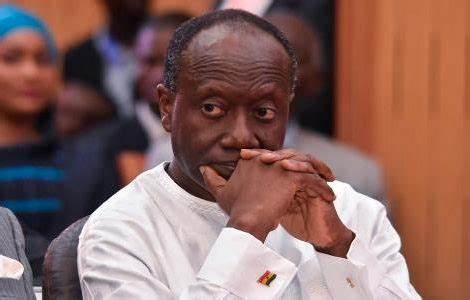
Finance Minister, Ken Ofori-Atta has already appealed to the World Bank, IMF and the G20 to extend the debt repayments of emerging and developing countries.
“We must address worsening debt vulnerabilities to avoid a debt crisis, beyond the Debt Suspension Initaitive. When debt cancellations or restructurings are necessary, a framework and mechanisms should be put in place to achieve expeditious and fair sovereign debt resolution involving official and private creditors. The IMF, World Bank and development partners should urgently work on such a framework and find the means to provide exceptional financing to countries undergoing debt restructuring”, he said at a recent IMF/World Bank meeting.
The Sub Saharan Africa Regional Economic Outlook report pointed out that exchange rate volatility could negatively affect debt-servicing costs, given the often large fraction of public debt denominated in foreign currency.
As a result, several sub-Saharan African countries may have been pushed beyond the sustainability threshold, adding if a country’s debt service exceeds its capacity to pay, it is in the best interests of both creditors and sub-Saharan African borrowers to agree on terms of relief from creditors where needed, using Angola and Zambia as case studies.
Total public debt stock
Ghana’s debt hit GHS263 billion in July 2020.
The external component of the debt was estimated at GHS138 billion [$24.3bn], representing 35.8 percent of GDP.
The domestic component of the debt was also estimated at GHS125.1 billion, approximately 32.5% of GDP.
The financial sector resolution bond however constituted GHS14.2 billion, which is equivalent to 3.7 percent of GDP.
Interest payments
The country is expected to spend about GHS26 billion on interest payments for this year alone.
This will be a little over GHS6 billion spent in 2019.
Last year, interest payments cost the nation about GHS19.756 billion on loans borrowed.
Latest Stories
-
GH¢800,000 goods destroyed as fire engulfs Kia Rhino truck on Apedwa-Kibi Road
29 minutes -
Chief Justice calls for supportive workplaces to address mental health stigma
30 minutes -
NVI CEO defends GH¢13m spending on training, workshops and conferences
31 minutes -
Ghana targets first locally manufactured vaccine by 2027
34 minutes -
Teachers suspend strike after reaching agreement with government
45 minutes -
Council of State describes talks with striking teachers as fruitful
1 hour -
Adjaye Associates opens new Accra studio with public space for cultural exchange
1 hour -
BoG to issue new Credit Risk Directive as NPL ratio in the Savings and Loans sector deteriorates
1 hour -
You can preach in a stationary vehicle, but not when it’s moving – Mahama clarifies
1 hour -
Alhaji Iddrisu Mustapha: The educated professional seeking to bring experience to NDC Western Region leadership
1 hour -
Former Deputy Trade and Industry Minister Nana Ama Dokua called to Ghana Bar
2 hours -
Old Edubiase Methodist Basic School pupils turn traders, farmers as teachers’ strike bites harder
2 hours -
Prudential Bank secures GH¢1.13bn investment from Bloom Africa
2 hours -
Ernest Kwasi Okoh
2 hours -
The Trotro has become a House of Worship!
2 hours