

Audio By Carbonatix
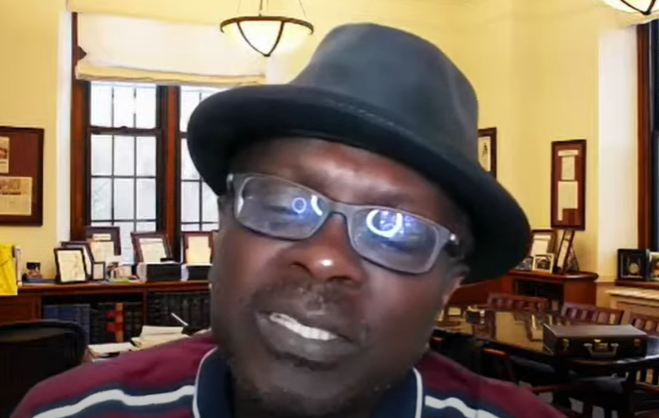
Democracy and Development Fellow at the Ghana Centre for Democratic Development (CDD), Professor Kwaku Asare, has suggested to Chief Justice Gertrude Torkornoo to consider hearing cases without the physical presence of plaintiffs and respondents.
According to him, this would allow room for the judiciary to render verdicts on cases efficiently and save them from spending too much time and energy on each case.
Speaking on Joy FM’s Top Story on April 8, he said that the court's tendency to schedule all cases causes delays in hearing cases, affecting their effectiveness.
“I also think that our courts tend to want to schedule hearings for almost every case that is filed. That is unfortunate, especially in an appellate court such as the Supreme Court.
“When the parties have filed their briefs, it is acceptable. Here in Florida where I practice, seldom do you see who your appellate justices are.
“You file your briefs and then some weeks after you get a note that your judgment is ready. They read the briefs and they come out with their decision,” he said.
Professor Asare explained that this would also make it easier for the court to deliver verdicts on related cases at the same time.
This way, it would end the suspicion in the minds of Ghanaians that the justice system was biased.
“So if you take the two injunctions that were filed at the Supreme Court, justices of the Supreme Court could have ruled on both at the same time and can rule now without having the parties appear before them.
“We know from several precedents what this decision should be and I think it has to also be made clear that it is extremely difficult for an individual to injunct either the Executive or the Parliament. The court should make that very clear.
“If you don’t make that clear and there are two similar cases, you address one and don’t address one, I don’t care how many times you talk, people are still going to have that perception,” he said.
His comments follow the recent concerns raised by the Minority in Parliament that the Supreme Court was biased when it granted an expedited hearing to the Rockson-Nelson Defeamekpor lawsuit, which sought to prevent Parliament from vetting ministerial nominees.
The minority argued that the Richard Dela Sky case which sought a declaration that the Human Sexual Rights and Family Values Bill, commonly known as the anti-gay bill, is null, void, and of no effect, was filed weeks before the Defeamekpor case, but a date for that case had not been set yet the latter was expedited, heard, and a verdict delivered.
- Read also: We did no wrong – Chief Justice
However, Justice Torkornoo has since explained that she granted the Attorney General's request for an expedited hearing because it was an issue impacting governance, and the court was then preparing to go on Easter break.
Latest Stories
-
Kwaku Azar writes: A-G vs OSP
13 minutes -
Mfantsipim–Adisadel rivalry built excellence, not division – Sam Jonah
38 minutes -
Vice President launches Mfantsipim’s 150 years of shaping Ghana’s greatest mind
54 minutes -
I assure Otumfuo, Mahama will join him to commission KNUST Teaching Hospital by end of this year – Haruna Iddrisu
2 hours -
Gov’t to roll out free special education for persons with disabilities from July 1 – Education Minister
2 hours -
“We used it to test our officiating officials’ readiness” – Bawah Fuseini after CAA Athletics event
2 hours -
Volleyball emerges as Ghana’s fastest rising sport
3 hours -
National Sports Fund needs strong leadership from the top – Administrator David Wuaku
3 hours -
JoySports Exclusive: Steve McLaren in talks with GFA after expressing interest in Black Stars job
3 hours -
Fire guts auto parts warehouse at Bubuashie, one fire officer injured
3 hours -
I owe my victory to coach Ofori Asare – Allotey after winning WBA Africa Gold Super Flyweight belt
3 hours -
Church of Pentecost supports over 2,000 BECE candidates in Obuasi with career guidance seminar
5 hours -
Brandon Asante and Coventry all but promoted to Premier League despite Sheffield Wednesday draw
5 hours -
GPL 2025/26: Late Kwartemaa strike downs Hearts in Tema
5 hours -
Ghana Faces Sierra Leone Moment as Prosecutorial Powers come under strain
5 hours