


Audio By Carbonatix
China has the world's largest livestreaming industry and Wuhan - the epicentre of the Covid-19 outbreak - was already something of a livestreaming hub.
So when the new virus emerged, confining millions of people to their homes, the industry responded quickly, with new programming genres emerging and a shift in the formats of popular TV reality shows.
Audiences have been watching livestreams of both celebrities and ordinary people singing, cooking and exercising in their own homes. Programmes that usually feature live audiences have instead come to resemble video conferences - but have still proven an unusual hit.
But despite these changing programming trends, vloggers - of which there are more than 524 million in China - still need to be extremely cautious about what they post, especially within Wuhan.
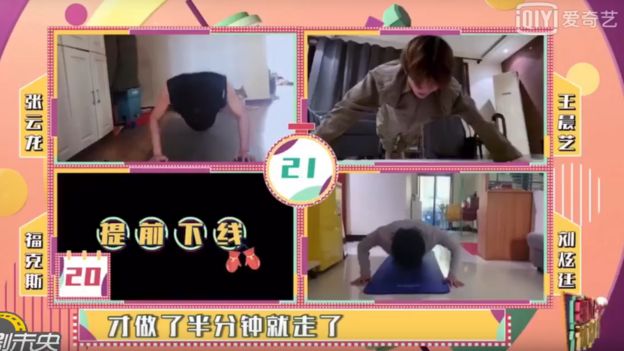 New online programmes like Games at Home have proven popular and helped homebound Chinese see how others are keeping entertained
The Guangzhou Daily newspaper noted the rise of a new genre of "cloud reality shows", where artists only needed a mobile phone or a computer and a good network to be part of a show.
There has been no limit to the range of sub-genres. Since 8 February, an hour-long cookery programme called Eat Well has sprang up on the YouTube-like Youku, which takes viewers inside different peoples' homes and shows a different person each day cooking a homemade meal.
Similarly, in mid-February, the popular iQiyi website hosted a new "at home" reality shows. In Karaoke at Home, the format is simple: social media users send requests for singers to perform songs of their choice, from their own home.
Games at Home shows different stars compete in certain challenges within their homes, like "who can do the most press-ups".
New online programmes like Games at Home have proven popular and helped homebound Chinese see how others are keeping entertained
The Guangzhou Daily newspaper noted the rise of a new genre of "cloud reality shows", where artists only needed a mobile phone or a computer and a good network to be part of a show.
There has been no limit to the range of sub-genres. Since 8 February, an hour-long cookery programme called Eat Well has sprang up on the YouTube-like Youku, which takes viewers inside different peoples' homes and shows a different person each day cooking a homemade meal.
Similarly, in mid-February, the popular iQiyi website hosted a new "at home" reality shows. In Karaoke at Home, the format is simple: social media users send requests for singers to perform songs of their choice, from their own home.
Games at Home shows different stars compete in certain challenges within their homes, like "who can do the most press-ups".
 Talk show panelists on Day Day Up have used video conferencing to watch fellow panelists sing along to tunes from Frozen
Coronavirus coverage has also been inescapable. In late January, China's top media regulator called on the revision of TV schedules to "reduce entertainment programming" and step up special reports on the coronavirus.
As viewing audiences have increasingly turned online, many linear TV programmes have swiftly adapted their formats to continue running, even though their stars have needed to remain off-site.
The popular reality show Singer normally shows performers in front of a live audience, with a panel of judges on a stage. However, on 21 February, viewers saw the judges and other contestants calling in from their homes.
Popular talk show Day Day Up has similarly come to resemble a video conference, as guests have kept the show running by filming within their homes.
The Sixth Tone news website adds that an upcoming show Street Dance of China has had to ask auditioning contestants to submit videos of themselves dancing in their homes.
Talk show panelists on Day Day Up have used video conferencing to watch fellow panelists sing along to tunes from Frozen
Coronavirus coverage has also been inescapable. In late January, China's top media regulator called on the revision of TV schedules to "reduce entertainment programming" and step up special reports on the coronavirus.
As viewing audiences have increasingly turned online, many linear TV programmes have swiftly adapted their formats to continue running, even though their stars have needed to remain off-site.
The popular reality show Singer normally shows performers in front of a live audience, with a panel of judges on a stage. However, on 21 February, viewers saw the judges and other contestants calling in from their homes.
Popular talk show Day Day Up has similarly come to resemble a video conference, as guests have kept the show running by filming within their homes.
The Sixth Tone news website adds that an upcoming show Street Dance of China has had to ask auditioning contestants to submit videos of themselves dancing in their homes.
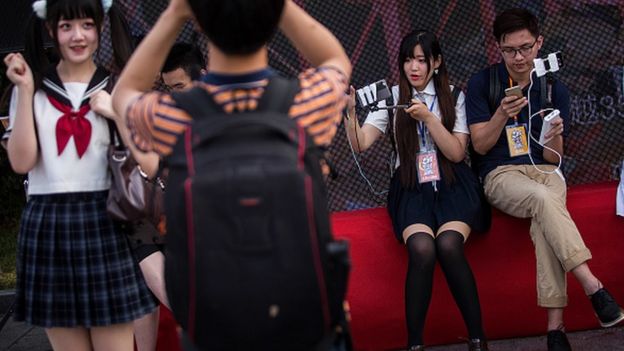 The annual Douyu Festival in Wuhan is normally a must for livestreamers - but vloggers have found ways to adapt
The South China Morning Post newspaper noted in November 2019 that companies were investing millions of dollars developing in the city, which was "eager to boost innovation and cultivate the next big technology unicorns".
So much so, that in December 2017, Wuhan built a livestreaming "village" with rooms for around 100 livestreaming hosts, complete with "European style architecture".
Wuhan is home to some of China's largest live-streaming services including industry leader Douyu.
And its rapidly developing industry meant that the provincial Hubei government actually set the precedent for livestreaming regulations across the country.
In February 2018, it set China's first standards for livestreaming platforms and hosts. It issued guidance on "content, account supervision, platform inspection and how hosts should dress", the official China Daily reported.
Wuhan-based livestreamers, therefore, should be better equipped than anywhere else to know what the guidelines are on what people can say and do.
But Chinese live streaming applications have a strict and extensive list of guidelines so that mainland-based users do not post content that is deemed subversive towards the state.
After Wuhan went into lockdown on 23 January, video diaries proved popular as residents began detailing their daily lives in quarantine.
But those that have challenged the government's lines on the coronavirus have seemingly been deemed unacceptable.
Fang Bin and Chen Qiushi had both been posting livestreams and videos from Wuhan which questioned the government's reporting.
Their videos claiming to show "what is really happening" received thousands of views. In February, Chen told the BBC the censorship was "very strict and people's accounts are being closed down if they share my content".
Shortly after, both he and Fang went quiet and haven't been heard from since.
The annual Douyu Festival in Wuhan is normally a must for livestreamers - but vloggers have found ways to adapt
The South China Morning Post newspaper noted in November 2019 that companies were investing millions of dollars developing in the city, which was "eager to boost innovation and cultivate the next big technology unicorns".
So much so, that in December 2017, Wuhan built a livestreaming "village" with rooms for around 100 livestreaming hosts, complete with "European style architecture".
Wuhan is home to some of China's largest live-streaming services including industry leader Douyu.
And its rapidly developing industry meant that the provincial Hubei government actually set the precedent for livestreaming regulations across the country.
In February 2018, it set China's first standards for livestreaming platforms and hosts. It issued guidance on "content, account supervision, platform inspection and how hosts should dress", the official China Daily reported.
Wuhan-based livestreamers, therefore, should be better equipped than anywhere else to know what the guidelines are on what people can say and do.
But Chinese live streaming applications have a strict and extensive list of guidelines so that mainland-based users do not post content that is deemed subversive towards the state.
After Wuhan went into lockdown on 23 January, video diaries proved popular as residents began detailing their daily lives in quarantine.
But those that have challenged the government's lines on the coronavirus have seemingly been deemed unacceptable.
Fang Bin and Chen Qiushi had both been posting livestreams and videos from Wuhan which questioned the government's reporting.
Their videos claiming to show "what is really happening" received thousands of views. In February, Chen told the BBC the censorship was "very strict and people's accounts are being closed down if they share my content".
Shortly after, both he and Fang went quiet and haven't been heard from since.
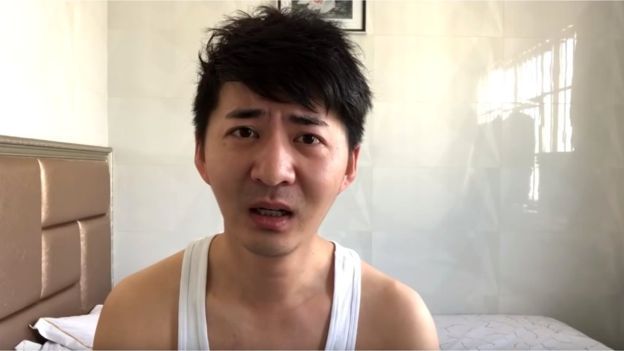 Chen Qiushi is one of two Wuhan journalists who have gone missing
New online shows
In late January, livestreams of two hospitals being built in Wuhan proved unusually popular with online audiences. Recognising the appeal that unconventional livestreams have had among audiences while Chinese have been in self-quarantine, some new shows quickly sprang up on online streaming services.
New online programmes like Games at Home have proven popular and helped homebound Chinese see how others are keeping entertained
The Guangzhou Daily newspaper noted the rise of a new genre of "cloud reality shows", where artists only needed a mobile phone or a computer and a good network to be part of a show.
There has been no limit to the range of sub-genres. Since 8 February, an hour-long cookery programme called Eat Well has sprang up on the YouTube-like Youku, which takes viewers inside different peoples' homes and shows a different person each day cooking a homemade meal.
Similarly, in mid-February, the popular iQiyi website hosted a new "at home" reality shows. In Karaoke at Home, the format is simple: social media users send requests for singers to perform songs of their choice, from their own home.
Games at Home shows different stars compete in certain challenges within their homes, like "who can do the most press-ups".
TV programmes quick to adapt
These new shows, along with Chinese government restrictions on people's movements as a result of the coronavirus threw a spanner in the works for reality TV producers. Some 780 million people in China - more than half of the population - have experienced some form of lockdown since late January.
Talk show panelists on Day Day Up have used video conferencing to watch fellow panelists sing along to tunes from Frozen
Coronavirus coverage has also been inescapable. In late January, China's top media regulator called on the revision of TV schedules to "reduce entertainment programming" and step up special reports on the coronavirus.
As viewing audiences have increasingly turned online, many linear TV programmes have swiftly adapted their formats to continue running, even though their stars have needed to remain off-site.
The popular reality show Singer normally shows performers in front of a live audience, with a panel of judges on a stage. However, on 21 February, viewers saw the judges and other contestants calling in from their homes.
Popular talk show Day Day Up has similarly come to resemble a video conference, as guests have kept the show running by filming within their homes.
The Sixth Tone news website adds that an upcoming show Street Dance of China has had to ask auditioning contestants to submit videos of themselves dancing in their homes.
Wuhan: livestreaming capital
Nowhere has actually been better equipped to respond to this new trend, than Wuhan. Before the outbreak of the coronavirus, the city was gaining a reputation as the place to be for Chinese livestreamers.
The annual Douyu Festival in Wuhan is normally a must for livestreamers - but vloggers have found ways to adapt
The South China Morning Post newspaper noted in November 2019 that companies were investing millions of dollars developing in the city, which was "eager to boost innovation and cultivate the next big technology unicorns".
So much so, that in December 2017, Wuhan built a livestreaming "village" with rooms for around 100 livestreaming hosts, complete with "European style architecture".
Wuhan is home to some of China's largest live-streaming services including industry leader Douyu.
And its rapidly developing industry meant that the provincial Hubei government actually set the precedent for livestreaming regulations across the country.
In February 2018, it set China's first standards for livestreaming platforms and hosts. It issued guidance on "content, account supervision, platform inspection and how hosts should dress", the official China Daily reported.
Wuhan-based livestreamers, therefore, should be better equipped than anywhere else to know what the guidelines are on what people can say and do.
But Chinese live streaming applications have a strict and extensive list of guidelines so that mainland-based users do not post content that is deemed subversive towards the state.
After Wuhan went into lockdown on 23 January, video diaries proved popular as residents began detailing their daily lives in quarantine.
But those that have challenged the government's lines on the coronavirus have seemingly been deemed unacceptable.
Fang Bin and Chen Qiushi had both been posting livestreams and videos from Wuhan which questioned the government's reporting.
Their videos claiming to show "what is really happening" received thousands of views. In February, Chen told the BBC the censorship was "very strict and people's accounts are being closed down if they share my content".
Shortly after, both he and Fang went quiet and haven't been heard from since.
Chen Qiushi is one of two Wuhan journalists who have gone missingDISCLAIMER: The Views, Comments, Opinions, Contributions and Statements made by Readers and Contributors on this platform do not necessarily represent the views or policy of Multimedia Group Limited.
DISCLAIMER: The Views, Comments, Opinions, Contributions and Statements made by Readers and Contributors on this platform do not necessarily represent the views or policy of Multimedia Group Limited.
Latest Stories
-
Fire guts auto parts warehouse at Bubuashie, one fire officer injured
4 minutes -
I owe my victory to coach Ofori Asare – Allotey after winning WBA Africa Gold Super Flyweight belt
8 minutes -
Church of Pentecost supports over 2,000 BECE candidates in Obuasi with career guidance seminar
2 hours -
Brandon Asante and Coventry all but promoted to Premier League despite Sheffield Wednesday draw
2 hours -
GPL 2025/26: Late Kwartemaa strike downs Hearts in Tema
2 hours -
Ghana Faces Sierra Leone Moment as Prosecutorial Powers come under strain
2 hours -
Don’t consume fish or seafood from Tema Shipyard until further notice – FDA warns
2 hours -
Why volunteering might be Africa’s most underrated career accelerator
3 hours -
ActionAid Ghana raises concern over gender gaps in Feed Ghana Programme
3 hours -
Windstorm wreaks havoc in Gushegu, displacing nearly 2,000 residents and damaging schools
3 hours -
Friends of Bridget Bonnie Marks her 35th birthday with donation to Kasseh Model Health Centre
3 hours -
From Ekumfi Kokodo to the Pulpit Stage: Essi Donkor’s gospel journey takes shape
4 hours -
Landfilling waste management creates no value, it’s an economic waste
4 hours -
Photos: Speaker Bagbin Commissions MPs constituency office under parliamentary decentralisation programme
4 hours -
Black Stars technical advisor Winfried Schäfer sacked as GFA shakes up backroom staff
4 hours