

Audio By Carbonatix
The US state department is to advise Americans to avoid 80% of countries worldwide because of the coronavirus pandemic.
In a note to the media about its updated travel guidance, it said the pandemic continued to "pose unprecedented risks to travellers".
The current US "Do Not Travel" advisory covers 34 out of 200 countries.
Covid-19 has now claimed more than three million lives worldwide - more than half a million of them in the US.
The World Health Organisation (WHO) warned the world was "approaching the highest rate of infection" so far, despite the global rollout of vaccination programmes.
The US state department said its decision to update its travel advisories was to bring it more in line with those from the Centers for Disease Control and Prevention (CDC) and "does not imply a reassessment of the current health situation in a given country".
However, it said the move would "result in a significant increase in the number of countries at Level 4: Do Not Travel, to approximately 80% of countries worldwide". Anyone planning to travel to a country in the remaining 20% is advised to reconsider before proceeding.
Which countries move to level four?
The state department has not revealed which countries will be added to the level four category - the highest of its four risk levels. Guidance will be issued individually for each country in the next few days.
Currently, only three places in the world are assessed at the lowest tier - level one, which advises "Exercise normal precautions". They are Macau, Taiwan and New Zealand.
Even Antarctica is at level two - "Exercise increased caution" - while the UK is at level three - "Reconsider travel" - with an extra warning to exercise caution because of the risk of terrorism.
The CDC currently recommends all Americans refrain from travelling domestically until they have been fully vaccinated and warns that international travel "poses additional risks" even for those vaccinated.
In addition, all air passengers coming to the US, including US citizens, must have a negative Covid test result or documentation of recovery from the virus before they board a flight.
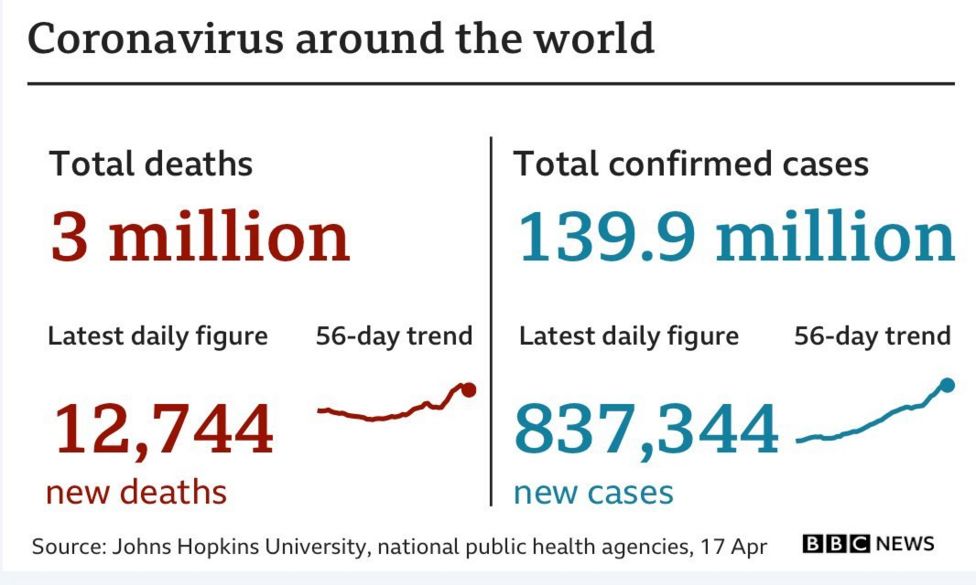
While more than 860 million doses of coronavirus vaccine have been administered in 165 countries worldwide, many countries are still struggling to contain the virus.
Brazil has recorded the third-highest number of cases and, at 368,749, the second-highest number of deaths in the world.
Canada has also reported a recent rise in cases and Papua New Guinea has been highlighted as a cause for concern.
While some countries - such as Israel and the UK - have secured and delivered doses to a large proportion of their population, many more countries are still waiting for their first shipments to arrive.
That is leading to warnings about growing "vaccine inequity" - jabs not being shared fairly between rich and poorer countries.
Latest Stories
-
Livestream: The Probe examines Kumasi’s looming water crisis
26 seconds -
MTN Ghana gears up to lead Africa’s AI revolution
1 minute -
Philanthropist Alhaji FuZak donates Da’wah bus to Ambariya Sunni community
9 minutes -
GUTA calls for suspension of Publican AI system over trade disruptions, demands temporary halt in import activities
12 minutes -
TTAG raises alarm over proposed recruitment of 7,000 teachers, demands national posting roadmap
45 minutes -
Civilians feared killed after reports of air strike on Nigerian market
55 minutes -
Bishop Simon Kofi Appiah installed as new Jasikan Diocese Bishop
56 minutes -
Trump’s Strait of Hormuz blockade threat raises risks and leaves predicaments unchanged
58 minutes -
US Court backs extradiction of former MASLOC CEO Sedina Tamakloe-Attionu’s to Ghana
1 hour -
Seven arrested as NAIMOS dismantles illegal mining camp, seizes firearms at Boin River
1 hour -
Fire erupts at Madina Ritz Junction, destroys multiple wooden structures and containers
2 hours -
Daniel-Kofi Kyereh returns from long-term injury, registers assist for Freiburg U23
2 hours -
Knifeman calling himself ‘Lucifer’ slashes three at NYC’s Grand Central
2 hours -
Brands are built from within to without
2 hours -
Matriculants urged to pursue excellence as gov’t reaffirms support for Maritime education
2 hours