

Audio By Carbonatix
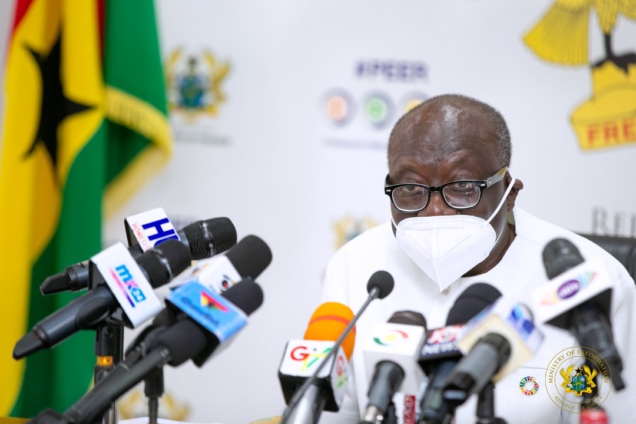
Ghana’s debt increase of 137% between 2016 and 2020 is lower than that of previous administrations, Finance Minister, Ken Ofori-Atta has disclosed.
Comparing debt levels of all the past governments, Mr. Ofori-Atta said the rate of increase in debt presently, is lower than that of former President John Kufuor, late former President John Mills and former President John Mahama administrations.
Addressing the media amidst ‘fix the country protest’, the Finance Minister said between 2004 and 2008, Ghana’s debt stock increased by 30%. However, it was high between 2000 and 2004, a period in which the country obtained debt forgiveness from multilateral and bilateral institutions.
Also, between 2008 and 2012, the debt stock increased by 269%, whilst between 2012 and 2016, the increase in the debt stock was 243%.
“Between 2016 and 2020, the increase in Ghana’s debt stock was 137% (This includes the cost of the banking sector clean-up, excess capacity charges and the impact of the COVID-19 pandemic)”, Mr. Ofori-Atta said.
“We have financed the construction of seven on going interchanges across the country, including those at Takoradi, Tamale, Tema, Obetsebi Lamptey and Pokuase to ease traffic congestion and enhance productivity.
Despite the impact of the pandemic, he said the rate of growth of the public debt has been lower under this government than under previous administrations.
“The rate of debt growth was lower despite massive investments in our flagship programmes such as free SHS, Planting for Food and Jobs (PFJ), NABCO, One District One Factory (1D1F), One Constituency One Ambulance, One Village One Dam (1V1D), restoration of teacher and nursing training allowances amongst others while maintaining relative macroeconomic and exchange rate stability.”
The total public debt had increased from GH¢122 billion (56.9% of GDP) in 2016 to GH¢291.6 billion (76.1% of GDP) at the end of December 2020.
Mr. Ofori-Atta said the debt stock and the debt/GDP ratio at the end of 2020 are as a result of non-recurrent burdens that the nation had to deal with as a matter of urgency.
Ghana’s debt hit GH¢291.6bn in December 2020 – BoG
Ghana’s total public debt stock reached an all time high of GH¢291.6 billion in December 2020, approximately 76.1% of GDP, the Bank of Ghana said.
According to the figures, external debt alone stood at GH¢141.8 billion, approximately US$24.7 billion. This is also equivalent to 37.0% of GDP.
The domestic debt was however slightly higher at GH¢149.8 billion at the end of 2020, about 39.1% of GDP.
The financial sector debt also stood at GH¢15.3 billion in December 2020, but GH¢100 million lower, from the September 2020 data. This is however equivalent to 4.0% of GDP.
Latest Stories
-
AFCON 2027Q: Alexander Djiku ruled out of Gambia game with injury
4 minutes -
AFCON 2027Q: The god of football is results – Carlos Queiroz
6 minutes -
Africa will not be forced to choose sides in global power rivalry – Ablakwa
10 minutes -
NPP demands review of GH¢2,650 cocoa price, questions statutory calculation
12 minutes -
AFCON 2027Q: ‘Better to stay home if you’re coming to complain about absent players’ – Carlos Queiroz
12 minutes -
First Deputy Minority Whip files private members’ motion for inquiry into Ghana-linked narcotics seizures
13 minutes -
KMA spearheads construction of new Kumasi Central Divisional Police Headquarters, seeks support for relocation
16 minutes -
Photos: GAF begins documentation and physical screening for 2026/27 enlistment
16 minutes -
Three arrested over alleged kidnapping and murder of 33-year-old in Accra
18 minutes -
Alan Kyerematen calls for end to political ‘duopoly’ ahead of 2028 election
18 minutes -
Wrestler Benjamin Satterley, known as Pac, dies aged 40
18 minutes -
AFCON 2027Q: There’s no problem with the Black Stars – Carlos Queiroz
24 minutes -
Ghana hotels see revenue per room fall by 19% between November 2024 and January 2025 – GSS
30 minutes -
Apple ordered to pay $5.7bn after losing vibration tech patent suit
32 minutes -
Hostels outperform hotels as accommodation demand shifts to lower-cost options – GSS
35 minutes