


Audio By Carbonatix
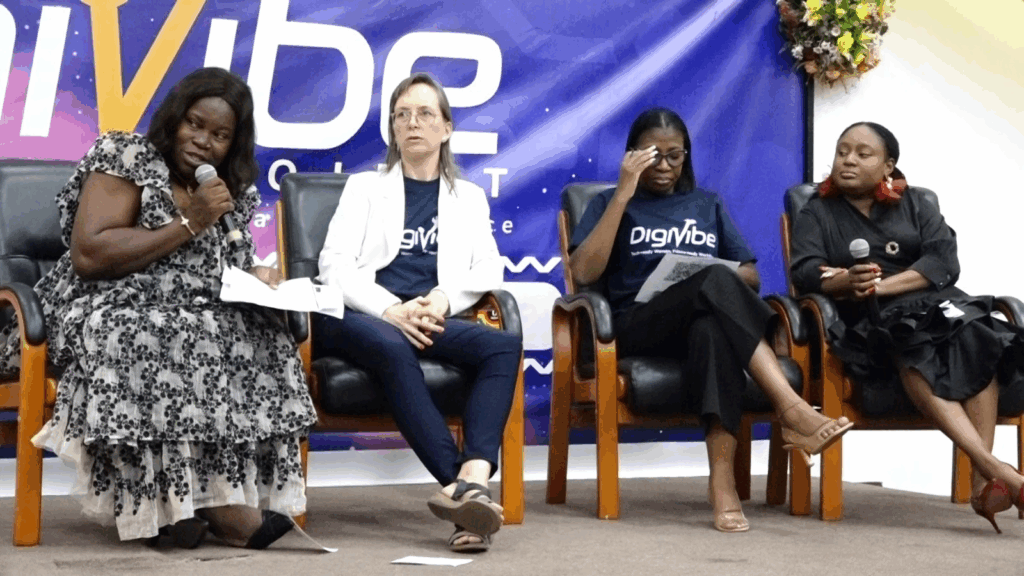
The DigiVibe training programme has been launched, aimed at bridging gender gaps in digital skills, industry exposure, and gender representation in tech.
The initiative will in two years train 1,000 women, engage 45 companies, and place over 400 graduates in tech roles and national service positions to bridge gender gaps in the tech industry.
Female graduates will receive training, mentorship, and job placements through a consortium of business associations, educational institutions, and tech partners.
The IT and tech industry in Ghana faces significant divides, with urban areas benefiting from digital infrastructure and access to tech hubs, while rural regions struggle with limited access.
The sector is also male-dominated, with a few women holding a fraction of tech roles due to systemic barriers.
The DigiVibe initiative by Ghanaian business associations, Oxford Africa Women Leadership Institute and WERise Network, aims to address three critical divides.
These include the digital gap, exposure gap and gender gap to promote and to empower underrepresented women in tech, especially in leadership roles, including female graduates through female-focused programmes.
Project Lead of AFOS Foundation, Hanna Schlingmann says the initiative will help build a future-ready workforce for Ghana.
“Over the next two years, DigiVibe aims to create awareness for at least 4000 students about digital upskilling opportunities, train over 1,000 women in ICT and soft skills, engage over 45 companies in mentorship and placements, turn 270 graduates into junior consultants, place more than 400 women in tech-related jobs and fitting national service positions. These numbers aren’t just statistics. They represent lives transformed, careers launched, and businesses empowered—all working together to build a future-ready workforce,” she said.
DigiVibe is built on four key pillars to ensure success, skills development, thus upskilling opportunities for young female professionals.
There will be consultancy services where graduates are trained as junior consultants to support businesses, mentoring which will provide structured guidance for career growth, and job placement, thus connecting skilled female graduates to decent employment and National Service opportunities.
Founder and CEO of Women's Haven Africa, Adwoa Fosua Owusu Ofori, is encouraging young females to eschew tech misconceptions and aspire to take advantage of opportunities in the industry.

“It’s important that young women are encouraged to believe in themselves. Many don’t believe tech is for the. The first thing is for them to believe in themselves that they can build up to be tech ready,” she said.
WERise Network Senior Project Coordinator, Eunice Adjei, explained that stakeholders have been engaged to facilitate the progress of the project.

“We are linking young women who would be trained and given employability skills through our programme, to institutions that aspire to put together an integrated and tech-based structure that helps their business grow. This time we have gone beyond public institutions and engaged private entities as well,” she said
DigiVibe has developed two flagship upskilling initiatives and a mentorship programme. These are: Career essentials initiative, an AI-driven virtual training programme designed to train at least 1,000 female students and graduates.
SheConsults initiative, a programme that pairs tech-savvy female graduates with businesses to develop affordable digital solutions, creating a win-win for both sides. Additionally, DigiVibe’s mentoring programme will support 800 female graduates during their first year of employment, ensuring a smooth transition into professional life.
The Director of KNUST E-Learning Centre, Prof Eric Appau Asante, indicated that KNUST is committed to supporting the efforts and implementation of the DigiVibe project.

“KNUST is indeed glad to support. The E-Learning centre is ready to provide expertise, infrastructure and environment that enables people to learn virtually and apply them in physical space as well,” he said.
DigiVibe is backed by a consortium of partners, namely AFOS Foundation for Entrepreneurial Development Cooperation (AFOS), WERise Network, Oxford Africa Women Leadership Institute (OAWLI), Women’s Haven Africa Innovation Hub, Universities, among others: Kwame Nkrumah University of Science and Technology (KNUST), Accra Technical University (ATU), University of Cape Coast (UCC) and the National Service Authority.
The initiative is funded by the German Ministry of International Cooperation and Development (BMZ) through Sequa and the German Special Initiative Decent Work for a Just Transition.
Latest Stories
-
Today’s front pages: Friday, October 2, 2026
2 minutes -
GPL 2026/27: Opoku Agyemang strike sends Kotoko third after Karela win
8 minutes -
Government ‘cannot dissolve’ GFA – Sports Minister Kofi Adams
21 minutes -
Baffour Awuah granted GH¢50m bail after EOCO detention
55 minutes -
“Every genre we create doesn’t have to be ‘Afro’ something” – M.anifest
1 hour -
GMTF marks first anniversary with lifesaving equipment for 9 more hospitals
1 hour -
NAIMOS seizes 10 excavators in raid on illegal mining sites blocking River Pra’s flow
1 hour -
Pump prices may stay unchanged as government holds TOR, Sentuo prices
2 hours -
Akra Reads! 2026: Ladé Wosornu poetry contest expands to JHS
2 hours -
K9 dog sniffs out 72lbs of prohibited Ghanaian food items at JFK
2 hours -
If family planning is our choice, why isn’t it in our budget?
2 hours -
Mahama, Lordina to attend World Assemblies of God Congress opening in Accra
2 hours -
‘The power play is disgusting’ – Atta Akyea questions Baffour Awuah’s detention by EOCO
2 hours -
Ghana to review all public-sector AI acquisitions under new directive
2 hours -
NPP ready for national elections; 7,121 delegates to vote
2 hours