

Audio By Carbonatix
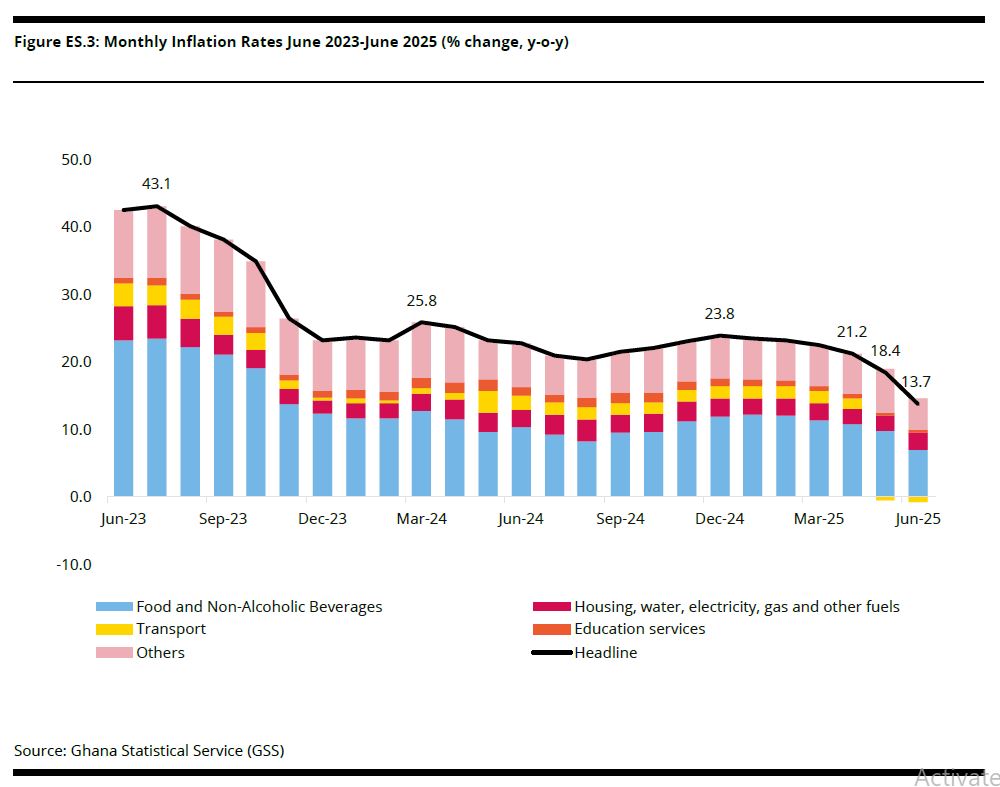
Ghana has successfully resumed its disinflationary path in 2025, with a significant decline in headline inflation driven by a tight monetary policy, a stronger currency, and improved macroeconomic conditions.
According to the World Bank Group's 9th Economic Update on Ghana, this trend marks a positive shift after the disinflationary process stalled in 2024.
The report notes that headline inflation has seen a continuous decline since December 2024, reaching a notable 13.7 percent in June 2025.
This six-month-long reduction reflects a broad-based easing of price pressures across core, food, and non-food categories.
"The decline was influenced by a tighter monetary policy rate of 28 percent, improved macroeconomic conditions, and a significant rebound of the currency," the report states.
- slot pulsa
- situs slot 5000
- slot deposit 5000
- royalhoki77
- https://poolsafetygroup.com.au/what-we-do/
- https://patorama.com.au/helicopter-photography/
- https://reactmaintenancegroup.com.au/electrical-maintenance/
- https://www.100plumbing.com.au/work-with-us/
- slot maxwin
- https://finishingblade.ca/Banner/
- https://tubulousaustralia.com.au/gallery/
A key factor in this success has been the remarkable performance of the Ghanaian cedi, which appreciated against all major currencies in the year to June 2025.
This has marked a dramatic turnaround from its struggles in previous years.
The cedi’s appreciation was supported by a combination of a tight monetary policy stance, ongoing fiscal consolidation, and interventions by the Bank of Ghana (BoG) in the foreign exchange (FX) market, according to the report.
The World Bank also acknowledges the crucial role of the BoG's interventions in managing liquidity and supporting the currency.
However, it offers a word of caution, stating that these interventions "should be managed carefully to avoid distortions in the currency market and allow for a more flexible exchange rate regime."
This advice underscores the need for a balance between maintaining stability and ensuring market efficiency.
The strong disinflationary trend and cedi's rebound are seen as positive indicators that Ghana's stabilization and recovery reforms are taking hold.
This is giving the Mahama administration the confidence to pursue its ambitious reform agenda, aimed at restoring growth and achieving long-term fiscal sustainability.
Latest Stories
-
Don’t let speed of information become your judgement – CJ tells new lawyers
34 minutes -
World Cup visa scandal: People have leveraged public office to facilitate fraud – Senyo Hosi
39 minutes -
Glut! Farmers count losses as prices crash, customers happy
1 hour -
GSA postpones auction of unserviceable vehicles
1 hour -
Man charged with attempted murder after stabbing
1 hour -
World Cup visa scandal: Senyo Hosi says issue goes beyond calls for Sports Minister’s resignation
1 hour -
Yaw Ampofo Ankrah hasn’t taken or received any money to facilitate visas – Lawyer insists
2 hours -
World Cup visa scandal: Senyo Hosi urges focus on constitutional accountability
2 hours -
La Beach demolition: Senyo Hosi condemns lack of consultation
2 hours -
Russian glide bomb attack on Zaporizhzhia kills at least 15 people
2 hours -
Jinapor warns underperforming energy sector CEOs of consequences, says no protection for failure
2 hours -
Fire destroys head of tipper truck on Lower Volta Bridge
2 hours -
Palmer signs new Chelsea contract until 2034
2 hours -
World Cup visa scandal: Mahama will act on corruption allegations – Abass Nurudeen
2 hours -
Abass Nurudeen accuses Minority of ‘scandal scavenging’ over World Cup visa controversy
2 hours