

Audio By Carbonatix
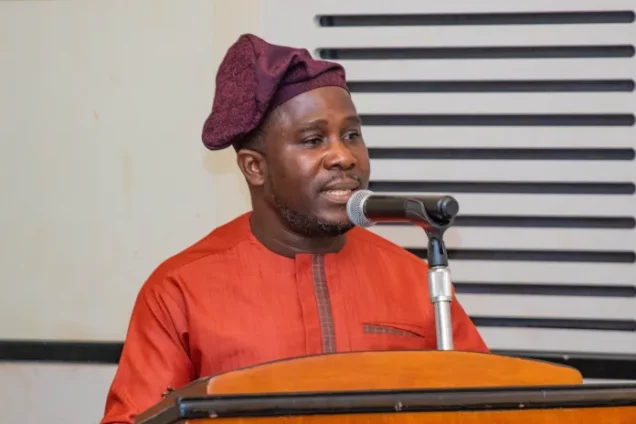
Ghana's ongoing power fluctuations, often referred to as "dumsor," are expected to persist for at least another two years, according to a bleak forecast by Nana Amoasi VII, the Executive Director of the Institute of Energy Security (IES).
Speaking on the Super Morning Show on Monday, November 25, Nana Amoasi VII stated, “We are not moving out of dumsor anytime soon. It could take up to two years before we see any stability in the power sector.” His comments have added to the growing concerns over the country’s energy challenges.
Nana Amoasi attributed the ongoing power cuts to inefficiencies within key areas of the energy distribution network.
He highlighted problems such as poorly maintained meters, some of which have not been recharged in over a year. "As long as the Electricity Company of Ghana (ECG) remains inefficient, with meters failing to function properly, dumsor will continue," he explained.
He stressed that the power crisis will not be resolved until these inefficiencies in the distribution infrastructure are addressed. M
He called for a disciplined approach to investment and a commitment to mechanisms that ensure equitable revenue distribution across the power utilities. "Until these inefficiencies are cleared, dumsor will remain with us," he said, adding that the government must invest in the right systems to restore stability to the power sector.
Reflecting on the situation, he lamented the missed opportunities by successive governments to tackle the issue earlier.
The IES Executive Director believes that the government had inherited a strong power sector with adequate installed capacity and a reliable fuel supply, and that 'dumsor' should not have recurred after 2017.
Read Also: Government is “suppressing information” about power sector challenges – IES Director
He further noted that a modest investment of about 22 million Ghana cedis in 2018 and 2019 could have addressed many of the inefficiencies that continue to affect the sector today.
Unfortunately, he warned that dumsor is unlikely to fade until a new government takes office, citing what he sees as systemic issues that remain unresolved.
In a more troubling revelation, he pointed out that information concerning the grid’s operations is being kept from the public. “If you try to access a sheet from GRIDCo today, it’s labelled 'private and confidential'—why is the government suppressing vital information?” he questioned, raising concerns about transparency within the energy sector.
With no immediate solutions in sight, Ghanaians are likely to face prolonged power disruptions as the country struggles with deep-rooted inefficiencies in its energy distribution network.
Read Also: Ghana shouldn’t have experienced any ‘dumsor’ after 2017 – IES Boss
Latest Stories
-
When the Gospel Becomes a Weapon: The church, blackmail and the abuse of faith
12 minutes -
JoyNews’ Jacqueline Ansomah Yeboah selected for UK Media Excellence for Emerging Technology Fellowship
29 minutes -
Mental Health Alliance urges government to operationalise Mental Health Fund
43 minutes -
Ghana–Holy See agreement heads to Parliament after Cabinet approval
48 minutes -
Luv FM Corporate Games 2026: Kumasi Central Prisons, Amanfiman Bank win big amid fun
59 minutes -
WAFU B U17: Ghana top Group A after win over Togo
1 hour -
Ho Central Mosque reopens amid unresolved leadership dispute that led to closure
3 hours -
Minority caucus questions GH¢16.4m in Ablakwa’s SA evacuation spending, demands independent audit
3 hours -
Gender Ministry meets Nana Akua Addo’s husband over domestic violence after hospital discharge
4 hours -
UG Vice-Chancellor urges swift operationalisation of National Research Fund
4 hours -
Pope Leo to have surgery after lump found in lung
4 hours -
Joseph Cudjoe writes: Ghana must break free from the dangerous mindset that natural resources are the foundation for wealth
5 hours -
Children among 109 dead after boat capsizes off Djibouti, UN says
5 hours -
OmniBSIC Bank’s 11th health walk promotes fitness and business growth
5 hours -
2026 World Maritime Day: Danish Embassy organises “The Gulf of Guinea Speaks”
5 hours