

Audio By Carbonatix
The West African Examinations Council (WAEC) has expressed deep concern over coordinated cheating schemes, some reportedly involving entire schools in premeditated examination malpractice, saying the menace is becoming a national security threat.
The council said such unethical acts, often facilitated by students, school authorities, and even trusted stakeholders, posed a serious threat to the credibility and integrity of the examination process.
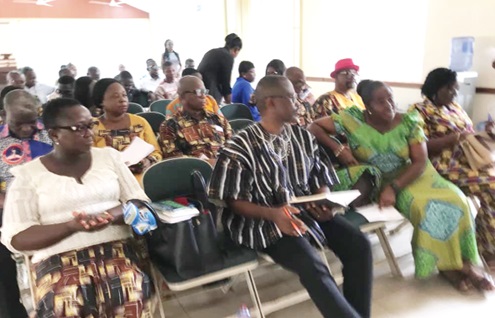
Speaking at a regional stakeholders meeting in Cape Coast last Thursday, the Head of Humanities at WAEC, Daniel Nii Dodoo, described the trend as a threat to both educational integrity and national stability, calling for a unified front to combat it.
Mr Dodoo revealed that despite intensified measures, the problem had reached alarming levels.
Widespread examination malpractice undermines honest students, devalues our certificates, and may even lead to social unrest.
“This challenge goes beyond the classroom; it undermines our educational system, threatens national development and weakens our security framework.
We must treat it as the national crisis it has become,” he stressed.
He indicated that WAEC had recorded staggering levels of malpractice over the past five years.
In 2023 alone, he stated that over 587,000 subject results were withheld, and more than 59,000 results were cancelled outright.
The year before, he said, over 382,000 results were flagged for irregularities.
“These numbers are not just statistics; they represent a deep and dangerous erosion of academic integrity,” Mr Dodoo said.
He outlined a range of national security implications stemming from this crisis, including the production of underqualified graduates, infiltration of public institutions by unqualified personnel, a rise in youth disillusionment and the spread of extremist ideologies.
“If individuals can ascend to power or secure jobs through fraudulent means, we compromise the integrity of governance. This is not only a threat to the credibility of our education system but to democracy itself,” he added.
Mr Dodoo warned that Ghana's international reputation was also at risk, with increasing levels of malpractice potentially discouraging foreign investment and academic collaboration.
He expressed concern that some WAEC staff had faced threats and intimidation in the line of duty.
“The examining body is under siege; those tasked with safeguarding our academic standards are being targeted. We must protect them if we are to protect the system,” he said.
Mr Dodoo called for a whole-of-society response, stressing that the fight against examination malpractice could not be left for WAEC alone.
“Government, parents, schools, religious institutions, traditional leaders, security agencies, and even students, all have a role to play,” he said.
Among those with critical roles, he cited the Conference of Heads of Assisted Secondary Schools (CHASS), school supervisors and teacher unions, who he said, must lead with integrity, and model ethical behaviour.
The media, he added, must continue to highlight the consequences of malpractice and hold institutions accountable.
“The media must not only report the scandals but help shape a national culture of integrity,” he urged.
He also urged religious leaders and the traditional authorities to use their platforms to promote honesty among young people.
“If we want students to reject cheating, they must hear it from every voice of moral authority,” he said.
On resource mobilisation for WAEC, Mr Dodoo called on the Parliamentary Select Committee on Education to strengthen oversight, ensure timely funding for WAEC operations and support the implementation of stricter penalties for offenders.
He also appealed to the security agencies and the judiciary to take examination fraud seriously and pursue those who facilitate or profit from it.
“This is organised crime,” he stated bluntly. “It involves networks, coercion and corruption. It must be investigated and prosecuted accordingly.”
To counter the growing menace, he outlined a multi-pronged mitigation strategy, including strengthening regulatory frameworks with harsher sanctions; promoting ethical education in early schooling, leveraging technology, such as biometric verification and item randomisation, rewarding whistleblowers who report malpractice, and accrediting NGOs to help monitor examination centres.
“Our goal is to restore public confidence in examinations and ensure that every certificate issued in this country is backed by merit, not manipulation,” he stated.
The Head of Public Affairs at WAEC, John Kapi, revealed alarming tactics used by cheating syndicates, including answer projection, mobile device smuggling, impersonation, and even individuals hiding in ceilings during examinations.
These, he said, were not random acts but increasingly coordinated, with collaborators using money, external materials and syndicates to undermine the system.
Latest Stories
-
Turning invitations into arrests is making citizens reluctant to assist police – Twumasi Ankrah
33 minutes -
The Traffitech-GH SMS spot-fine system: The good, the sad, and the funny – Bright Simons writes
45 minutes -
Hawa Koomson pledges experienced and mature leadership of NPP women’s wing
2 hours -
Young woman found dead at Kasoa Peace Town
2 hours -
Playback: The Law examined lawful arrest in Ghana
3 hours -
Mahama urges African governments to treat healthcare as an investment, not budget cost
3 hours -
Bawumia congratulates John Boadu and new NPP executives, pledges support ahead of 2028
3 hours -
Aksa Energy delegation pays courtesy call on GRA Commissioner-General
3 hours -
‘No talent should be left out’ – Bawumia pledges inclusive NPP campaign for 2028
4 hours -
Prof. Mike Oquaye recounts how he blocked the Special Prosecutor’s attempt to arrest Bawku Central MP
4 hours -
Make health sovereignty a priority for Africa – Mahama
4 hours -
Dorimon Naa, Wa West DCE lead massive clean-up exercise; threaten sanctions against recalcitrant residents
4 hours -
Photos from Adom FM Y2K Jam
4 hours -
Praye Tiatia steals the show at Adom FM Y2K Jam [Watch]
4 hours -
Boakye Agyarko congratulates John Boadu, pledges support for NPP leadership
5 hours