


Audio By Carbonatix
A retired Public Health expert, Dr Oben Apori, says he is not surprised pregnant women are made to pay for service delivery in hospitals in Ghana.
According to him, the exposé by Corruption Watch investigator, Francisca Enchill, dubbed: Pay or Die! The agony of pregnant women in hospitals is just the “tip of the iceberg”.
The investigative piece uncovers that pregnant women pay big money before delivery.
Renowned hospitals, including the 37 Military Hospital, Mambrobi Hospital, and Maamobi General Hospital, are captured participating in such rots.
The issue is even murkier when holders of the National Insurance Health Card are told to make a down payment before service is rendered.
Some pregnant women, who could not afford the cost, were left with no option other than to go on a borrowing spree or face death.
Reacting to the appalling scene in the documentary, Dr Apori said difficulties faced by pregnant women with National Health Insurance (NHIS) card keep getting worse.
While in active service, the Public Health expert said he encountered many of such sad stories in public health facilities.
He bemoaned the unnecessary application of medical technology by health personnel to make money.
“Most of the monies charged go into individual pockets which is worrying,” the Public Health expert said on Adom FM Wednesday.
Dr Apori said a Presidential NHIS Review Committee, set up by President Nana Akufo-Addo, revealed the damning findings in their report.
He said in the Ashanti and Greater Accra Regions, it found that majority of people who visited health facilities with the NHIS card paid.
“In the Ashanti Region, we found out that, 74 percent of NHIS card holders paid and 53 percent in Greater Accra pay something,” the Public Health expert stated.
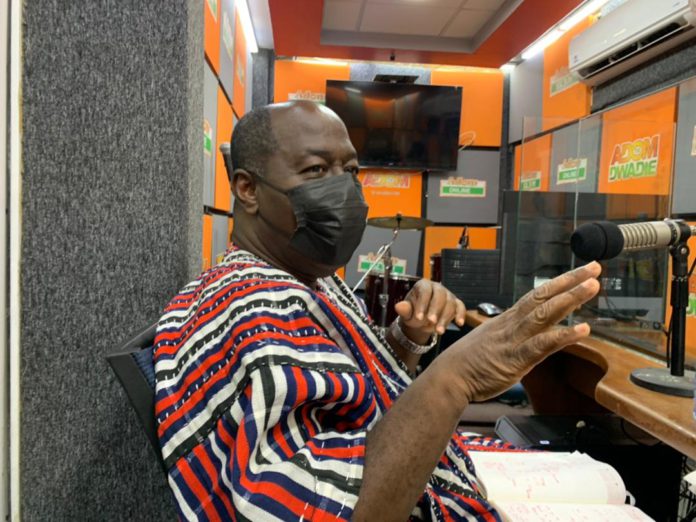
The reason for this, Dr Apori explained, is 75 percent of Internally Generated Funds (IGF) generated by the health facilities is from the NHIS.
He said: “75 percent of IGFs for health facilities are from NHIS so when payment delays, it makes them incapable of doing their work.”
Dr Apori said only 1.5 percent of NHIS card holders are able to report the conduct of health professionals who charge the illegal fees – a situation he described as worrying.
The only way to solve the problem, Dr Apori said, is for the government to review the policies and allow citizens to pay half to sustain it.
He also called for a national forum to restructure the NHIS policy to save it from collapse.
Latest Stories
-
Ghana’s recovery supported by gold strength despite global oil price pressures – Standard Bank Research
5 minutes -
Kwaku Azar writes: A-G vs OSP
38 minutes -
Mfantsipim–Adisadel rivalry built excellence, not division – Sam Jonah
1 hour -
Vice President launches Mfantsipim’s 150 years of shaping Ghana’s greatest mind
1 hour -
I assure Otumfuo, Mahama will join him to commission KNUST Teaching Hospital by end of this year – Haruna Iddrisu
2 hours -
Barcelona dominate derby to extend La Liga lead
2 hours -
Gov’t to roll out free special education for persons with disabilities from July 1 – Education Minister
2 hours -
Importers and Exporters Association declares full support for Publican AI port system
3 hours -
“We used it to test our officiating officials’ readiness” – Bawah Fuseini after CAA Athletics event
3 hours -
Volleyball emerges as Ghana’s fastest rising sport
3 hours -
National Sports Fund needs strong leadership from the top – Administrator David Wuaku
3 hours -
JoySports Exclusive: Steve McLaren in talks with GFA after expressing interest in Black Stars job
3 hours -
Fire guts auto parts warehouse at Bubuashie, one fire officer injured
3 hours -
I owe my victory to coach Ofori Asare – Allotey after winning WBA Africa Gold Super Flyweight belt
4 hours -
Church of Pentecost supports over 2,000 BECE candidates in Obuasi with career guidance seminar
5 hours