

Audio By Carbonatix
Conversations about diversity in who covers the ‘hard’ news have been prominent in newsrooms, from business leadership to editorial staff.
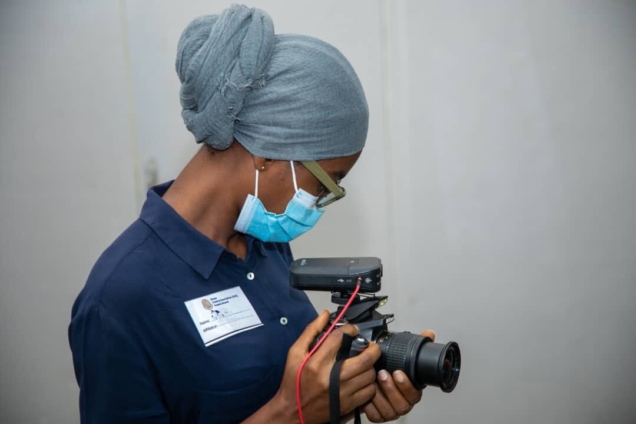
However, there’s one crucial area of journalism where women should consider making their mark: photojournalism or video journalism.
Women’s representation in photo or video journalism is essential because those who control news imagery control the collective visual narrative.
For a decade, Juliana has been the only female camera technician behind most of the shots displayed on the screens of Ghana Television (GTV). The other fifteen women in her organization are all on-air personalities and producers.
Juliana shares some of the challenges that come with being a woman behind the lens.

According to her, handling the same camera as the men can be quite stressful and demands considerable physical strength.
"The professional video cameras are very heavy and you can imagine moving around with the camera when you go for an assignment or cover an event.
“It's the same thing the men also use and I can't complain because that's my job. If you complain, the men feel you're lazy but that's not the case," she bemoaned.
Seyram Abla De-Souza, an editor at The Multimedia Group’s JoyNews, was irritated by the bulkiness of the camera when she started journalism.
This contributed to her lack of interest in learning photo/video journalism.
"I don't know why, learning to operate the camera never crossed my mind,” she said. “I guess it’s because when I started, the cameras were very bulky – a complete put-off".
Edith, a communication student at the Kwame Nkrumah University of Science and Technology (KNUST) learnt how to handle the camera after a month of internship at Luv FM.

She has been a one-lady army, taking on roles of both a camera technician and a reporter.
Edith says she has faced some stereotypes while working.
"I have faced discrimination as a camera technician. Some people will ask, do you really know how to use the camera?
"Make sure they’re of good quality because I don’t really trust ladies who handle the camera. But we get good compliments after the work is done," she exposed.
Collincia, who won the Most Promising Student Journalist Award at the 2023 GJA Awards, shares her experience as a camera technician.
“There were times when the event organiser will ask who was going to operate the camera and if I pointed out that I’d be the one they’d ask if I could do a good job.

“They would even ask me to show some of the shots before we left just to make sure that I had captured the event. On other occasions, where there is a male camera technician from other media organizations, they’ll ask them to give me their shots even when you tell them you’ve captured the event on your camera,” she narrated.
Bilqis revealed, "I didn't really face any challenge when I started using the camera. People always compliment me when they see me handling the camera and that really encouraged me to learn more about cameras".
Unlike Bilqis who was mentored by a colleague, some female journalists who have developed interest in the use of cameras have been deprived of the opportunity to learn.
“Because the big cameras are expensive the camera guys don’t allow us to touch them. We're actually willing to learn but unfortunately, we're not given the opportunity," lamented Akosua and Christiana, journalists with GBC in Kumasi.
The representation of women in this media space is low.

Though specific statistics on the percentage of women camera technicians in Africa or globally might not be readily available, the Geena Davis Institute on Gender in Media and the Center for the Study of Women in Television and Film, report that the film and television industry tends to be male-dominated.
These numbers are damning for an industry responsible for visually representing the world and the vulnerable.
With the recent introduction of DSRL cameras and smartphones, women have developed an interest in learning how to use cameras.
According to Abla De-Souza, "to catch up and make up for what I don’t know in camera operating, I have taken two intensive Deutsche Welle (DW) Mobile Journalism (MoJo) training.
“A Mojo training done well turns your mobile phone into a professional video and editing bay,” she said.
It is however imperative that media institutions and society encourage and empower women and girls to thrive in male-dominated fields like video and photojournalism.
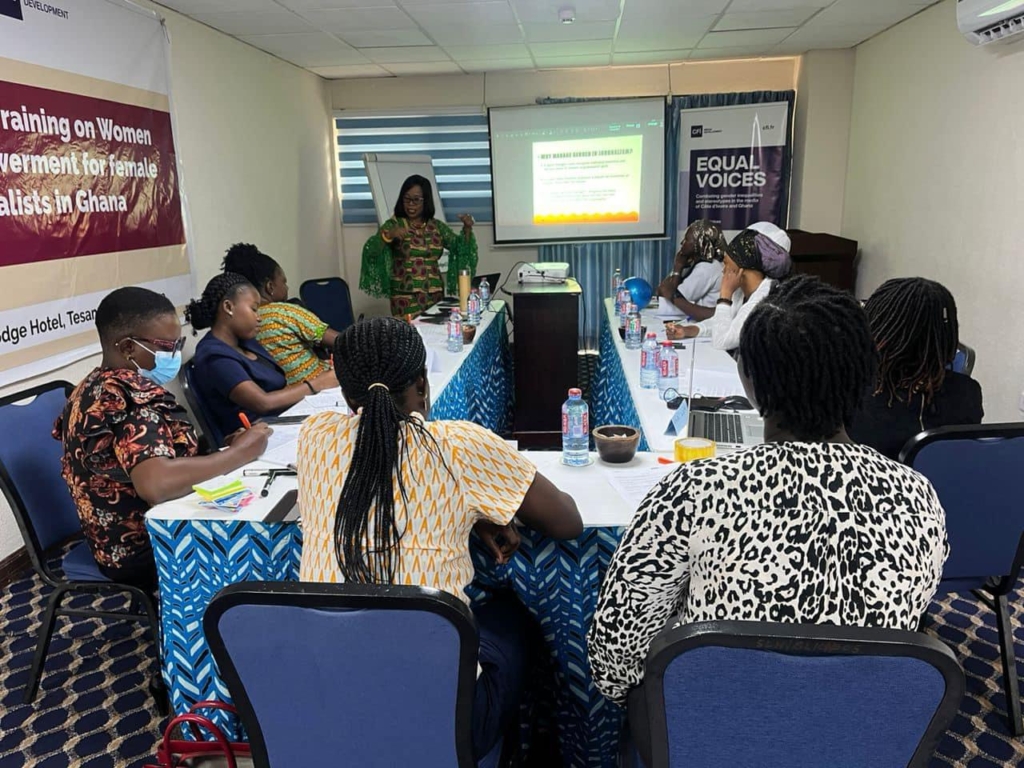
The Media Foundation for West Africa (MFWA) and CFi media development through its equal voices project and women empowerment training is however encouraging female journalists to combat gender inequalities and stereotypes in the media.
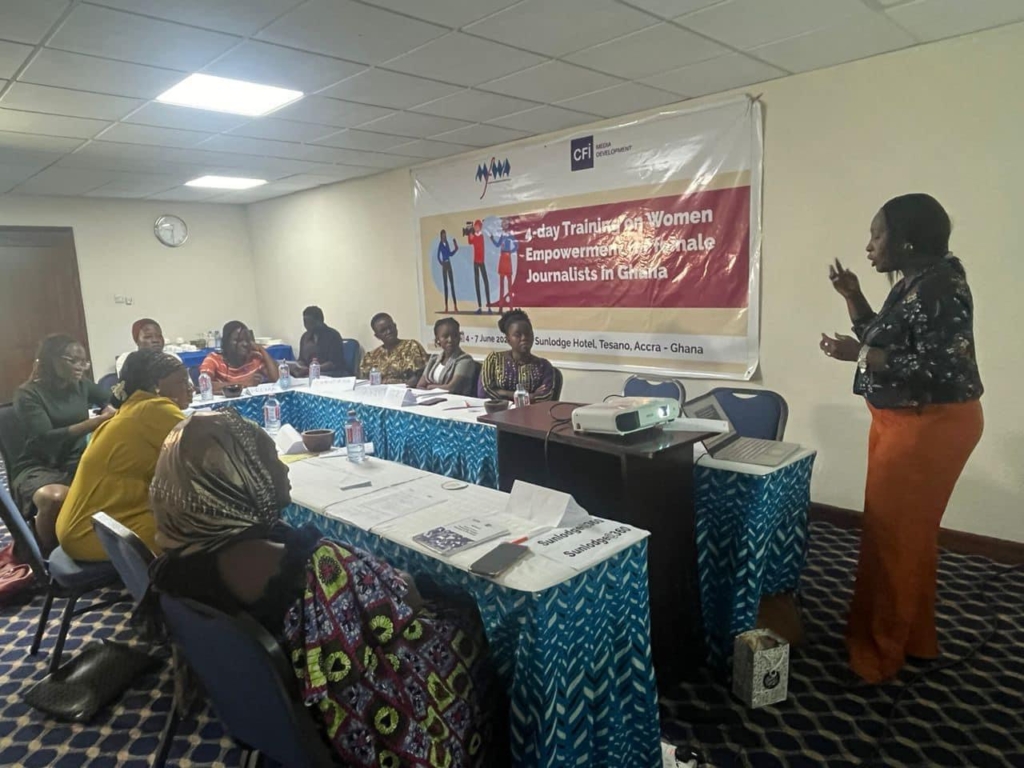
Sixteen female journalists from media outlets in Ghana benefited from a four day training in Accra
The training provided participants with in depth knowledge on gender concepts, gender equality and women empowerment.
The equal voices project is being organized with funding support from CFi media development.
Latest Stories
-
Kwaku Azar writes: A-G vs OSP
19 minutes -
Mfantsipim–Adisadel rivalry built excellence, not division – Sam Jonah
43 minutes -
Vice President launches Mfantsipim’s 150 years of shaping Ghana’s greatest mind
1 hour -
I assure Otumfuo, Mahama will join him to commission KNUST Teaching Hospital by end of this year – Haruna Iddrisu
2 hours -
Barcelona dominate derby to extend La Liga lead
2 hours -
Gov’t to roll out free special education for persons with disabilities from July 1 – Education Minister
2 hours -
Importers and Exporters Association declares full support for Publican AI port system
2 hours -
“We used it to test our officiating officials’ readiness” – Bawah Fuseini after CAA Athletics event
3 hours -
Volleyball emerges as Ghana’s fastest rising sport
3 hours -
National Sports Fund needs strong leadership from the top – Administrator David Wuaku
3 hours -
JoySports Exclusive: Steve McLaren in talks with GFA after expressing interest in Black Stars job
3 hours -
Fire guts auto parts warehouse at Bubuashie, one fire officer injured
3 hours -
I owe my victory to coach Ofori Asare – Allotey after winning WBA Africa Gold Super Flyweight belt
3 hours -
Church of Pentecost supports over 2,000 BECE candidates in Obuasi with career guidance seminar
5 hours -
Brandon Asante and Coventry all but promoted to Premier League despite Sheffield Wednesday draw
5 hours