


Audio By Carbonatix
In a massive logistical undertaking to underpin the upcoming Free Primary Healthcare Programme, the government has announced the imminent distribution of over 24,500 pieces of medical equipment to health facilities across all 16 regions.
The Minister of State in charge of Government Communications, Felix Kwakye Ofosu, revealed the details on Friday, 3rd April 2026, following an inspection of the inventory alongside the Minister for Health, Kwabena Mintah Akandoh.
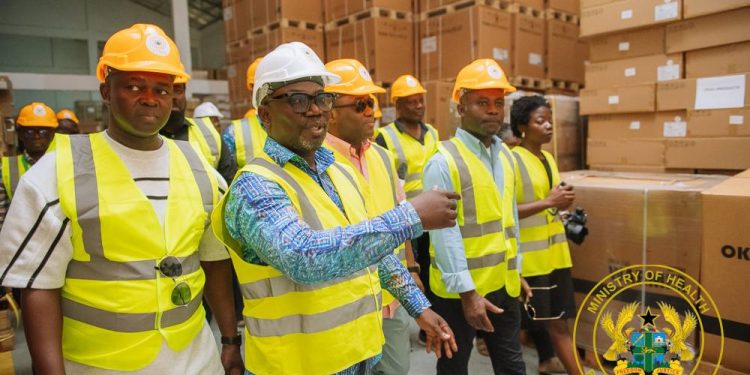
The surge in equipment is designed to ensure that frontline clinics are fully ready before President John Dramani Mahama officially commissions the programme on April 15.
According to the Minister, the deployment involves exactly 24,534 pieces of equipment specifically curated to address gaps in rural and urban primary care. The goal is to shift the burden away from overstretched tertiary hospitals by ensuring that diagnosis and basic treatment can happen at the community level.
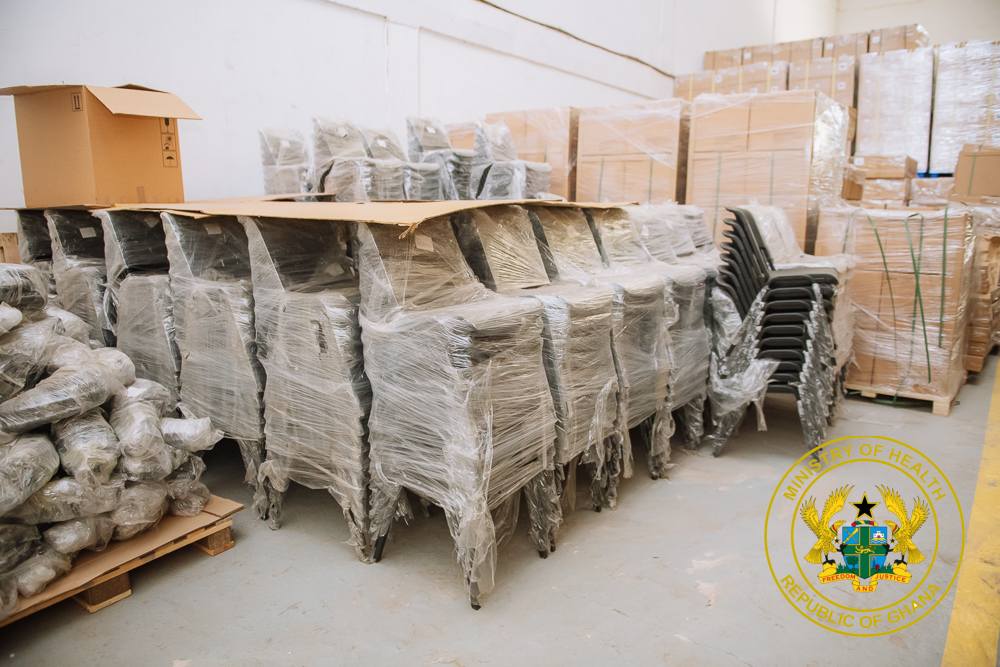
“The equipment will begin arriving at health facilities from next week to strengthen service delivery at the primary care level,” Mr. Kwakye Ofosu disclosed, adding that the massive haul is intended to “support the effective implementation of the Free Primary Healthcare Programme.”
The package goes beyond basic furniture, focusing heavily on diagnostic precision and maternal health. For the first time, many local clinics will receive advanced neonatal equipment to combat infant mortality rates.
The 24,534-piece package includes:
- Neonatal Care: Baby incubators, radiant warmers, and oxygen concentrators for newborn resuscitation.
- Diagnostics: X-ray machines, ultrasound scanners, and laboratory analysers.
- Chronic Disease Monitoring: Vital sign monitors (BP and temperature) and glucometers for diabetes screening.
- General Ward Support: Patient monitors, infusion devices, delivery beds, and standard hospital beds.
The Minister emphasized that the distribution is not merely a political gesture but a structural enhancement of the National Health Insurance Scheme (NHIS) ecosystem. By placing ultrasound and X-ray machines at the primary level, the government hopes to slash the cost and travel time for patients seeking routine scans.
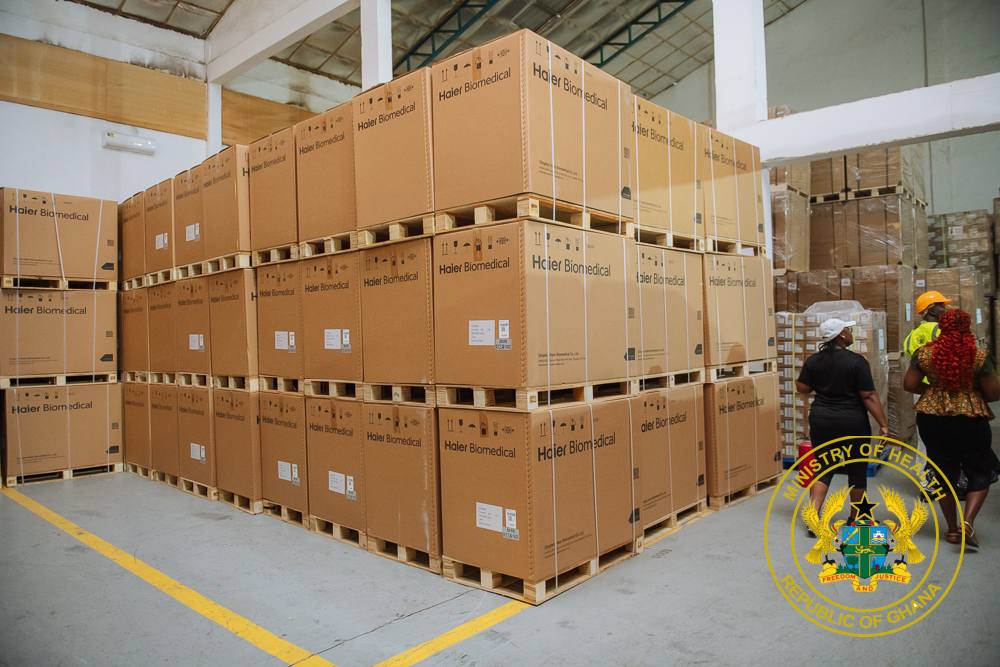
“The deployment of the equipment is aimed at enhancing the capacity of health facilities nationwide, particularly at the primary level, to deliver quality and accessible healthcare services,” he noted.
With the first crates set to move out on Monday, the Ministry of Health has reportedly put its regional directors on high alert to oversee the installation and training of staff on the new devices.
Latest Stories
-
Heritage Series Cedi notes to modernise cedi while preserving national identity – BoG
13 minutes -
Ghana’s business environment at ‘Inflection Point’ as private Sector takes greater lead — Vish Ashiagbor
20 minutes -
At least 2 new airlines could join domestic aviation market by 2027 – GCAA Director General
29 minutes -
What if Ghana’s next tourism boom begins with Ghanaians?
50 minutes -
Energy Commission to monitor EV charging stations
54 minutes -
Invest with confidence, Ghana’s golden era is beginning – Finance Minister
1 hour -
Do Ghana to launch The Great Ghana Day Out on World Tourism Day
1 hour -
Clean up our politics before politics cleans us up
2 hours -
2025 was a turning point, says Abradu-Otoo as NAFCO posts record GH¢91.7m profit
2 hours -
Today’s front pages: Friday, September 25, 2026
2 hours -
‘FA President has four clubs; what do you think he would do?’ – Nana Baffour Awuah fires back
3 hours -
Kurt Okraku doesn’t like criticism, but Ghana football is beyond him – Nana Baffour Awuah
3 hours -
Ghana’s Liquidity Paradox: Why capital is not reaching productive businesses
3 hours -
Ghana football has collapsed under Kurt Okraku – Manhyia South MP
3 hours -
Mr John Blankson Adu Otu
4 hours