

Audio By Carbonatix
The Director-General of the Institute for Educational Planning and Administration (IEPA), Dr Michael Boakye -Yiadom, has indicated that quality education in a Free Senior High School system requires a holistic approach where teachers are teaching not just to get their learners to pass examinations and learners are also not learning just to pass examinations.
But rather, the education received must provide learners with the capabilities required to become economically productive, develop sustainable livelihoods, contribute to peaceful democratic societies and enhance individual well-being.
He stated this in reference to the VVOB (a non-profit organisation contributing to quality education in developing countries) definition of quality education.
He further added that, SHS graduates should not struggle to identify their career paths to determine which post-secondary educational pathway they need to pursue for their future; academic advising must be strengthened to ensure flexible pathways for SHS graduates.
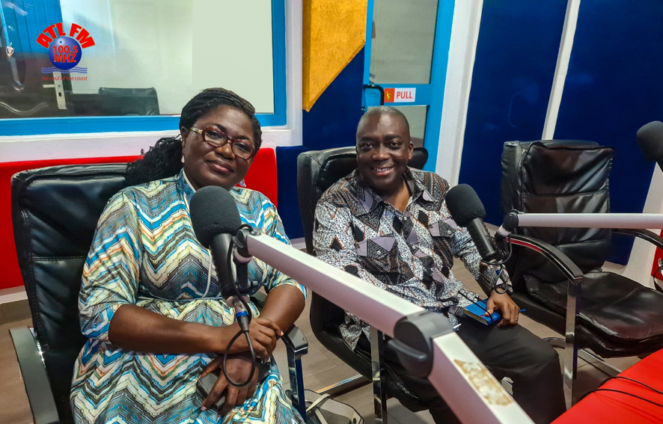
Dr. Boakye-Yiadom was speaking as a co-panelist on the topic, “Ensuring Quality Education in a Free SHS System: The Do’s and Don’ts”, on the Issues Segment on ATL Fm in Cape Coast, dubbed “SDG 4 Drive” (a programme designed by IEPA to interrogate educational issues towards meeting SDG 4 in Ghana).
On the issues of curriculum content and its importance to quality education, the other co-panelist, Dr. Clara Araba Mills, a lecturer at IEPA, indicated that: As one of the Do’s, the SHS curriculum offers a variety of courses to inform different pathways students may identify for further education and training, as required by the UN Sustainable Development Goal 4 (SDG 4).
The curriculum also caters to the core subjects of Mathematics, English language, Science, among others, which generally provide the foundational/core skills needed to excel in a course or programme chosen for further education.
Again, the SDG 4 advocates for the constructivist approach to teaching and learning which recognises individualism and diversity, and thus, calls for different approaches to teaching to meet the diversity of learners’ needs. On the ground, the data however indicates that the current average teacher-learner ratio is 1:50 instead of the Ghana Education Service’s (GES) 1:35 standard.
This makes it challenging for teachers to employ multiple methods and innovative ways to suit the needs of students. Regardless, Dr. Mills recommended that teachers would do well to employ different approaches to teaching to ensure that learning is productive and meets the quality standards for education.
Dr. Mills further indicated that another gap related to the curriculum identified at the SHS level is the challenge of students transitioning into the tertiary system where some students have no clue with regards to pathways the SHS subjects’ combination offered at the tertiary level. This challenge she intimated, can be addressed through guidance and counselling at the SHS level.
She pointed out that, unfortunately, guidance and counselling in schools has continued to be managed by just one individual who is too overwhelmed to combine the role with teaching. Guidance and Counselling Coordinators, usually do not have the space and time to meet students individually and offer directions.
Concluding the discussions on the SDG 4 Drive segment, Dr. Boakye-Yiadom speaking on the gains of the free SHS System remarked that: The free SHS system has increased the numbers of students’ enrolment and graduations. This has ultimately improved equity and social justice. For instance, the 30% catchment area placement is making it possible for learners from certain rural and peri-urban schools to attend category A schools.
These gains must be sustained for the future, he emphasised, and also stated that, “whether the free SHS system is going to continue to be free or semi-free, by whatever percentage, the model adapted going forward, must sustain the gains earned since 2017. We cannot go back to challenges with access, enrolment or equity irrespective of which political party or president is at the helm of educational policy implementation.”
Instructively, the IEPA is committed to achieving the United Nations Sustainable Development Goal (SDG) 4 as well as the African Union’s Agenda 2063 and the SDG 4 Drive on ATL FM in Cape Coast is designed to promote, advocate and interrogate educational issues geared towards implementing the United Nations Sustainable Development Goals 4 (UN SDG 4).
Latest Stories
-
Linking LEAP to productive inclusion could cut extreme poverty by 2030 – UNICEF
46 minutes -
Trade Ministry backs use of creative arts to rehabilitate prison inmates
47 minutes -
Negotiations with government to continue despite strike suspension – GNAT
51 minutes -
‘Ghana cannot afford to waste public resources; every cedi has a job’ – Ato Forson
53 minutes -
Ghana expects economic boost as World Assemblies of God Congress brings 10,000 delegates to Accra
60 minutes -
Joy in Nayilifong as Farouk Aliu Mahama donates 100kVA transformer to improve power supply
1 hour -
Chief Justice urges employers to tackle mental health stigma in workplaces
2 hours -
Analysis: Ghana’s yellow fever numbers reveal a gap between vaccination and protection
3 hours -
Education Ministry welcomes suspension of teachers’ strike
3 hours -
Vice Chancellors Ghana appeal to striking university administrators to resume work
3 hours -
KNUST postpones 2026/2027 academic year reopening indefinitely amid GAUA strike
3 hours -
Fire destroys mattress factory at Sokoban in Kumasi
3 hours -
ECOM-SMS Ghana launches ‘Agriculture Our Future Clubs’ to address threat of ageing farmer population
4 hours -
Nicholas Atsu Kumi
4 hours -
Cherif Sarr: Economic participation needs more pathways, not one prescribed route
4 hours