

Audio By Carbonatix
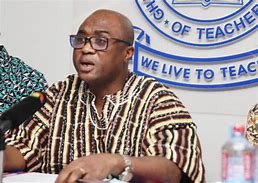
The General Secretary of the Ghana National Association of Teachers (GNAT), Thomas Musah, has welcomed the proposal to cover academic user fees for first-year tertiary students but has expressed concern about sustainability.
While he acknowledges the benefits of easing the financial burden on students and parents, he warns that the country’s stretched education budget may not be able to bear the weight of such an initiative without careful planning.
Speaking on JoyNews’ AM Show, he recognised the proposal by Haruna Iddrisu, the Minister of Education nominee, as a step in the right direction, offering much-needed support for new students.
However, he stressed that while the idea is commendable, the reality of financing it could pose significant challenges for the already fragile national budget.
"While it's a great move for students, we need to ask ourselves: how much do we actually have to fund these initiatives?" he asked, underscoring the importance of a sustainable funding strategy.
He highlighted the ongoing financial struggles within the education sector, including arrears owed to the West African Examinations Council (WAEC), unpaid bills to school feeding suppliers, and long-overdue payments to food vendors in Senior High Schools (SHS).
To make matters worse, capitation grants have been in arrears for over two years, raising serious concerns about the government's ability to meet its educational commitments.
Mr Musah also pointed to the need for a broader, more long-term strategy to secure reliable funding for education in Ghana, something GNAT has long advocated for but has yet to see fully implemented.
Without this, he warned that any effort to support first-year students could be short-lived and add even more strain on the system.
Mr Musah agreed that paying first-year university students’ fees is a positive development, and emphasised that its success hinges on the government’s ability to secure sustainable funding.
"Without a solid financial plan, the initiative could face significant challenges and deepen the financial pressures already plaguing the education sector" he concluded.
Latest Stories
-
Students’ academic freedom central to Africa’s democratic future – Prof. Appiagyei-Atua
1 minute -
Ɔdadeɛ Global Executives congratulate PRESEC on historic 9th NSMQ trophy
3 minutes -
Mahama announces maize processing plant for Sissala area to tackle glut
8 minutes -
Ghana undertaking Africa’s largest road infrastructure programme – Agbodza claims
39 minutes -
Prospective homeowners troop to Day 2 of JoyNews-Republic Bank Habitat Fair, engage experts on homeownership
54 minutes -
Video: Medeama suffer preliminary round exit after losing to TP Mazembe
1 hour -
Police interdict officer over death of 23-year-old law student, Ivan Baidoo
1 hour -
BECE: ‘I’m happy we’re seeing our children’s true results because cheating is curtailed’ – Mahama
2 hours -
24-Hour Economy targets greenhouses, cold storage and air cargo to transform horticulture
2 hours -
Taxpayers’ money shouldn’t fund National Cathedral; Christians can contribute towards it – Mahama
2 hours -
U.S. Embassy launches Girls’ soccer initiative in Ghana to build leaders on and off the pitch
2 hours -
CAF Champions League: GPL champions Medeama eliminated at the preliminary round
2 hours -
HIDAH Foundation equips youth with future-ready skills at free 2-day development programme
2 hours -
Mahama: 24-Hour Markets will boost economic activity across districts
2 hours -
Ablakwa celebrates PRESEC’s 9th NSMQ triumph, rewards contestants, staff with MacBooks and cash
2 hours