

Audio By Carbonatix
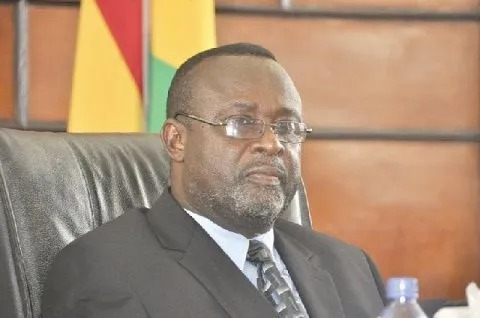
Acting Chief Justice, Justice Paul Baffoe-Bonnie, has called on political leaders to take bold and far-reaching measures to end the illegal mining menace (galamsey) in Ghana.
He warned that galamsey was worsening despite ongoing efforts, which he described as “half-hearted” and ineffective in tackling what he called an existential threat to the nation.
“Considering the unspeakable deaths, pain, and destruction that galamsey has brought to this country, I urge political leadership to take bold and far-reaching measures to bring this menace to a long-overdue end.
“We cannot continue to dither in September 2025 on the repeal of L.I. 2462 that has permitted mining in forest reserves. It is a good place to start if we sincerely want to win the war against galamsey. The time to act is now without any further delay,” he stressed.
Justice Baffoe-Bonnie’s remarks were delivered on his behalf by Supreme Court Justice Hafisata Amaleboba at the Ghana Bar Association’s (GBA) annual conference in Wa, Upper West Region, on Monday.
Devastating Impact of Galamsey
The Acting Chief Justice highlighted the extensive damage caused by illegal mining, noting that galamsey had polluted rivers, destroyed forests, degraded fertile farmlands, and displaced farmers and their families.
He said the activity had worsened poverty, exposed communities to mercury-related diseases, and undermined food security. Economically, he added, while some individuals earned short-term income, the long-term effects included higher living costs and declining agricultural output.
Justice Baffoe-Bonnie further linked galamsey to rising insecurity, citing robbery, violence, and other crimes often associated with foreign-backed miners.
Quoting Nigerian author Chinua Achebe, he said, “The death that will kill a man begins as an appetite,” to illustrate how unchecked practices like galamsey can escalate into national crises.
Drug Abuse Concerns
Turning to the issue of drug abuse, Justice Baffoe-Bonnie urged a multifaceted approach to curb the growing problem.
He called for education campaigns to raise awareness among the youth, stressing the role of schools, families, and communities in providing accurate information and early guidance.
He also recommended strengthening support systems through counselling services, rehabilitation centres, and hotlines to assist those struggling with addiction.
According to him, parents, teachers, and community leaders must be equipped to identify early warning signs, while law enforcement agencies work to disrupt the supply of illicit substances.
“Finally, we need to create a society that supports recovery and rehabilitation. By breaking the stigma surrounding addiction, we can encourage adolescents to seek help without fear of judgment,” he said.
Latest Stories
-
Ghana’s BRICS move requires clear strategy to manage risks – Godfred Bokpin
26 seconds -
Pay teachers realistic income – Duncan Amoah to gov’t
17 minutes -
Bechem to become chicken capital of Ghana – Mahama projects
18 minutes -
Gov’t targets recruitment of 16,500 health professionals in 2026
39 minutes -
Two-week strike will not derail academic calendar – GNAT President
54 minutes -
Headmaster detained after BBC investigation into alleged sexual abuse of students
1 hour -
GNAT pushes for clear implementation procedures of teachers’ conditions of service
1 hour -
Recurrent strikes threaten quality of education and academic calendars – Prof Bokpin
1 hour -
‘Cockroach’ group leaders among hundreds detained in Delhi protest
2 hours -
Don’t let speed of information become your judgement – CJ tells new lawyers
2 hours -
World Cup visa scandal: People have leveraged public office to facilitate fraud – Senyo Hosi
2 hours -
Glut! Farmers count losses as prices crash, customers happy
3 hours -
GSA postpones auction of unserviceable vehicles
3 hours -
Man charged with attempted murder after stabbing
3 hours -
World Cup visa scandal: Senyo Hosi says issue goes beyond calls for Sports Minister’s resignation
3 hours