

Audio By Carbonatix
The battle for the leadership of Ghana in the 2024 election was initially expected to focus on the economy and corruption.
However, a statement by the Ghana Water Company Limited (GWCL) in late August shifted the nation’s attention to the pressing issue of illegal mining, commonly known as galamsey.
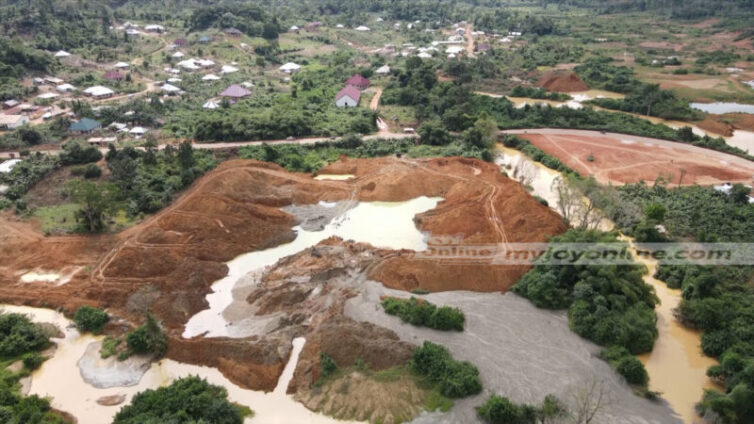
On August 30, the GWCL announced that it was unable to supply water to parts of Cape Coast due to pollution of its water sources caused by galamsey activities. While this was not the first time the GWCL had flagged galamsey as a major threat to its operations, the statement served as a catalyst, prompting Ghanaians, civil society, and religious organizations to intensify their calls to combat the menace.
I have observed with keen interest the protests by the Democracy Hub and the subsequent arrests and prosecutions that followed. Alongside these events, I’ve also noticed the public statements from politicians across the political spectrum, and I must admit, I am deeply disappointed.
Before outlining my reasons for this disappointment, I want to acknowledge the contribution of illegal mining to the economy. According to the Ministry of Lands and Natural Resources, the small-scale mining sector employs over one million Ghanaians—ten times more than the large-scale mining sector. I am also aware of the sector’s contribution to the country’s revenue, particularly in the context of the gold-for-oil initiative.
The complex nature of Ghanaian society, especially in mining communities, makes it difficult to ban small-scale mining or galamsey outright. However, as a nation, we must make a critical choice between "champagne for a few or safe drinking water for all," to borrow a phrase from Thomas Sankara.
Our failure to effectively address the galamsey issue has led to an escalation that now poses an existential threat to the entire country, not just the affected regions of the Western, Eastern, Ashanti, and Bono regions. Our water bodies have been destroyed to such an extent that international organizations warn that Ghana may have to import water if illegal mining activities are not curtailed.
Beyond the devastation of water sources, galamsey also threatens our food supply. Recently, it was reported that foodstuffs exported from Ghana to the U.S. contained dangerous levels of heavy metals—food that we consume daily within our borders.
We are already feeling the effects. In a recent interview with Channel One TV (formerly Citi TV), Prof. Dr. Paul Osei Sampene, a pathologist and researcher at Kwame Nkrumah University of Science and Technology, confirmed that the rise in babies born with defects is directly linked to the consumption of water and food contaminated by galamsey activities. Terminal illnesses such as kidney disease are also increasingly being tied to galamsey.
With these dangers staring us in the face, it is frustrating to hear politicians on both sides engage in a blame game. Galamsey affects everyone, regardless of political affiliation, and while some politicians may be able to afford imported water, the majority of Ghanaians cannot.
The government may worry that a decisive crackdown on galamsey will have political repercussions in the 2024 elections, but I believe President Nana Addo Dankwa Akufo-Addo can tackle this issue head-on and make it a lasting part of his legacy, much like the Free SHS policy.
It’s time to prioritize the fight against galamsey before it’s too late. This is more than a political issue—it’s a matter of survival for our nation.
Latest Stories
-
Friends of Bridget Bonnie Marks her 35th birthday with donation to Kasseh Model Health Centre
21 minutes -
Landfilling waste management creates no value, it’s an economic waste
48 minutes -
Photos: Speaker Bagbin Commissions MPs constituency office under parliamentary decentralisation programme
1 hour -
Black Stars technical advisor Winfried Schäfer sacked as GFA shakes up backroom staff
1 hour -
Wenchi water project almost complete, critical to gov’t agenda – GWL MD
1 hour -
Anti-LGBTQ+ bill not part of government’s legislative agenda – Inusah Fuseini
1 hour -
Anti-LGBTQ Bill: Forget the rumour mongers, I’m a man of action, and will pass the bill – Speaker
2 hours -
Women and children among those killed in Sudanese army shelling of wedding celebration
2 hours -
President Mahama is not sincere with Ghanaians on LGBTQ bill matter – Hassan Tampuli
3 hours -
Gov’t to establish Prison Industrial Hub to equip inmates with income-generating skills – Prison Service boss
3 hours -
Alhassan Tampuli donates cement, roofing sheets to support storm victims in Gushegu
3 hours -
Alhassan Tampuli appeals for urgent support for storm victims in Gushegu
3 hours -
The hypocrisy must stop; pass Anti-LGBTQ+ Bill now – Alhassan Tampuli to Mahama
3 hours -
Imprisonment should be rehabilitative, not punitive – Ghana Prisons boss at UNGA
3 hours -
Ga Adangbe traditional priests petition Mahama over McDan aviation licence revocation
4 hours