

Audio By Carbonatix
Ghana Health Service has expressed deep concern over the significant rise in cases of measles and rubella, which have surged by more than 100 per cent in the past two years in the Ashanti Region.
This alarming trend highlights a growing public health issue that officials are struggling to contain.
Despite intensified efforts by health officials to combat the spread of these diseases, the number of reported cases continues to escalate.
In 2021, only four cases of measles were recorded, but this figure jumped to 24 cases in 2022.
By 2023, the situation worsened further, with 79 reported cases, and the trend has not abated in 2024, which has already seen an alarming 119 cases.
Dr Fred Adomako Boateng, the incoming Director of the Ghana Health Service in the Ashanti Region, has attributed the surge in cases to gaps in vaccine administration.
His comments underline the critical role that immunization plays in preventing outbreaks of these preventable diseases.
“As the number of unvaccinated children rises, the likelihood of outbreaks is very high. And if you will bear with us, remember last year, some of the northside and even here, we started having a lot of measles cases. Measles-rubella’s complications are something that you cannot really pay for."
“And you never know who is going to be at risk and I believe that you don’t want your child to have to be blind or to be deaf. And this is the opportunity that you have that you can vaccinate your child against measles and rubella.”
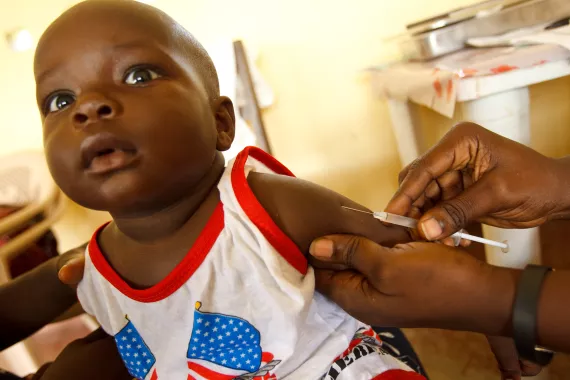
In response to this concerning situation, health authorities are launching a supplementary campaign for measles and rubella vaccination.
This initiative is scheduled to take place from October 2 to October 6, 2024, aiming to enhance vaccination coverage and protect vulnerable populations, particularly children.
The campaign seeks to address the vaccination gaps identified by health officials and curb the rising cases of measles and rubella in the region.
With the ongoing efforts to raise awareness and increase vaccination rates, health authorities hope to reverse the current trend and safeguard public health in the Ashanti Region.
Latest Stories
-
Workers came across human remains – and unearthed a mass grave of 572 people
3 hours -
Each Jehovah’s Witness member now decides whether to accept or donate main blood components
3 hours -
Trump says US will form ‘AI Force’ and appoint an artificial intelligence tsar
4 hours -
Google’s Gemini AI hacked three companies in security test
4 hours -
Converse pulls ‘deeply upsetting’ advert after backlash
4 hours -
Warren Buffett steps down after six decades at Berkshire – ‘Father Time always wins’
4 hours -
Billionaire Man United owner says he has lost confidence in the UK
4 hours -
I have experienced racism a thousand times – Lamine Yamal
4 hours -
Ipswich Town investigates racist abuse of Fatawu
5 hours -
Man City battle past Sunderland in eight-goal thriller
5 hours -
Neville calls Man Utd ‘pathetic’ – but Carrick maintains belief
5 hours -
Cunha rescues point for Man United at Fulham
5 hours -
Government has improved sanitation in one-and-a-half years — Salaga South MP
5 hours -
Impressive defence behind Iraola’s solid Liverpool start
5 hours -
Nkwanta North Assembly to appear before Parliament over DACF sanitation spending
5 hours