

Audio By Carbonatix
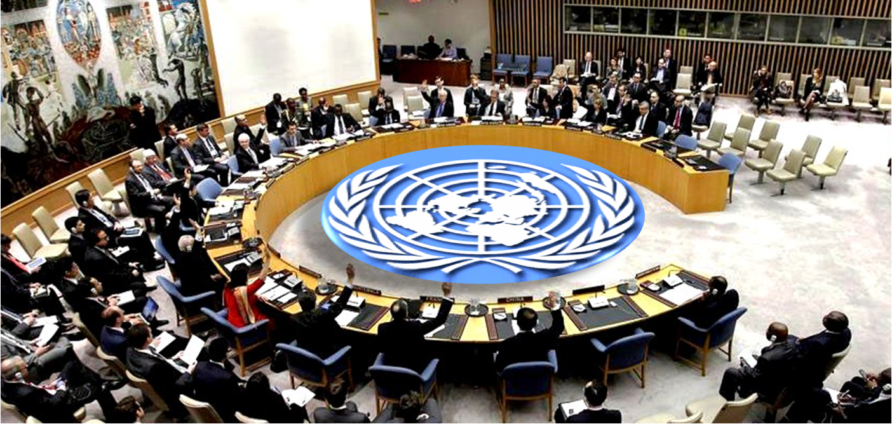
Ghana has commenced a two-year term on the UN Security Council.
The country joins four others on the world’s top body for addressing threats to international peace and security.
The other countries are; the United Arab Emirates, Brazil, Gabon and Albania.
The countries were elected unopposed by UN members in June and will each serve until the end of 2023.
They are expected to address issues such as terrorism, child soldier recruitment and conflicts in Syria, Yemen, Libya and other parts of the world.
Ghana and Gabon have served on the council three times whiles Brazil is serving for the first time with the UAE serving once from 1986-1987 and Albania serving for the first time on the council.
The Security Council has 10 seats for temporary members but five of the seats are permanently occupied and dominated by Russia, China, the US, Britain and France — which hold the power of veto.
The council holds regular meetings to address threats to international peace and security and makes the ultimate decisions on resolutions to impose sanctions, authorise the use of military force and launch peacekeeping missions.
Some of the council’s priority includes hotspots such as Ethiopia and Afghanistan as well as the long-standing Palestinian-Israeli conflict and Iran's nuclear programme.
To be adopted, council resolutions need at least nine votes in favour and no vetoes from permanent members.
Welcoming the new members on the security council, Russia’s deputy UN ambassador Dmitry Polyanskiy said the council has a “big responsibility on its shoulders” and urged the newcomers to help “find compromises” to global problems.
UN Sectary General, Antonio Guterres in his New Year message, urged UN members to step up to the plate in 2022.
“These are not just policy tests. These are moral and real-life tests. And they are tests that humanity can pass if we commit to making 2022 a year of recovery for everyone,” Mr. Guterres said.
Latest Stories
-
Ghana Medical Trust Fund has exceeded expectations in first year – Health Minister
2 minutes -
One-Week Observation for Mrs Janet Gyasi Boakye
15 minutes -
Before the bulldozers arrive: What the state owes workers in the informal economy
16 minutes -
NIA extends Ghana Card registration for children in North East and Upper East
19 minutes -
Volta Team wins NPA 2026 Welfare Week Quiz championship
22 minutes -
Maxwell Klu turns birthday into relief mission for Hohoe flood victims
24 minutes -
NDC congratulates NPP, calls for national interest to rise above party politics
26 minutes -
NPP’s new executives will not alter our 2028 preparations – Tanko-Computer
1 hour -
Tema East MP urges men to take active role in breast cancer awareness
1 hour -
Hawa Koomson vows to bring experience and maturity to NPP women’s wing
1 hour -
Opare Addo cautions NDC against adopting NPP’s aggressive politics
2 hours -
NPP has 35 months to prepare for 2028 after early reorganisation – Political strategist
2 hours -
All six passengers presumed dead after plane went missing off US coast
2 hours -
Teachers’ promotion arrears to be paid by Oct. 30 – Education Minister
2 hours -
Stop talking too much on stage – Kafui Dey warns MCs
2 hours