

Audio By Carbonatix
The International Monetary Fund (IMF) has recommended that Ghana places the losses incurred under its Gold for Reserves (G4R) programme on the Budget's balance sheet, rather than have the Bank of Ghana (BoG) absorb those costs.
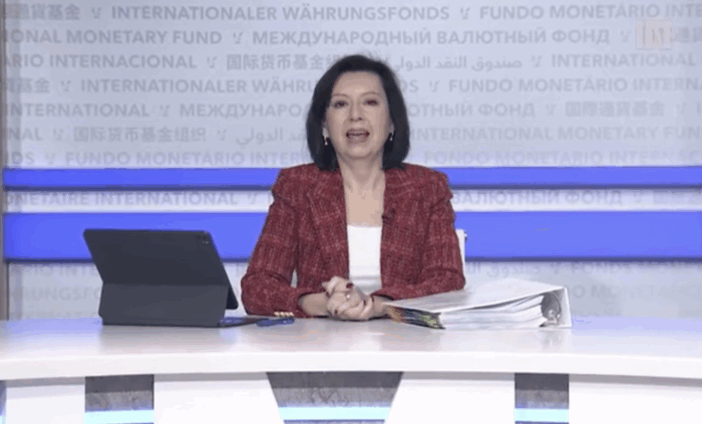
“We strongly recommend that the losses should be brought on the national balance sheet rather than being held on the balance sheet of the Central Bank,” Julie Kozack, Director of the Communications Department of the IMF, said on Thursday.
During a press briefing monitored, she called for transparency and strengthening of governance and risk management, especially for the Gold Board (GoldBod)- linked channel under the domestic gold purchase programme.
The IMF has said the country recorded US$214 million in losses through the end of quarter three, stemming from the artisanal and small-scale (ASM) doré gold transactions component of the Gold for Reserves programmes, including trading activities, fees, and exchange rate movements.
This has raised concerns, with the Governor of the Central Bank calling for a national response to address the losses and improve efficiency, while the government has taken on the costs incurred under the programme.
Ms Kozack explained that bringing the losses onto the national budget balance sheet was because “it’s important to ensure that the Bank of Ghana remains well-positioned to deliver on its key price stability mandates.”
“So, it’s about moving something that is quasi-fiscal onto the budget balance sheet. So, it’s transparent and ensures that the Bank of Ghana is able to deliver on its mandate,” she said.
She said the IMF Staff Report for the country’s Fifth Review showed that the G4R programme contributed to buildup of international reserves and reduced pressure on the foreign exchange market “during a difficult period for Ghana.”
Speaking about the performance of the country’s ongoing US$3 billion loan-supported programme, Ms Kozack said the Board approved a three-month extension to allow for sufficient time to complete the final review.
That included an assessment of data for the end of 2025 and the end of the first quarter of 2026.
Dr Johnson Pandit Asiama, the Governor of the Bank of Ghana, who appeared before Parliament’s Public Accounts Committee (PAC) on Monday, said the G4R programme remained relevant to the country.
“The scheme was introduced to solve national problems. The question now is how to reform it and make it more efficient,” he said, adding that the Bank had already reduced some charges and was pursuing additional reforms.
“The Gold for Reserves programme is still relevant. Its objective is to build reserves. Evidence shows that it is not a matter of shutting it down but rather enhancing efficiency and removing inefficiencies,” he said.
Latest Stories
-
He entered at eight. He is now 16: Ghana’s children growing up in prayer camps
44 minutes -
‘Development must not always begin from Accra’ — Anwelle Foundation launched in Jirapa
46 minutes -
PKO trio eye victories at Odwira Festival
3 hours -
346 Ghana Navy recruits pass out after 26 weeks of intensive training
3 hours -
Newsfile to discuss EOCO-MP arrest, drug trafficking, speech arrests and $235m water debt
4 hours -
JoyNews gets results as listeners raise GH¢40,000 to help 17-year-old student with cerebral palsy attend SHS
4 hours -
Vice President calls for stronger local pharmaceutical production to reduce medicine imports
5 hours -
The brewing tension at KNUST; Beware the Ides of October….
5 hours -
Health Ministry moves to integrate traditional medicine into mainstream healthcare
5 hours -
550 pupils in Kintampo South get educational lifeline as ‘Seeds of Hope’ reaches farming communities
6 hours -
Opoku Mensah urges Christian Council, House of Chiefs to speak up on democratic freedoms
6 hours -
Teacher unions’ strike: Minority demands immediate payment of teacher arrears, 20% deprived area allowance
6 hours -
The Accra-Kumasi Expressway: Building it right
6 hours -
Beyond gold exports: Building value and economic resilience from Ghana’s gold
6 hours -
2027 AFCONQ: Ghana under pressure as Gambia beat Somalia 2-1
7 hours