

Audio By Carbonatix
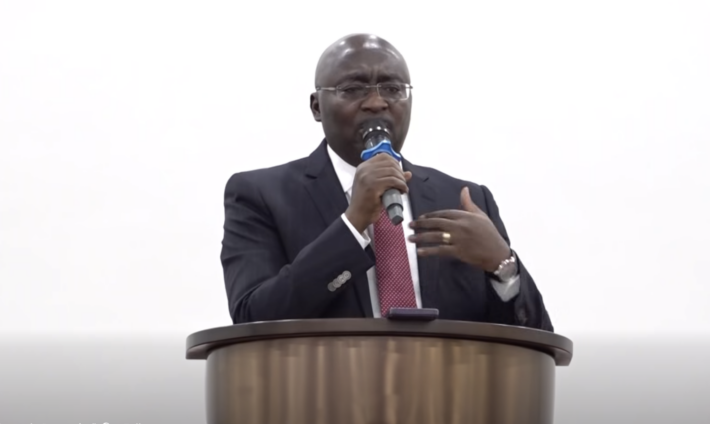
Flagbearer of the New Patriotic Party (NPP), Dr Mahamudu Bawumia, has credited Ghana’s Gold-for-Oil and Gold-for-Reserves programmes with helping to build the country’s foreign exchange reserves and stabilise the cedi.
According to him, the programmes enabled Ghana to acquire about $5 billion worth of gold within two years, strengthening the country’s reserve position at a time when access to foreign exchange was constrained.
Dr Bawumia said the idea for the gold reserves programme emerged in 2021, when Ghana had only about 8.7 tonnes of gold reserves, despite being Africa’s leading gold producer.
“Since independence to 2021, 65 years, we only had 8.7 tons. I said this cannot be right,” he said.
He explained that Ghana could leverage its domestic gold production by using cedis to purchase gold locally, rather than first having to generate foreign exchange to acquire the precious metal on international markets.
“We had bought about $5 billion worth of gold in just two years,” he stated.
IMF restriction
Dr Bawumia also linked the accumulation of reserves to the removal of an IMF-related restriction on the Bank of Ghana’s foreign exchange market interventions.
He said the Bank of Ghana had previously been restricted to a maximum intervention of $80 million per month.
“In January 2025, that restriction — because we had built up the foreign exchange reserves — was removed,” he said.
According to Dr Bawumia, the Bank of Ghana has since been able to intervene with significantly larger amounts.
“Since then, the Bank of Ghana has been able to put at least $1 billion a month into the market. From $80 million maximum to $1 billion a month,” he said.
Cedi appreciation
Dr Bawumia attributed the subsequent appreciation of the cedi to the increased supply of foreign exchange made possible by the stronger reserve position.
“What does economics tell you? When you have an increase in supply, what will happen to price? It comes down,” he said.
“There’s no rocket science to it. It is just simple demand and supply.”
He argued that the approach allowed Ghana to build reserves while creating greater capacity for the central bank to support the local currency when necessary.
“We have built a free market which allowed us to build reserves and then be able to put those reserves to support the currency,” he added.
The comments form part of Dr Bawumia’s defence of the economic policies implemented under the previous administration, particularly measures aimed at addressing Ghana’s foreign exchange constraints and strengthening the country’s reserve buffers.
Latest Stories
-
‘Nkoko Nketenkete’ boosts local poultry production from 4.6% to 22% in one year – Agric Minister
1 minute -
ARK Foundation boss warns against stigmatisation of abuse victims
8 minutes -
Health investment beginning to improve access to care – Akandoh
16 minutes -
“It is meaningless” – Parent laments as teachers’ strike leaves boarding school students idle
17 minutes -
Austin Gamey predicts possible end to teachers’ strike, urges better negotiation
20 minutes -
Mahama and Trade Minister champion local manufacturing during Ghato Foods visit
21 minutes -
Labour Minister, ILO Country Director strengthen partnership on decent work and jobs
21 minutes -
Approved vaccine to be rolled out in Upper West next week-GHS
25 minutes -
Trump wants to reduce the cost of fuel as the midterms loom – will it work?
27 minutes -
Fear, institutional bias and lack of support deter domestic abuse victims from reporting – Lawyer
28 minutes -
Yellow fever outbreak is under control – Health Minister
29 minutes -
Communication Minister Sam George called to the Bar
35 minutes -
Kenteman’s Kentemusic weaves ‘Kente Love’
36 minutes -
Former JoyNews journalist Richard Kwadwo Nyarko called to the Bar
55 minutes -
Chopmoney Bookkeeping seeks to simplify bookkeeping for Ghana’s small businesses
58 minutes