


Audio By Carbonatix
Campaigners are taking the government to court accusing it of failing to stop chicken manure polluting the River Wye.
The case has been brought by the charity River Action which says laws designed to keep waterways healthy have not been enforced.
The Wye last year had its status downgraded to "unfavourable" with some blaming the rapid expansion of chicken farming in the catchment area.
The Environment Agency said anyone breaking the law could be prosecuted.
The Wye flows along the English-Welsh border and is home to otters, kingfishers and the endangered Atlantic Salmon.
"We believe that the government and the Environment Agency, have acted unlawfully by deliberately not enforcing the critical regulation that, had it been in force, would have prevented the contamination of the Wye Catchment area," Charles Watson, the chair of River Action, told the BBC.
At the heart of the judicial review, which is being heard in Cardiff, are regulations known as the Farming Rules for Water.
Introduced in 2018 they state that farmers must make sure that fertiliser does not get into watercourses and that they should not put more on fields than is needed.
River Action say the Environment Agency deliberately ignored the rules under pressure from farmers, allowing them to apply excessive amounts of manure to fields, creating nutrient rich run-off that found its way into the River Wye and its tributaries.
The Environment Agency (EA) said it does not comment on ongoing legal proceedings but that "anyone caught breaching environmental laws faces enforcement action, up to and including prosecution".
The BBC has learnt that to date there have been no EA prosecutions in the Wye catchment for applying too much fertilisers to fields.
There are many different sources of pollution which have contributed to the decline of the Wye. Studies by Lancaster University have shown that 70% of the phosphate in the River Wye catchment comes from agriculture, but not all of that is chicken-related.
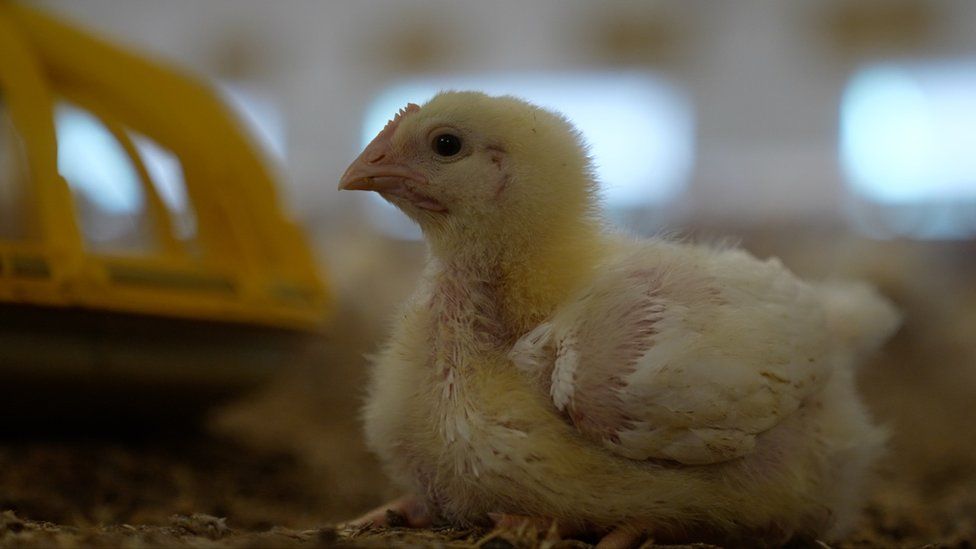
But the chicken industry in the Wye has seen the most dramatic expansion. More than 20 million chickens are now being raised in the catchment area at any one time - that's about a quarter of the UK's total production. And some have directly linked the expansion of chicken farming to the decline of the Wye.
Chicken manure contains high levels of nitrogen and phosphorus. It makes it a great fertiliser for crops, but when the nutrients reach waterways they can result in excessive growth of algae, starving the river of oxygen.
With chicken sheds producing huge amounts of manure, some farmers have been spreading it on fields as fertiliser. But if the ground cannot absorb it and it rains heavily, the nutrients can be washed into rivers and streams.
The National Farmers Union will also submit evidence at the court hearing. Its deputy president, Tom Bradshaw, says its important that laws are applied correctly and proportionately.
"Farmers and growers care about water quality in rivers and we continue to work hard, through a range of measures, to prevent valuable nutrients and soil that are crucial to our farming systems and producing food from contributing to water pollution." he said.
"The use of organic manures has always been at the heart of sustainable food production."
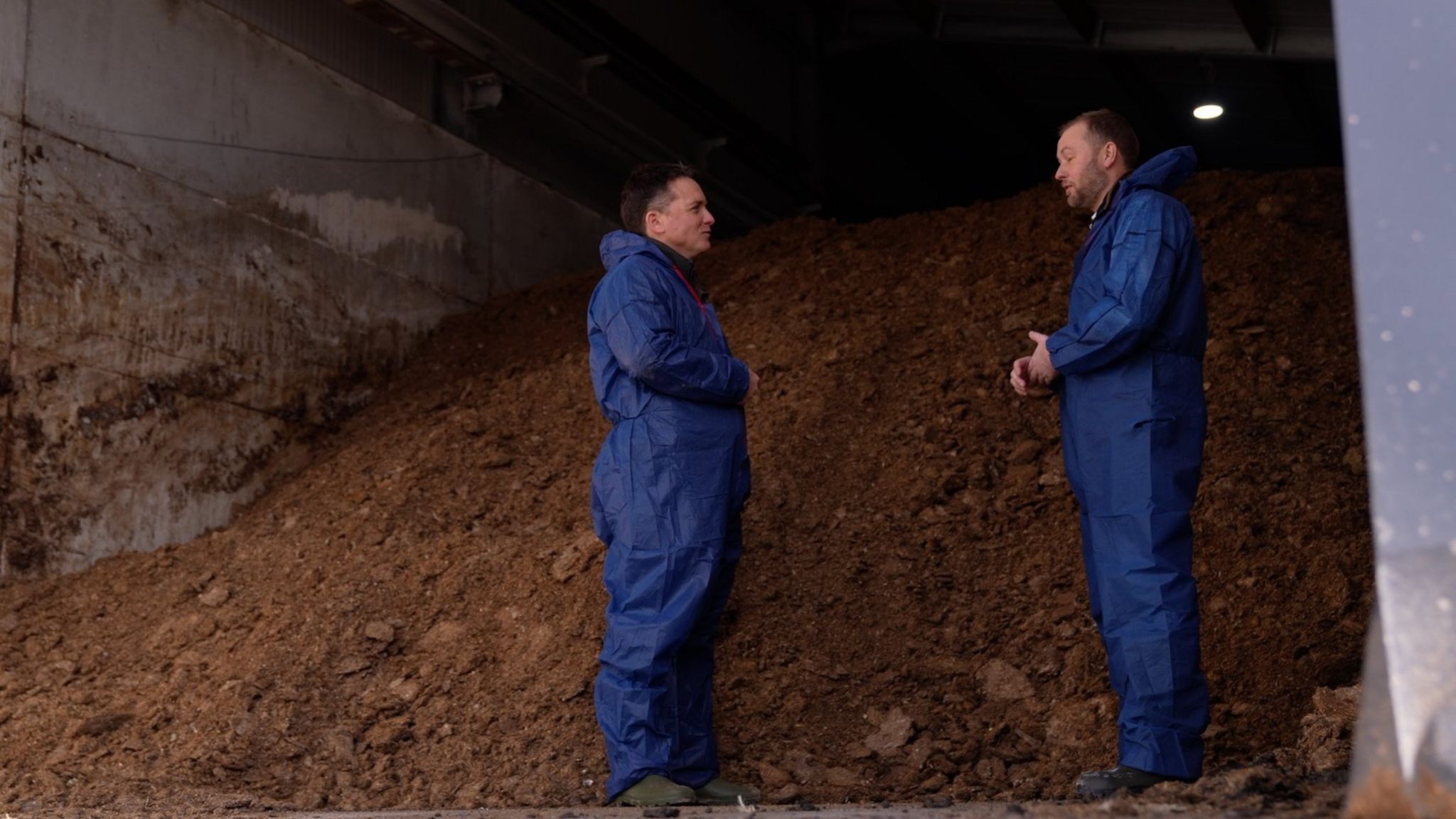
There are technical solutions but they come at a cost. Chicken farmer James Wright, a manager at Whittern Farms in Herefordshire, says they have invested in equipment that prevents pollution from manure.
"These chickens will produce about 40 tonnes of chicken poo," he says as he shows us around one of the sheds.
There are about 28,000 birds in the building, one of six on the property.
The chicks are delivered at a day old and have automated machines give them water and food. By about day 36 they should weigh more than 2kg and will be killed, packaged and sold for about five pounds in a supermarket.
"We give them the best life we possibly can," Mr Wright says. "We are providing a protein source for over 60 million people in this country and we've got to do it somehow affordably and sustainably."
Whittern Farms has installed £3m biomass boilers to deal with the more than 200 tonnes of chicken manure which it produces every six weeks. They burn the manure to heat the sheds while also making powdered fertiliser which they sell to other parts of the UK.
But Mr Wright says economics make it difficult for other chicken farmers to do the same.
"Chicken should definitely be more expensive," he says. "If the consumer was willing to pay an extra 10 to 20 pence for a chicken or an extra few pence for a chicken sandwich... that could be passed on down the chain to farmers and it would make a huge difference. It would pave the way for investment in technology like this."
Latest Stories
-
‘At the age of 12, I was teaching people and collecting money from them’ – Forty Under 40 Awards
40 minutes -
I broke my virginity at the age of 26 after university – Richard Abbey Jnr.
2 hours -
Sacked for fees, saved by faith: The untold story of Forty Under 40 Awards founder Richard Abbey Jnr
2 hours -
GCB Bank surges GH¢0.45, ETI gains GH¢0.06 as GSE ends week higher
3 hours -
Two teens jailed 55 years for robbery
3 hours -
UDS demands apology for MPhil student wrongly branded as Tamale robber
4 hours -
“We don’t sell fish!” – Tema Shipyard CEO hits back over dead fish discovery
5 hours -
Sam George defends anti-LGBTQ+ Bill as ‘national priority’ amid debate over gov’t focus
5 hours -
Artemis II astronauts safely back on Earth after trip around moon
5 hours -
Sam George unveils massive 1,150-cell site rollout to end network woes
6 hours -
This Saturday on Prime Insight: Fuel levy suspension, LGBTQ+ legislation, and Damang Mine controversy
6 hours -
Struggling Real suffer title blow with Girona draw
7 hours -
Mahama nominates Pamela Graham as Auditor-General
7 hours -
The five big sticking points in US-Iran talks
8 hours -
Melania Trump’s speech propels Epstein crisis back to forefront
9 hours