

Audio By Carbonatix
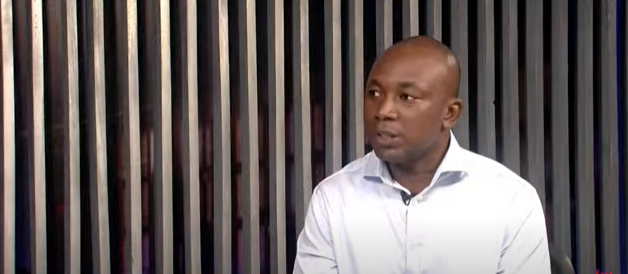
Economist, Professor Godfred Bokpin, says the International Monetary Fund (IMF) expects that Ghana’s negotiation team will engage in a transparent manner with them as the country’s domestic recovery plan is assessed for approval.
According to him, the IMF has already collected enough data to be able to pinpoint exactly what the problem is for the country, however, to avoid being blamed for government’s failure to fully and effectively implement an economic plan, it has delegated the drawing of the plan to the government.
He noted that if the government stays transparent and admits exactly where Ghana’s current fiscal problem stems from, it is likely the negotiation process for the IMF loan will be much shorter.
This means the government would be able to secure a deal, hopefully by the end of the year as has been projected.
Speaking on JoyNews’ PM Express Business Edition, he said, “I think it is more about what the country presents, and the country must go to the negotiation knowing very well that the IMF is not ignorant. They’ve been with us, they understand the issues, and more importantly because we just exited the 16th IMF programme and their latest report as honourable Seth Terkper said actually captures what the issues are.
“So what would shorten the negotiation would be more of transparency and full disclosure, and that is why the Fund will not impose a programme on us. Because it’s a bit more dangerous if the Fund imposes a programme on the country, so what it means is that if the programme doesn’t work, the blame goes to the Fund.
“But here, the Fund is asking you to make a diagnosis of the problem, how you see it. And sometimes too, when the Fund is asking you to make a diagnosis of the problem, the Fund is actually asking you to admit that the problem came from you, so that is important.”
Professor Bokpin stated that the government’s ability to make a proper diagnosis of the problem would inform the extent to which the government will be able to implement the programme at the close of negotiations, when the deal is approved.
“Because the programme will not be implemented by the IMF, it’s going to be implemented by we ourselves and that is why they call it Ghana government programme supported by the Fund. So transparency, full disclosure is very important.
“And we all know that there is a way that data speaks even if you don’t love the data, and for the IMF they’re driven by the data because data is their oxygen, and that is how they do it, it’s not only with respect to Ghana,” he said.
Latest Stories
-
Banks NPL ratio of 16.1% is still too high – S&P
21 minutes -
Guidelines, regulations of cryptocurrency in Ghana fall short of comprehensive oversight – IMF
55 minutes -
COCOBOD’S GH¢16.3bn SPV: Real progress toward a sustainable cocoa sector
1 hour -
Ghana lose Morocco friendly as Atlas Lions turn to Mali
3 hours -
Burnham ‘really concerned’ if Man City owners sell up after rule breaches
3 hours -
2026/2027 GPL: Kelvin Nkrumah strike sends Medeama top of league table
3 hours -
Punish Manchester City this season, say other club chiefs
3 hours -
Emmanuel City crowned champions of maiden Global Game Scouting Tournament
3 hours -
MPship should not shield anyone from arrest – Felix Ofosu-Kwakye
4 hours -
Thomas Partey loses father Jacob Teye Partey
4 hours -
Gov’t rejects Baffour Awuah ‘kidnap’ claims, says EOCO officer was lawfully executing arrest
4 hours -
Martin Kpebu explains when EOCO can arrest Manhyia South MP after securing court warrant
4 hours -
EOCO’s reasons for seeking Manhyia South MP arrest warrant not justified – Kpebu
4 hours -
MTN Ghana warns SMEs against sharing PINs amid digital fraud risks
4 hours -
Yendi nursing students warn restricted access to skills lab could affect their training
4 hours