

Audio By Carbonatix
The National Development Planning Commission (NDPC) has said it would ensure all Government projects and programmes go through cost-benefit analysis to safeguard crucial investments in the country’s infrastructure.
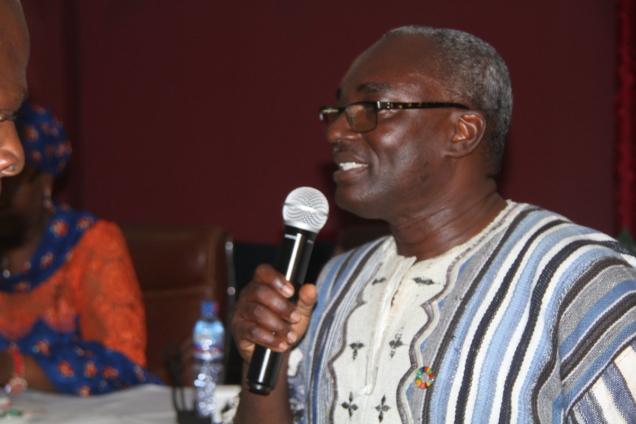
Dr Kodjo Mensah-Abrampa, the Director-General of the Commission said the analysis would enable government to assess whether projects and programmes were worth doing.
Dr Mensah-Abrampa who said this at a day’s workshop on the Ghana Priorities Project in Accra noted that cost-benefit analysis was being pursued within the framework of the Ghana Priorities Project, which was a collaboration between the NDPC and the Copenhagen Consensus Centre (CCC).
The aim of Ghana Priorities is to provide government and the international donor community with a systematic process to help prioritise the most effective policy solutions and help Ghana to accelerate the achievement of the National Development Agenda and Sustainable Development Goals (SDGs).
Its sole mission is to promote the use of data and cost-benefit analysis for policy decisions.
Dr Mensah-Abrampa said the NDPC received the findings of a research team consisting of renowned Ghanaian and international economists over the last 24 months, in collaboration with the Commission and the Ministry of Planning.
He said the team analysed the social, economic and developmental cost and benefits of about 80 policy interventions on health, education, agriculture, infrastructure and sanitation.
He said a forum for Eminent Technical Panel Discussion was to be organised for the presentation of the research documents by the researchers and reviewed by the technical panel.
He said passing every policy, key programme and project of government through cost benefits analysis would enable them assess their efficiency.
Dr Mensah-Abrampa said that would afford policy makers the opportunity to relate alternatives and make choices.
“In that sense, it makes it easier for the decision makers to take a decision promptly and wisely; backed by scientific reasons to make a choice,” the Director-General said.
Dr. Felix Addo-Yobo, Director, Development Policy NDPC, in his presentation dubbed, “Ghana Priorities – Our Journey, Our Results, The Way Forward”, said just like other countries, the scope of problems in Ghana exceeded resources available to address them; adding that “this requires hard choices about where to invest first.”
He said even if the country had more than enough resources, it could not do everything at a go and needed to prioritise.
Mr Addo-Yobo said the Ghana Priorities research project explored the smartest solutions to help Ghana, covering themes from poverty and health to education, infrastructure and gender equality.
Latest Stories
-
Top-Up Pharmacy wins Community Pharmacy Chain of the Year at 2026 PSGH Pharma Excellence Awards
7 seconds -
Nigeria military aircraft with 32 on board crashes
3 minutes -
Black Stars need a coach who can inspire players to perform – Ignatius Osei Fosu
4 minutes -
Revenue collector crushed to death on Kasoa-Winneba highway
8 minutes -
GPL Week 5: Stephen Amankona, 8 other outstanding players win NASCO awards
10 minutes -
NPP’s new leadership team has experience to deliver – Dr Asah-Asante
10 minutes -
Mahama committed to developing Volta Region – Chief of Staff
11 minutes -
NPP’s new leadership offers no renewal after ‘micro minority’ defeat – NDC’s Abeiku Hayford
13 minutes -
Blackstar Experience to hold fashion show and summit in November
13 minutes -
Prof Mike Oquaye backs Kojo Bamba’s call for stronger ballot protection
23 minutes -
If police won’t protect you, you’ll protect yourself – Prof Mike Oquaye backs Kojo Bamba’s election
24 minutes -
Spotify makes fandom the ticket with debut Surround Sound experience in Lagos
34 minutes -
Deputy Interior Minister calls for joint action to strengthen Ghana’s cybercrime response
44 minutes -
Gov’t announces plans to create 20,000 jobs in waste management, circular economy
49 minutes -
T-bills auction: Government exceeds target by 30%, but demand to remain relatively soft at next auction
51 minutes