

Audio By Carbonatix
A policy think tank, Centre for Policy Scrutiny (CPS), has called on the government to ensure fiscal discipline, institutional coherence and transparent costing in the implementation of the 24-Hour Economy and the Accelerated Export Development Programme.
The centre said policy accountability must guide every stage of the programme’s rollout to guarantee transparency, efficiency and value for money.
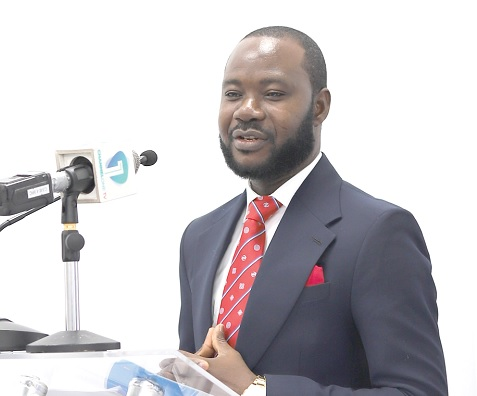
Presenting the findings of a review of the two major government policies at the CPS Office in Accra last Tuesday, a Senior Research Fellow at the CPS, Dr. Adu Owusu Sarkodie, said policy accountability should begin with fiscal transparency and the responsible management of public funds.
He explained that while the 24-Hour Economy and Accelerated Export Development Programme were ambitious and potentially transformative, their sustainability depended on disciplined financial planning and open reporting.
He said the review sought to provide an independent assessment of the programme’s design, fiscal implications and implementation prospects within the country’s current economic context.
24-Hour Economy
The initiative is expected to extend productive hours across key sectors of the economy to boost national output, stimulate industrial growth, create employment and expand exports.
The CPS, however, cautioned that the programme’s success would depend on fiscal prudence, coordination among implementing agencies and transparent reporting to ensure that it contributes meaningfully to national development without worsening the country’s debt situation.
Dr. Sarkodie expressed concern that the estimated $4 billion cost of the initiative might be understated, as it excluded indirect fiscal risks such as tax waivers, contingent liabilities and administrative expenses.
He cautioned that without fiscal discipline and accurate cost disclosure, the programme could exert additional pressure on the country’s budget and debt stock.
“The government must adopt transparent costing and open fiscal reporting to build credibility and prevent the policy from becoming another burden on public finances,” he said.
He urged the Ministry of Finance and implementing agencies to publish detailed cost breakdowns, funding sources and expenditure reports for public scrutiny.
“Accountability is not achieved by rhetoric but by opening up the numbers for Ghanaians to see how funds are used and what results are being achieved,” he emphasised.
Latest Stories
-
NPP’s new leadership offers no renewal after ‘micro minority’ defeat – NDC’s Abeiku Hayford
1 minute -
Blackstar Experience to hold fashion show and summit in November
1 minute -
Prof Mike Oquaye backs Kojo Bamba’s call for stronger ballot protection
11 minutes -
If police won’t protect you, you’ll protect yourself – Prof Mike Oquaye backs Kojo Bamba’s election
12 minutes -
Spotify makes fandom the ticket with debut Surround Sound experience in Lagos
22 minutes -
Deputy Interior Minister calls for joint action to strengthen Ghana’s cybercrime response
32 minutes -
Gov’t announces plans to create 20,000 jobs in waste management, circular economy
37 minutes -
T-bills auction: Government exceeds target by 30%, but demand to remain relatively soft at next auction
39 minutes -
Election Watch Ghana raises concern over low female representation in NPP leadership
45 minutes -
Four drinks that help manage blood sugar
46 minutes -
Ray Michael Djan Jr puts Ghanaian creativity on global stage with Chelsea anthem
55 minutes -
Matilda Dibloni Kokar elected USAG president after two-year dormancy
58 minutes -
NPP delegates wanted youthful energy with Kojo Bamba’s election – Political scientist
1 hour -
Zenith Bank supports Childhood Cancer Unit at Greater Accra Regional Hospital
1 hour -
KMA empowers 64 persons with disabilities; Mayor unveils plan for sustainable skills centre
1 hour