

Audio By Carbonatix
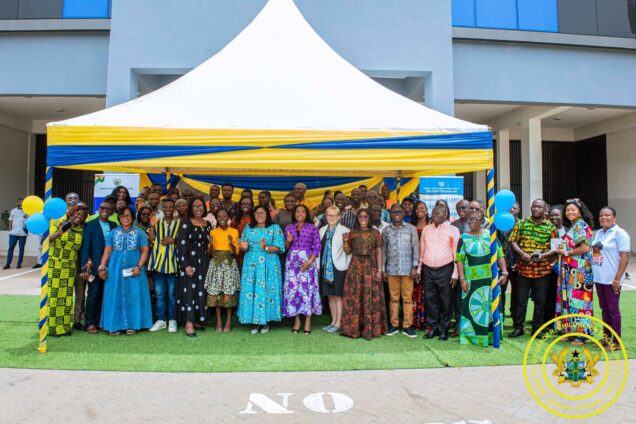
Government has officially commenced the enrolment of 400,000 newly eligible households onto the Livelihood Empowerment Against Poverty (LEAP) Programme, marking a significant expansion of the country’s social protection framework.
The initiative, led by the Ministry of Gender, Children and Social Protection, is aimed at extending support to more vulnerable populations nationwide.
Since its introduction in 2008, the LEAP Programme has grown substantially—from just 1,654 households across 21 districts to approximately 350,000 households prior to the latest reassessment.
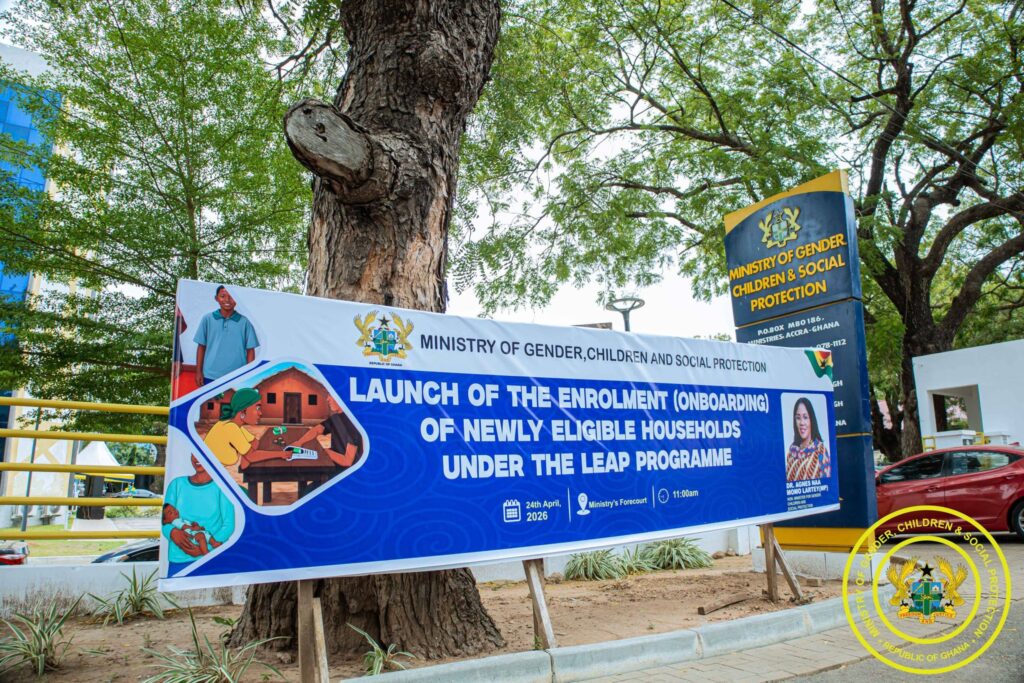
The scheme provides financial assistance to extremely poor households, including the elderly without support, persons with severe disabilities, orphans and vulnerable children, as well as pregnant women and mothers with infants.
The current onboarding follows a comprehensive nationwide reassessment conducted using the Ghana National Household Registry, designed to enhance targeting, transparency and efficiency.
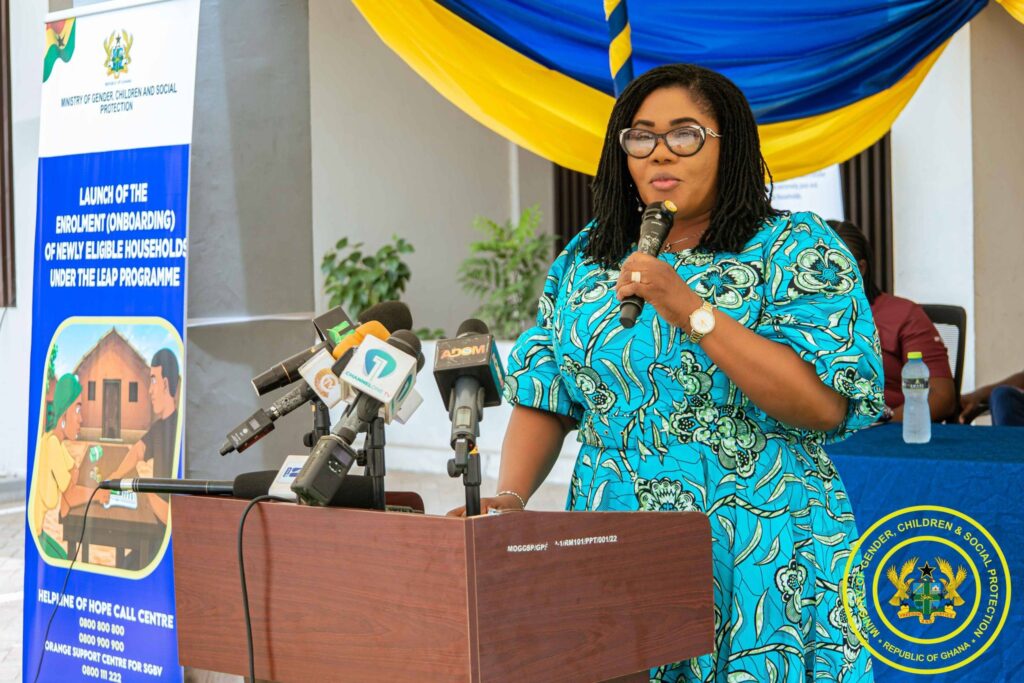
Speaking at the launch, the Minister for Gender, Children and Social Protection, Dr Agnes Naa Momo Lartey, described the exercise as a “clear statement of commitment, reform and hope,” highlighting the government’s resolve to build a more responsive and credible system.
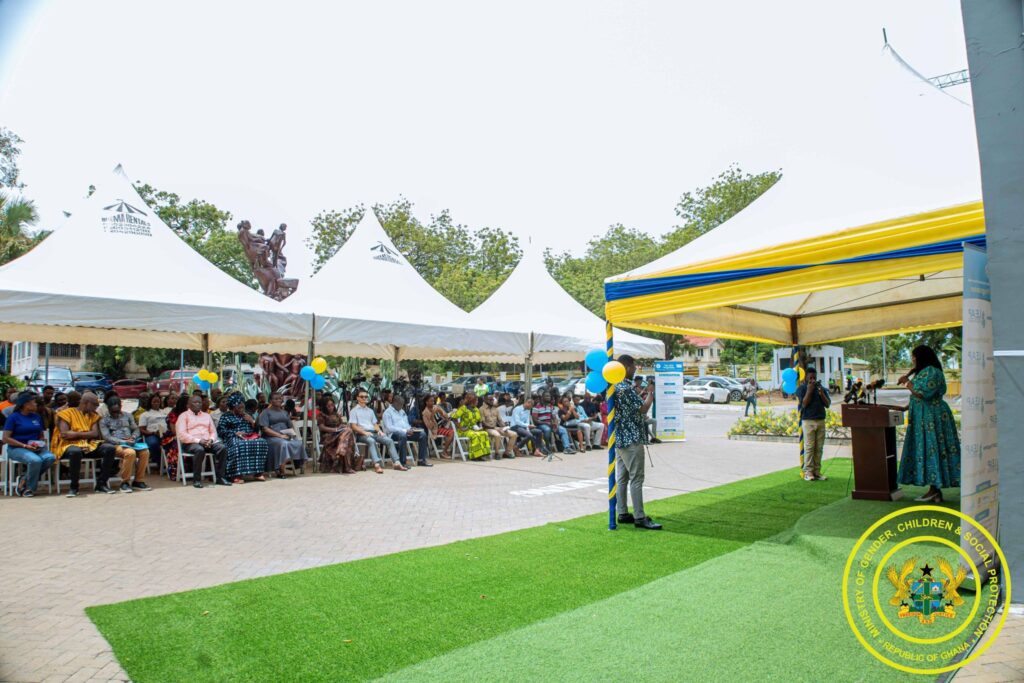
She explained that the reassessment reflects the changing nature of poverty, noting that while some households have been retained, over 220,000 others will exit the programme after meeting improvement benchmarks.
“Payments to new beneficiaries will begin only after the enrolment process is fully completed to ensure transparency and accountability,” she stated.

Dr Lartey further emphasised that the LEAP Programme continues to play a critical role in supporting access to education, healthcare and basic needs, adding that the latest expansion represents more than numbers—it signifies improved livelihoods and strengthened families.
She also outlined transition measures for exiting households, including access to livelihood support, financial literacy training and community savings schemes to promote long-term resilience.
Development partners, including the World Bank, UNICEF and the World Food Programme, commended the reforms and reaffirmed their support, while the Ministry reiterated its commitment to ensuring that no vulnerable Ghanaian is left behind.
Latest Stories
-
Trump says he is considering firing US ambassador to Greece
4 hours -
Man City bananas ‘brought fun back’, says Varadi
4 hours -
Meta releases Muse Wonder AI models to challenge Anthropic and OpenAI
4 hours -
Daily Insight for CEOs: The CEO as Chief Decision Maker
4 hours -
Burnham had formal meeting with Man City chair while mayor
5 hours -
Is Ghana producing too many lawyers? What is the best lawyer-to-citizen ratio?
5 hours -
NDC sinking Ghana’s democracy with Emelia Agbenyo’s appointment – Miracles Aboagye
5 hours -
Seedorf back in football as Corinthians head coach
5 hours -
Hincapié and Zubimendi injured in post-match training session
5 hours -
Fridges in French supermarkets hit by cyberattack
5 hours -
Qantas flight grounded after bedbug outbreak
6 hours -
Reality Zone with Vicky Wireko: International Day of the Girl, shaping today’s girl for tomorrow’s future – ZONTA Clubs lead the way
6 hours -
Global health must be led by countries, not designed for them – Mintah Akandoh
7 hours -
Mahama honoured at 2026 World Health Summit in Berlin for global health leadership
7 hours -
Breast cancer is not a death sentence – Besease Kontire Obaapanin, Magmina Foundation lead awareness campaign
7 hours