

Audio By Carbonatix
Ghana's academic landscape is set for a major cleanup, as the Ghana Tertiary Education Commission (GTEC) has outlined the next steps in its efforts to curb the widespread misuse of honorary titles.
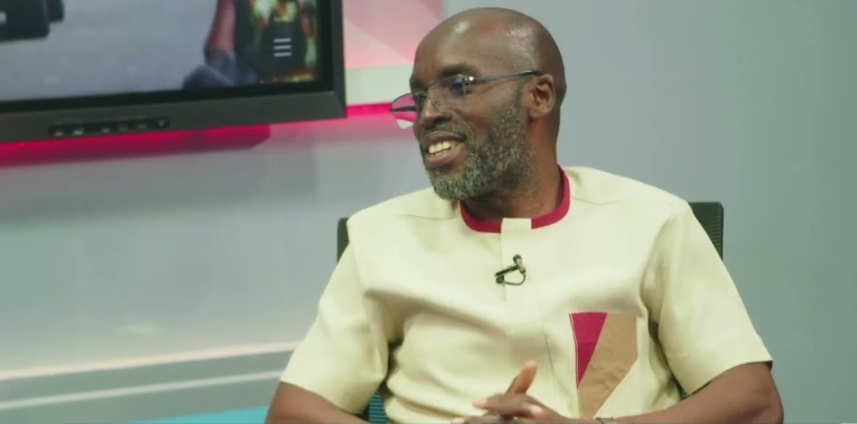
Professor Augustine Ocloo, Deputy Director-General of GTEC, has issued a stern warning, indicating that individuals misrepresenting unearned accolades face not only the revocation of their honours but also potential legal sanctions.
In an exclusive interview with MyJoyOnline, Professor Ocloo articulated GTEC's unwavering stance, clarifying that such titles are purely ceremonial recognitions, not earned academic qualifications.
GTEC, which was reconstituted around 2020 from the former National Accreditation Board (NAB) and National Commission for Tertiary Education (NCTE), has transitioned from periodic advisories to direct enforcement.
The Commission began issuing press releases on this matter in April and has since escalated to sending direct letters to individuals found in violation.
Professor Ocloo confirmed that punitive measures are now firmly on the table.
"Beyond that, we have other options. For instance, we can ask the institutions that confer these honorary degrees on people to revoke them. And then we also have legal areas that we can also pursue."
"These are not earned titles. So, they are just awards, recognitions," Professor Ocloo asserted.
While no prosecutions have been initiated yet, Professor Ocloo affirmed that GTEC is monitoring the space and will proceed with legal action at the appropriate time, urging Ghanaians to support the commission's efforts to safeguard the credibility of academic titles.
He emphasised that GTEC's aggressive crackdown is crucial to preserving the integrity of academic achievements in Ghana, which boasts over 70 recognised tertiary institutions, including 10-15 public universities offering advanced degrees.
Protecting academic merit from 'pay-for-title' culture
GTEC's renewed vigour stems from a growing concern that the proliferation of misused honorary titles devalues genuine academic pursuits, such as PhDs, which typically require 3-5 years of rigorous research and study.
"The argument here is that if we don't guard against the use of these titles, we would even demotivate hard-working citizens and individuals who want to generally, through their hard work, acquire these titles," Professor Ocloo explained.
He highlighted a disturbing trend where individuals might "pay a token or some kind, because they have money; they can go and maybe donate some money to an institution or even build a structure for an institution, and then they confer these titles on them. And then the next moment, they are called doctors all over the place."
This, he warned, risks "diluting that whole space."
Professor Ocloo stressed that international best practices universally dictate that honorary degrees do not confer the right to use academic titles as prefixes.
"All over the world, all over the world, honorary titles are no use. It's only Ghana and some other West African countries where titles have become so important to people that they want to find whatever means that they can to acquire it… Most people have five honorary degrees, you know, or honorary recognitions. Five of them. And they don't use the title. Because it's not something that you've earned."
The Deputy Director-General also flagged the alarming rise of degrees from unaccredited online programmes and even AI-generated certificates, making the regulatory task more urgent in the "AI era".
The GTEC is actively compiling a list of offenders, with Professor Ocloo indicating that they have identified "at least between 10 and 20" individuals in just the last two weeks, with daily reports of new cases.
Addressing concerns about targeting individuals, Professor Ocloo firmly stated, "We are not targeting any individual. We're just trying to clean that space. We want to clean it and be a country that has law-abiding citizens."
He added that the media, often inadvertently contributing to the problem by immediately attaching "Dr" to individuals receiving honorary degrees, would also be part of a broader public education campaign.
GTEC is also planning engagements with vice chancellors across the country to standardise the process, insisting that "any institution that is given this honorary title should clearly indicate in the citation that these are just awards. They are not certificates. And they don't qualify you to be called Dr so-and-so or Professor so-and-so."
Latest Stories
-
Chef Abbys: Feeding 50,000 people, putting food security on Ghana’s agenda
2 minutes -
Ho set to host Republic Bank–JoyNews Habitat Fair as multiple firms prepare to showcase housing solutions
9 minutes -
NPP demands public inquiry into alleged $600,000 World Cup visa fraud, wants Sports Minister, GTA CEO summoned
16 minutes -
I want my brand to be bigger than just music – Yaw Wazinga
20 minutes -
Houthi missile attack on Yemeni presidential palace kills two, minister says
20 minutes -
I hoped to win an award; I worked hard – 2026 Best Graduating Law Student
30 minutes -
Fraudsters increasingly target bank customers instead of banking systems – Fraud detection expert
31 minutes -
44 teacher sexual abuse cases tracked since 2015; school heads feature in 40% of recent cases — JoyNews Research
34 minutes -
Unchecked imports and the Middle East crisis threaten Ghana’s fragile food inflation anchor
52 minutes -
Ecobank Junior Saver Big Pitch to reward 10 winners with GH¢2,000 each
57 minutes -
AMA demolishes unauthorised pigsty obstructing Agbogbloshie waste evacuation exercise
57 minutes -
I was filled with disbelief – Akosua Achia Sarpong Esq. shares her first reaction
58 minutes -
Snake Village: A look at Volta Region’s hidden snake village and its tourism potential (Video)
1 hour -
Election Watch Ghana calls for constitutional reforms to strengthen Electoral Commission independence
1 hour -
NACOC, Postal and Courier Services Regulatory Commission intensify efforts to curb drug trafficking
1 hour