

Audio By Carbonatix
The Board of Ghana Water Limited (GWL) has assured of expanding water connectivity to some parts of Wa in the Upper West Region to ensure an even distribution of potable drinking water to reduce the over-reliance of people on untreated water sources.
It assured the management of the GWL in the region that it would facilitate the procurement of pipes next year to enable the extension of water to some parts of Wa that currently have no water connection.
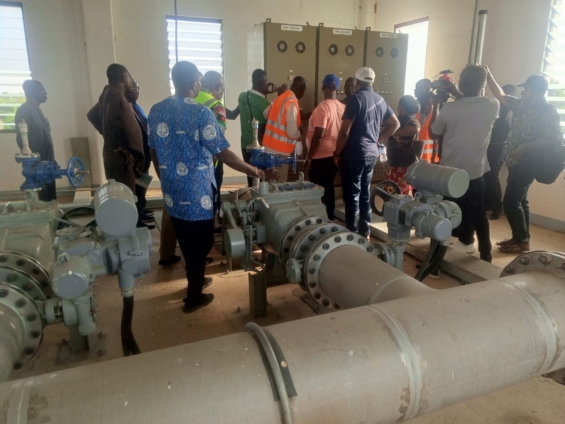
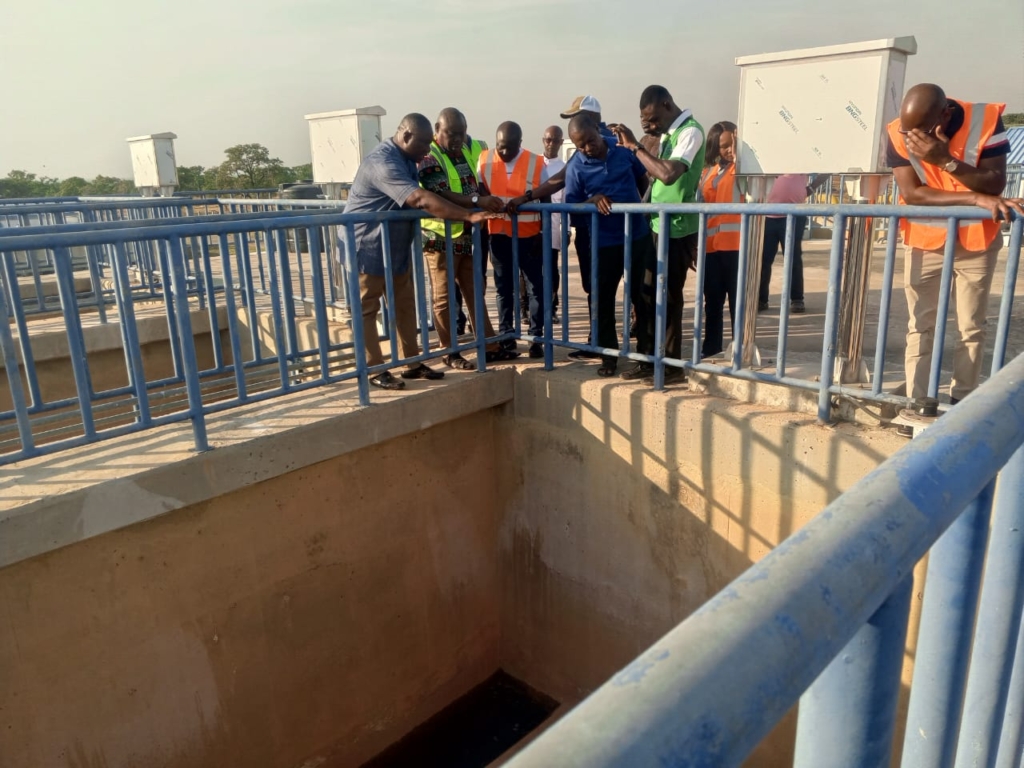
The Board Chairperson of GWL, Adamu Billiguo, gave the assurance during a visit to the GWL treatment plant at Jambissie community along the Black Volta River in the Wa West District.
He said it was economically unwise that the facility would be under-utilised while people in Wa still struggled to dig boreholes and draw water from sources that were not well treated.
He added that the Board would also engage management of the GWL in the region to provide at least three standpipes in communities along the Wa-Jambusie road.
“It doesn't make economic sense for us to have water running through these villages, yet they are struggling for day-to-day portable water,” Mr Billiguo indicated.
The Station Manager at the Jambussie Wa Treatment Plant, Alhassan Ali, who conducted the team around the facility, revealed that the plant currently operates at about 40 per cent of its 15,000-cubic-metre-per-day capacity.
However, Mr. Billiguo noted that the planned expansion would boost the plant’s operational capacity from the current 40 per cent to approximately 60 per cent.
He explained that the water connectivity in Wa was very low and required more pipes to connect the water to the outskirts of the town.
Mr Billiguo also expressed concern that the facility was not well-protected and that the Board would engage the GWL management to put in measures to protect it with good surveillance.
The GWL Board Chairperson also indicated that they would engage the Wa West Member of Parliament and other appropriate authorities towards improving the condition of the road leading from Wa to the water plant at Jambussie.
The Board also engaged with the staff and Management of GWL in the Upper West Region to enable them to appreciate their challenges and discuss how to address those challenges.
On his part, Mr Alhassan Ali observed that the activities of illegal mining in the region currently had no impact on the water quality at the treatment plant.
He said the Black Volta River, where they sourced water for production, had a turbidity of about 58 NTU on normal days, but increased to about 1000 NTU during the onset of the rainy season due to surface run-off.
Latest Stories
-
Livestream: The Law examines lawful arrest in Ghana
8 minutes -
Mahama urges African governments to treat healthcare as an investment, not budget cost
43 minutes -
Bawumia congratulates John Boadu and new NPP executives, pledges support ahead of 2028
45 minutes -
‘No talent should be left out’ – Bawumia pledges inclusive NPP campaign for 2028
50 minutes -
Prof. Mike Oquaye recounts how he blocked Special Prosecutor’s attempt to arrest Bawku Central MP
1 hour -
Make health sovereignty a priority for Africa – Mahama
1 hour -
Dorimon Naa, Wa West DCE lead massive clean-up exercise; threaten sanctions against recalcitrant residents
2 hours -
Photos from Adom FM Y2K Jam
2 hours -
Praye Tiatia steals the show at Adom FM Y2K Jam [Watch]
2 hours -
Boakye Agyarko congratulates John Boadu, pledges support for NPP leadership
2 hours -
Antwi HiMight thrills fans with Antwi ne Antwi hits at Adom FM’s Y2K Jam [Video]
2 hours -
Amb. Edward Boateng congratulates Boadu, Kodua on election wins
3 hours -
John Boadu pledges to rebuild NPP from grassroots and restore ‘winning machinery’
3 hours -
Ashaiman Assembly deploys monitoring system to curb dumping in storm drain
3 hours -
John Boadu must rebuild, unite NPP for 2028 – Edward Boateng
3 hours