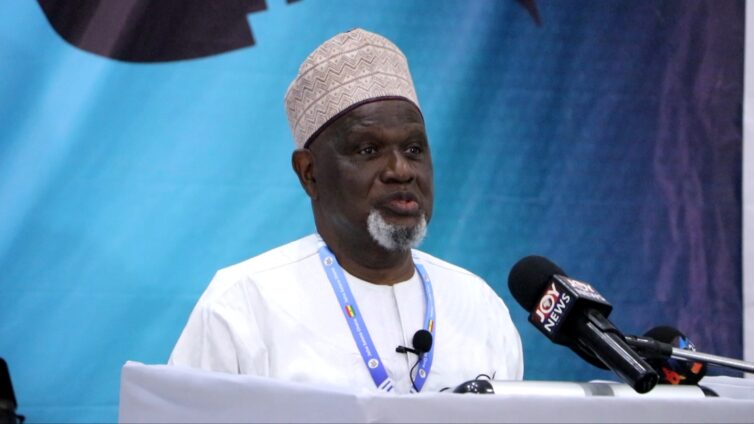
The Ameer and Missionary-in-Charge of the Ahmadiyya Muslim Mission Ghana, Alhaji Maulvi Noor Mohammed Bin Salih, has cautioned Ghanaians against allowing religious differences to threaten the peace and stability of the country, warning that religious conflicts could be more devastating than partisan political disagreements.
He said although partisan politics was not inherently harmful, the growing tendency to turn political and religious differences into hostility posed a serious threat to Ghana’s unity and peaceful coexistence.
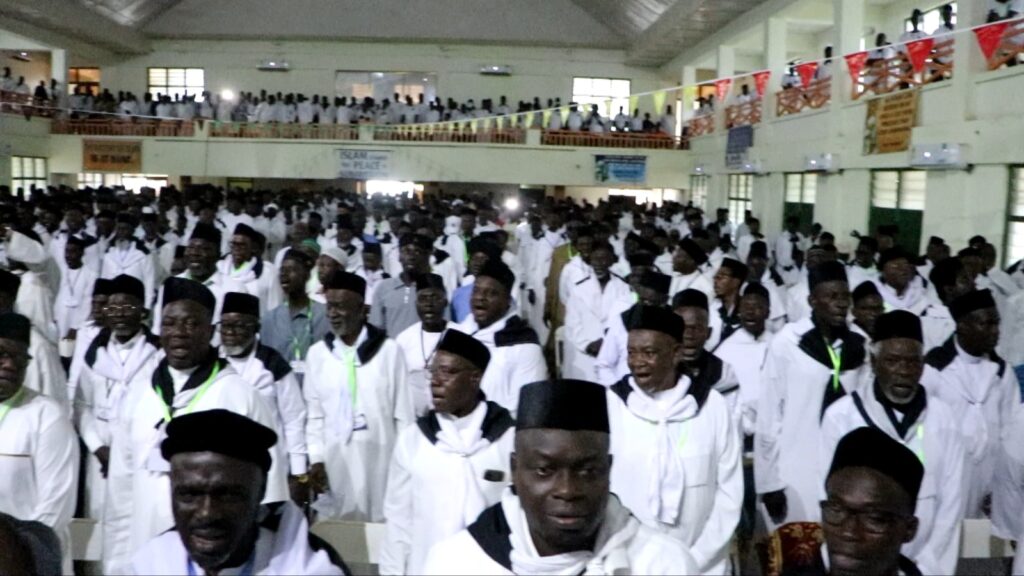
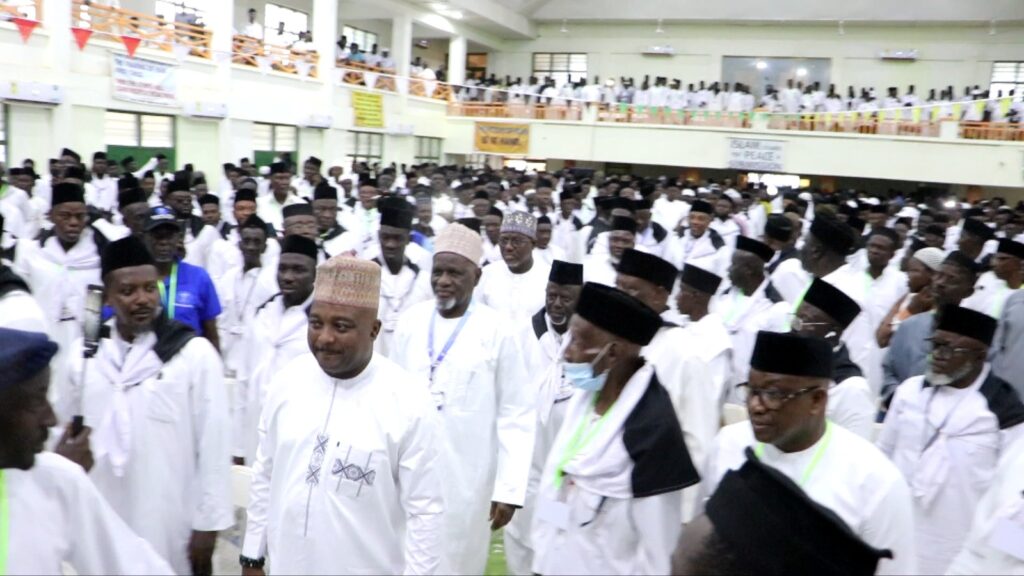
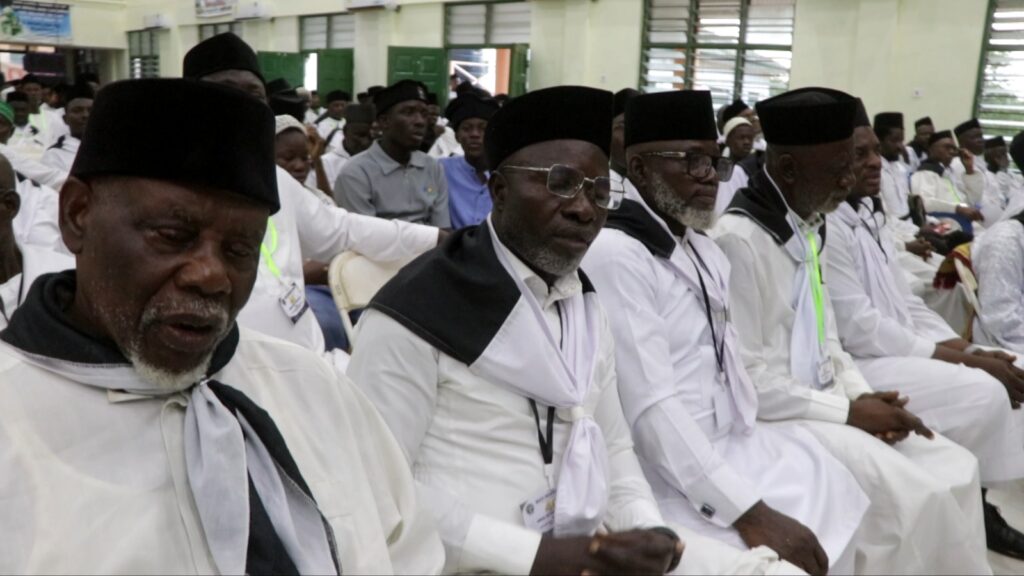
Alhaji Bin Salih was speaking at the Majlis Ansarullah (Elders) held at Nasrat Jahan, Wa, in the Upper West Region, on the theme: “Upholding Moral Excellence in the Digital Age: The Role of Ansarullah.”
The convention brought together elders of the Ahmadiyya Muslim Community from across Ghana, as well as international delegates from Nigeria, Benin and Burkina Faso. A Catholic priest was also present.
Morality and nation-building
Touching on the theme, the Ameer delivered a philosophical lecture on the meaning of morality and its importance to national development.
He explained that being religious did not automatically make a person moral, stressing that morality involved conscious decisions and actions aimed at promoting good.
“To be a moral being does not necessarily mean being a religious being. You can be a moral being and yet not religious,” he stated.
He used the example of mentally deranged mothers in Accra who continued to breastfeed their crying babies to distinguish between natural behaviour and conscious moral action.
“This act of the mother is a natural act, not a moral one. Moral acts are conscious acts, deliberate acts,” he explained.
According to him, morality involved harnessing the faculties given by God to promote the well-being of individuals and society, and that process began from the home.
“Morality starts from the feet of each individual. From the father and mother who exhibit morality, it is passed to their children,” he said.
The Ameer charged Ghanaians to ensure that their actions contributed to the peace, stability and progress of the country.
Quoting the Holy Prophet Muhammad, he said, "Hubbul Watan Minal Iman — Patriotism is part of faith.”
“Anything less than that doesn't make any one of us a patriot,” he stressed.
He reminded Ghanaians that the country had been handed down by previous generations as a peaceful, loving and united nation and that the present generation had a responsibility to preserve that legacy for its children and grandchildren.
“On the Day of Judgement, we will have questions that will demand answers from the children we leave behind. And even our predecessors will ask us, why did you do that with that peaceful country we left behind for you?”
‘Religious wars more devastating’
The Ameer defended the concept of partisan politics, saying political parties provided a mechanism for choosing representatives to manage the collective affairs of the country.
“There is nothing wrong with partisan politics. Partisan politics is a means by which we get the best representatives out of us and entrust them with our collective trust, to be held for and on behalf of all of us. What is bad in this?” he quizzed.
He, however, expressed concern that political differences had increasingly been interpreted in ways that put Ghanaians at odds with one another.
He said the situation had become even more worrying with what he described as the emergence of “drums of war” from religious circles.
“We've since held our elections, and we've put a government in place. So the politicians have somehow given us some little space to breathe. But before we could say Jack, we'd started hearing drums of war from religious circles,” he said.
He warned that religious conflicts could have devastating consequences for communities and nations.
“There is nothing in this world that is more devastating to the peace and peaceful coexistence of human society more than religious wars. Religion misapplied can undo a whole community, a whole nation, the whole of mankind.”
The Ameer questioned what could have changed in Ghana’s religious landscape to make people turn against one another.
“Are we the ones who invented the religions that we have in this country today? What have we added to the very religions that our founding fathers left behind that is better than them?”
Nkrumah’s integration model
Alhaji Bin Salih praised Ghana’s first President, Dr Kwame Nkrumah, for policies that promoted national integration, particularly the establishment of institutions such as Achimota School.
He said boarding schools created opportunities for children from different social, ethnic and geographical backgrounds to live and learn together.
“The poor man's son and daughter and the rich man's son and daughter find themselves together in a dormitory. The northerner finds himself in a dormitory with the southerner at Achimota School, and they interact, they get to know each other better. They develop as Ghanaians to develop our country Ghana,” he recalled.
He urged members of the Ahmadiyya Muslim Community not to underestimate their influence because of their relatively small numerical strength.
“Quality is where the weight comes from. Inferior as we are numerically compared to other religious bodies, yet we can bring about a moral revolution in this country if we put our act together,” he charged.
Call for religious tolerance
The Ameer also urged Ahmadi Muslims to respond to provocation with restraint and never resort to insults, even when the Holy Prophet Muhammad was insulted.
“You cannot defend the Holy Prophet Muhammad. Even the Almighty God who sent him watched on when the Holy Prophet was insulted, vilified in his own lifetime,” he said.
He recalled instances from the life of the Prophet, including the persecution he suffered in Ta’if, where he was reportedly stoned, but declined an offer from an angel to punish the people responsible.
“Even in Ta'if when he was stoned mercilessly and the angel appeared asking to assist him to punish them, he said, No, don't do that. If you do that, who will worship God tomorrow? He said these very people and their children will worship God tomorrow.”
He also cited the Prophet’s response after the Conquest of Makkah as an example of forgiveness and reconciliation.
“When Makka fell, what was his message? 'La Tathriba Alaykumul Yaum' — No blame on you today. Those of you who think we will retaliate for atrocities you carried out against us, forget it. Nothing like that will happen. You are free.”
He said the message of forgiveness and tolerance remained relevant to Ghana.
The Ameer noted that religious coexistence had long been part of Ghanaian society, with Muslims and Christians often living within the same families and communities.
He questioned why that longstanding relationship should now be threatened by religious divisions.
‘If Ghana fails, we have failed’
In his closing remarks, Alhaji Bin Salih thanked delegates from Nigeria, Benin, Burkina Faso and various parts of Ghana for attending the gathering despite the challenges of travelling to Wa.
He reminded the elders of their responsibility to contribute to the development and stability of the country.
“We must know that we have a mission for this country. The future of this country is in our hands. If the country fails, we sitting down here are the ones who have failed the country.”
He added:
“We are elders of the Ahmadiyya Muslim Community. Our wives, our children, our grandchildren — we are their leaders. If we get the message right, the message will go to everybody.”
DISCLAIMER: The Views, Comments, Opinions, Contributions and Statements made by Readers and Contributors on this platform do not necessarily represent the views or policy of Multimedia Group Limited.
DISCLAIMER: The Views, Comments, Opinions, Contributions and Statements made by Readers and Contributors on this platform do not necessarily represent the views or policy of Multimedia Group Limited.