

Audio By Carbonatix
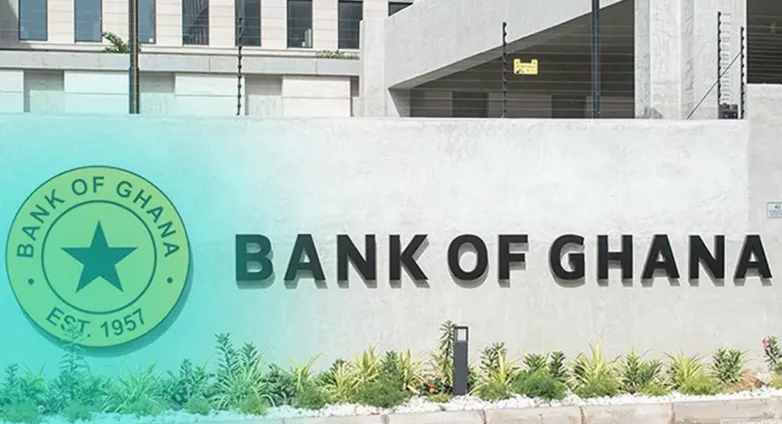
The Bank of Ghana’s aggressive inflation fight and efforts to stabilise the cedi are contributing significantly to its mounting financial losses, according to a new analysis by the Centre for Economic Research and Policy Analysis (CERPA).
The think tank says the central bank’s reliance on tight monetary policy tools—such as high interest rates and liquidity management operations—has come with “substantial financial costs” that are now reflected in its worsening balance sheet.
In its latest policy brief, CERPA noted that while these measures have helped in managing inflation and exchange rate pressures, they have also increased the Bank of Ghana’s operational losses.
“To manage inflation and exchange rate pressures, the Bank of Ghana has relied heavily on open market operations, central bank bills, and high policy rate transmission,” the report stated.
The analysis comes at a time when concerns are mounting over the central bank’s financial health, following reports of significant losses in recent years linked to macroeconomic stabilisation efforts.
According to CERPA, the high-interest-rate environment has sharply increased the cost of sterilising excess liquidity in the financial system. These operations—used to control money supply and curb inflation—have become more expensive as interest rates remain elevated.
At the same time, the depreciation of the cedi is compounding the problem. CERPA explains that a weaker currency increases the local value of the Bank of Ghana’s foreign liabilities, leading to revaluation losses.
“Depreciation of the Ghanaian cedi increases the domestic currency value of foreign liabilities,” the brief noted, adding that exchange rate volatility in 2025 likely worsened the central bank’s external position.
The situation presents what CERPA describes as a difficult policy trade-off: while tight monetary policy is necessary to stabilise inflation and restore confidence in the economy, it also deepens the central bank’s financial strain.
“This trade-off must be managed carefully to avoid undermining confidence in monetary policy,” the think tank cautioned.
Beyond monetary policy operations, CERPA also raised concerns about quasi-fiscal interventions such as the Gold-for-Oil and Gold-for-Reserves programmes. It argues that these initiatives, while aimed at stabilising fuel prices and foreign exchange reserves, extend beyond the Bank of Ghana’s core mandate.
The think tank is therefore urging a policy rethink, recommending that the government gradually assumes responsibility for such non-core functions.
It further calls for the central bank to refocus strictly on its primary mandate of price stability, warning that continued exposure to non-traditional operations could further weaken its financial position.
Latest Stories
-
Walter Mosley visits W.E.B. Du Bois Centre in Accra: A New York Secretary’s homecoming story on where Du Bois spent his final years.
26 minutes -
MTN set to deploy 5G services after winning spectrum licenses worth US$202m
3 hours -
NPP national elections: 3,000–4,000 police to handle security, traffic in Kumasi – Karbo
5 hours -
Atta Akyea fumes as Manhyia MP is to spend another night in EOCO custody
5 hours -
SSNIT says La Beach clearance was to protect hotel investments, beaches to remain public
6 hours -
APSU congratulates St Augustine’s College after back-to-back National Investment Quiz wins
6 hours -
Renewed flood intervention at Mallam Junction raises hopes among residents, businesses
7 hours -
St Augustine’s College retain National Investment Quiz title after nail-biting grand finale
7 hours -
Education infrastructure investment will drive Banda’s development – Ahmed Ibrahim
7 hours -
Teacher unions strike: Gov’t presents fresh proposals as talks end inconclusively
8 hours -
51,000 teachers’ promotion arrears to be validated for October payment – Education Minister
8 hours -
Kwabena Boamah appointed Board Chair for Impact Investing Ghana
8 hours -
Striking teacher unions to meet Fair Wages and Salaries Commission on October 6
9 hours -
EOCO working with AG to arraign Nana Baffour Awuah before weekend court
9 hours -
Duraplast reassures customers after fire, announces October 5 reopening
9 hours