

Audio By Carbonatix
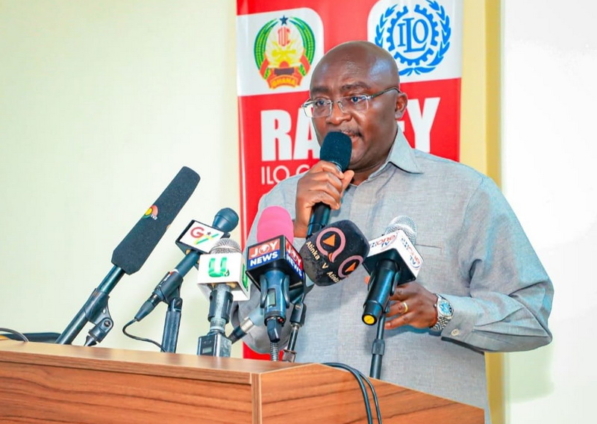
The 2024 flagbearer of the governing New Patriotic Party (NPP), Dr Mahamudu Bawumia, has pledged to realign government expenditure to prioritise the private sector as a key driver of growth if he is elected president.
This strategic shift aims to foster economic development by leveraging the potential of private enterprises.
As Vice President and Head of the Economic Management Team (EMT), Dr Bawumia highlighted the challenges posed by excessive government borrowing to fund projects.
He noted that such borrowing exerts significant pressure on the country's fiscal stability and adversely affects key micro-economic indicators.
Dr Bawumia shared these insights during a meeting with the leadership of the Labour Union Forum in Accra on Wednesday.
He underscored the importance of addressing the macroeconomic issues to prevent negative repercussions on the micro-economic level.
Emphasising the global implications of economic mismanagement, Dr Bawumia stressed that unresolved macroeconomic challenges inevitably trickle down to impact everyday economic conditions.
His proposed focus on the private sector is designed to create a more resilient and robust economy, capable of withstanding both domestic and international pressures.
“So, when I talk about the government, how it’d reduce the cost of living and create space as far as the fiscal is concerned is very key."
“One of the things that we have done over the years is that the size of government has grown. Some people say it has grown too large but it has grown and the government seems to want to do so much in the economic space, build all the roads, build all the hospitals and everything. In so doing, there is a burden that comes on the government and government is therefore in the process looking to either increase taxes or increase borrowing to do that."
“One of the key things I want to bring about is essentially to realign the government expenditure and bring a part of it towards the private sector,"he said.
Dr Bawumia further remarked that the nation has the capacity to deliver numerous services without resorting to significant increases in government spending.
“The more government expenditure we increase, ultimately we have to tax more or borrow more and when we have to do that, we create less space to increase the condition of service of workers.
“If you have to spend a lot of resources on paying interest on loans and so on, you end up with less that is available for the people who are doing the work,” he added.
Latest Stories
-
Wealth Over Water: How Galamsey Is Threatening Ghana’s Water Security
16 minutes -
LA 2028: Black Queens pumped up for second leg of Mauritius tie
23 minutes -
LA 2028: Black Queens hold final training session ahead of second leg against Mauritius
57 minutes -
Standards are not Seasonal: What the EC appointments teach both sides
1 hour -
King Mohammed VI urges private sector to create youth jobs and spread benefits of growth
1 hour -
KGL U17 Colts 2026: Greater Accra win title after penalties win over Western Region
1 hour -
UK Investment Roadshow opens in London to advance UK-Ghana growth partnership
1 hour -
Assemblies of God requires pastors to resign before entering partisan politics – Rev. Wengam
2 hours -
Ghana targets 20% annual reduction in maternal deaths – Health Minister
2 hours -
Cyber attacks in Africa grow faster than global rate, report finds
2 hours -
Ghana signs UAE deal to create 5,000 overseas jobs
2 hours -
One Million Coders Programme targets 100,000 digital jobs in two years – Sam George
2 hours -
John Jinapor, Italian Ambassador explore opportunities for energy sector investment
2 hours -
NHIA seeks legal reforms to support Free Primary Healthcare
2 hours -
Beatrice Annan defends Afi Agbenyo’s EC appointment, cites record of gender advocacy
2 hours