

Audio By Carbonatix
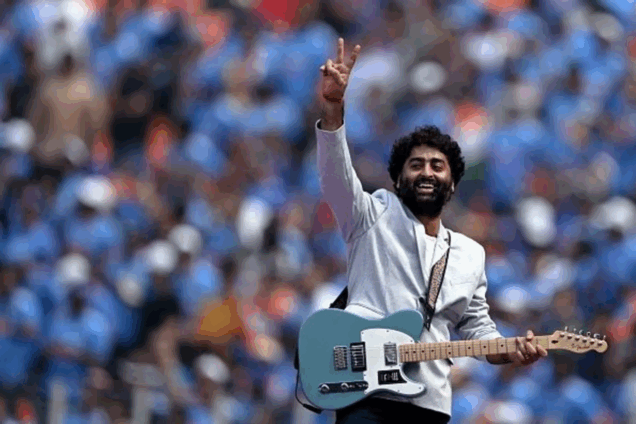
Heartbroken fans of renowned Indian singer Arijit Singh have been paying tribute to him after he announced he would no longer take on new playback assignments, marking the end of a defining chapter in contemporary Bollywood music.
Some described his voice as "the sound of our heartbreaks and celebrations", while others called it "a presence in every corner of our lives".
In Indian cinema, playback singing refers to studio recordings of songs that actors lip‑sync on screen - a bedrock of Bollywood storytelling.
Singh's voice became inseparable from that tradition, providing vocals for romantic ballads and chart‑topping soundtracks in recent years.
The 38-year-old, who has collaborated with global pop icons like Ed Sheeran, announced it on Instagram on Tuesday.
"I am calling it off. It was a wonderful journey," he said.
Fans then flooded social media with posts reflecting on how his songs, which consistently topped the charts, had become part of India's cultural soundtrack.
Singh did not explain why he was quitting playback singing, but reports say he will finish existing commitments and projects and continue making music independently, exploring creative projects beyond commercial cinema.
The decision is unusually bold for a singer at the peak of his career.
Singh recently performed to a sold-out crowd at Wembley Arena in London, a milestone few Indian playback singers achieve. His voice - bruised, buttery and intimate - has been an inescapable undercurrent of Bollywood, narrating heartbreaks, longings and reconciliations for millions for more than a decade.
Yet, even at the height of fame, he chooses to remain on the margins of celebrity culture, visibly ambivalent about his own success.
He rarely gives interviews, avoids publicity stunts and appears in public dressed like someone you might miss entirely: soft-spoken, his face concealed in a hoodie. "I hate being a celebrity," he told Forbes India in an early interview, describing himself as someone who stumbled into fame by accident.

Singh was born in 1987 in Jiagang, a small town in West Bengal, into a household where music was not an aspiration but a daily practice that permeated every aspect of life.
His mother and grandmother were trained classical singers, and his aunt also taught music. Classical training came early - he learnt tabla alongside vocal training - but so did exposure to popular music.
Singh's first teacher, Birendra Prasad Hazari, recalled him as a toddler at the local music school, eyes fixed on the harmonium before he could even pronounce the notes. Hazari told the Indian newspaper The Telegraph he had "never come across a singer as talented", noting the boy's rapid progression from early raga lessons to the voice the world would later know.
Singh's first brush with national attention came in 2005 when he appeared on the reality singing show, Fame Gurukul (Fame Academy). He did not win, and his presence barely registered. But the setback, in some ways, proved formative.
Singh returned to Kolkata, West Bengal, where he worked as a music programmer and assistant, gaining studio experience. For several years, he existed on the margins of the industry he would later dominate.
When recognition finally arrived, it did so with unusual force. In 2013, Singh sang Tum Hi Ho for the film Aashiqui 2. The song was released at a time when Bollywood's romantic music leaned toward scale and spectacle. Singh's voice - inward and raw - had the opposite effect, reintroducing vulnerability to Bollywood audiences as an acceptable emotion.
The song became so popular it outgrew the film to become a national obsession. It was everywhere, flooding radio, weddings and reality shows, the slowbuild, aching notes articulating romantic devotion that felt cinematic yet intensely personal. For months, it felt difficult to move through cities and towns without encountering it.

What followed was a period of extraordinary success. Overnight, Singh became Bollywood's most relatable voice, recording across many languages - Hindi, Bengali, Tamil and Telugu - and sometimes singing multiple songs in a single film. He collaborated repeatedly with leading composers, including Pritam, AR Rahman, Vishal–Shekhar and Amit Trivedi.
Singh appeared uncomfortable with the fame that followed and shunned media attention, often skipping award ceremonies.
On stage, too, he remained informal. At concerts, he chats with the audience, takes requests, sometimes stopping mid-song to adjust the arrangement, or to scold his fans for spending too much time recording instead of being present.
In his personal life, Singh works with a small team and has chosen to base himself primarily in his hometown - where he's routinely seen slipping out on a scooter to pick up groceries or catching up with old friends - over the glamour of big cities. International visitors, including Dutch DJ Martin Garrix and Sheeran, have reportedly visited his Jiaganj residence.
In recent years, his output has also become more selective, with him choosing to focus more on independent projects.
There was also criticism: some listeners and critics have argued that many of his songs started to sound alike, with his trademark husky, introspective delivery creating a sense of sameness across different films and genres.
In a 2017 interview, Singh admitted he was trying to cut down on projects because he found it "uncomfortable" to hear his songs playing everywhere.
"Of course, people will be exhausted if you continue to sing 100 songs a year," he said.
Fans are now wondering what comes next.
Some interpret this week's announcement as the natural evolution of an artist who finds fame stifling. Others see it as a statement on the pressures of commercial music or simply the next step in his journey of self-exploration.
Whatever the reason, his voice will continue to define music in India.
Latest Stories
-
Kwaku Azar writes: A-G vs OSP
18 minutes -
Mfantsipim–Adisadel rivalry built excellence, not division – Sam Jonah
43 minutes -
Vice President launches Mfantsipim’s 150 years of shaping Ghana’s greatest mind
60 minutes -
I assure Otumfuo, Mahama will join him to commission KNUST Teaching Hospital by end of this year – Haruna Iddrisu
2 hours -
Barcelona dominate derby to extend La Liga lead
2 hours -
Gov’t to roll out free special education for persons with disabilities from July 1 – Education Minister
2 hours -
Importers and Exporters Association declares full support for Publican AI port system
2 hours -
“We used it to test our officiating officials’ readiness” – Bawah Fuseini after CAA Athletics event
2 hours -
Volleyball emerges as Ghana’s fastest rising sport
3 hours -
National Sports Fund needs strong leadership from the top – Administrator David Wuaku
3 hours -
JoySports Exclusive: Steve McLaren in talks with GFA after expressing interest in Black Stars job
3 hours -
Fire guts auto parts warehouse at Bubuashie, one fire officer injured
3 hours -
I owe my victory to coach Ofori Asare – Allotey after winning WBA Africa Gold Super Flyweight belt
3 hours -
Church of Pentecost supports over 2,000 BECE candidates in Obuasi with career guidance seminar
5 hours -
Brandon Asante and Coventry all but promoted to Premier League despite Sheffield Wednesday draw
5 hours