

Audio By Carbonatix
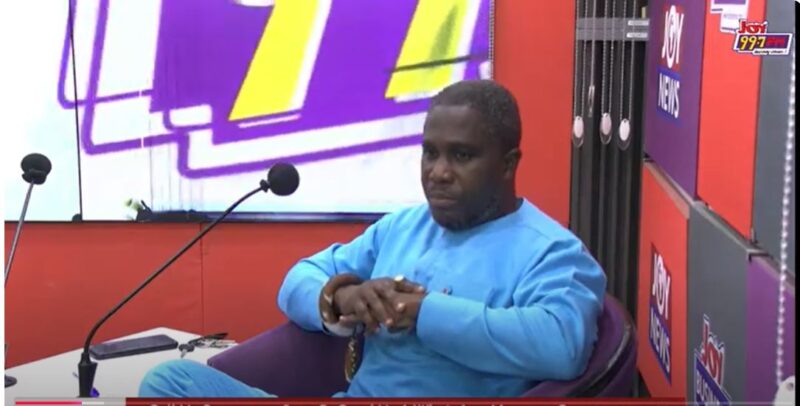
The Executive Director of the Institute of Energy Security (IES), Nana Amoasi VII, has raised concerns over the declining interest of international investors in Ghana's oil and gas sector.
Speaking on the state of the petroleum industry, he highlighted key challenges that have discouraged exploration and production activities, contributing to a consistent drop in oil and gas output over recent years.
“The reduction in upstream production is no surprise. Companies are struggling to find new fuel sources, with exploration activities declining due to regulatory challenges and uncertainties,” Mr Amoasi stated.
He pointed out that over the past five years, production has steadily declined as approvals for exploration and development became increasingly difficult to obtain, adding that "Processes are complicated and approvals are delayed, leaving investors frustrated."
"Today, Investors don't find Ghana's oil field or oil upstream sector attractive anymore, and so for us to have that attractiveness that we had initially, then we should be looking at our policies and our approval processes. This is very key." he indicated.
Mr Amoasi cited the exit of significant players like ENI, an Italian oil company that initially discovered oil in Ghana before also finding resources in Côte d'Ivoire.
“ENI found Côte d'Ivoire to be a haven, as they encountered fewer challenges compared to Ghana,” he said. Today, Côte d'Ivoire is seen as a safer and more attractive destination, with ENI choosing to operate there while only briefly entering Ghana to conduct essential business.”
He called for policy reforms to restore investor confidence, stressing that "policy certainty, transparency, and good governance" are crucial to reviving Ghana’s upstream sector.
He urged the government to simplify the approval processes to help boost oil and gas production.
The IES Executive Director also criticised political interference in the sector, warning that it drives investors away.
“If we allow political influence to dictate operations, this is what we get. The sector is time-bound; if you delay projects, investors will move to other countries eager for business.”
“To attract investors again, we must ensure clear, transparent, and efficient regulatory processes, free from political interference. Only then can we make Ghana’s oil and gas sector competitive once more,” he said.
Latest Stories
-
Ziope undertakes initiative to build a technologically inclined community, commissions self-help ICT lab
24 minutes -
ECG announces power outage in parts of Tema, Central Region due to network fault, maintenance
51 minutes -
When the Gospel Becomes a Weapon: The church, blackmail and the abuse of faith
1 hour -
JoyNews’ Jacqueline Ansomah Yeboah selected for UK Media Excellence for Emerging Technology Fellowship
2 hours -
Mental Health Alliance urges government to operationalise Mental Health Fund
2 hours -
Ghana–Holy See agreement heads to Parliament after Cabinet approval
2 hours -
Luv FM Corporate Games 2026: Kumasi Central Prisons, Amanfiman Bank win big amid fun
2 hours -
WAFU B U17: Ghana top Group A after win over Togo
3 hours -
Ho Central Mosque reopens amid unresolved leadership dispute that led to closure
4 hours -
Minority caucus questions GH¢16.4m in Ablakwa’s SA evacuation spending, demands independent audit
4 hours -
Gender Ministry meets Nana Akua Addo’s husband over domestic violence after hospital discharge
5 hours -
UG Vice-Chancellor urges swift operationalisation of National Research Fund
5 hours -
Pope Leo to have surgery after lump found in lung
5 hours -
Joseph Cudjoe writes: Ghana must break free from the dangerous mindset that natural resources are the foundation for wealth
6 hours -
Children among 109 dead after boat capsizes off Djibouti, UN says
6 hours