

Audio By Carbonatix
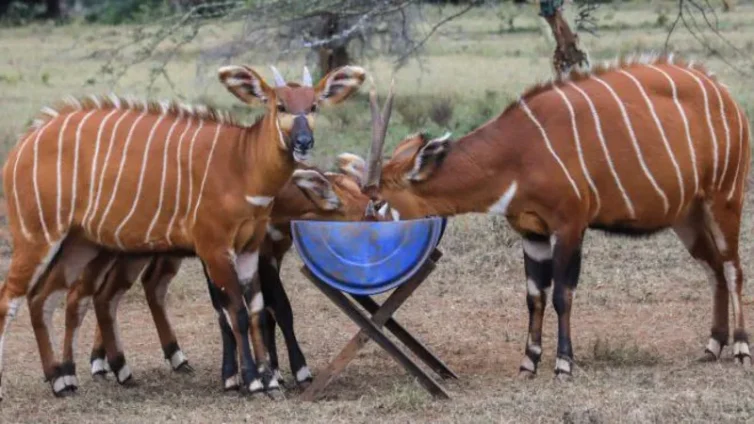
Kenya has received 17 mountain bongos – a very rare type of antelope – from a conservation centre in the United States.
The antelopes are third-generation descendants of mountain bongos taken from Kenya in the 1960s.
The return of the critically endangered animals, from the Rare Species Conservation Foundation in Florida, was hailed as a "monumental step" in Kenya's conservation efforts.
From about 500 in the 1970s, less than 100 mountain bongos are estimated to remain in the wild in Kenya, according to the Kenya Wildlife Service.
The KWS said this was due to habitat loss, poaching, illegal activities, disease, and small fragmented populations.
Tourism Minister Rebecca Miano described the arrival of the bongos at the country's main airport on Sunday night as "emotional and so cool", and a benefit for Kenya's tourism and conservation sectors.
The animals were taken to wildlife sanctuaries in Meru county near Mount Kenya, where they will be nurtured before they are gradually introduced to their natural habitat.
Ms Miano said the mountain bongo, "a species originally only found in Kenya, has suffered untold grief over the decades... dwindling to alarming proportions".
She said the plan was to grow the population to 700 by 2050.
The mountain bongo, which has a bright chestnut-red colour with narrow white stripes, is the largest African forest-dwelling antelope, according to the KWS.
It is listed by the International Union for Conservation of Nature (IUCN) as a Critically Endangered species - with more individuals in captivity than in the wild.
The first repatriation to Kenya was in 2004 when 18 mountain bongos were flown into the country.
KWS director-general Erastus Kanga said Kenya was expecting another batch of the mountain bongos from zoos in Europe in the next three months.
From captivity, the bongos have to go through a series of adaptation phases for them to build the immunity needed to survive in the wild.
In 2022, the head of conservancy at Mount Kenya Wildlife Conservancy (MKWC) told a Kenyan TV station that some of the bongos repatriated in 2004 had successfully been integrated into the wild and had started breeding.
The MKWC official, Robert Aruho, however, said that other had died from tick-borne diseases, adding that building immunity takes time.
Latest Stories
-
2 injured amid gunshots during raid at Nawara Mining office at Nsuapemso
3 seconds -
St Augustine’s College retains 2026 National Investment Quiz title
4 minutes -
KNUST Nursing and Midwifery School staff recognised at 2026 Health Ministry Excellence Awards
13 minutes -
JoyNews’ Esther Esi Nkrumah selected for UK Media Excellence for Emerging Technology Fellowship
18 minutes -
Five NDC youth organisers in Western Region pay courtesy call on Armah-Kofi Buah
30 minutes -
NACOC demands tighter port controls to prevent Tema Harbour drug trafficking
33 minutes -
Ghana’s startup ecosystem must build sustainability into innovation – Ghana Hubs Network
44 minutes -
Friday’s beachfront demolition was carried out at Labadi Beach Hotel’s request, not for flood mitigation – Stan Dogbe
46 minutes -
LA 2028: Mukarama returns to Black Queens squad for Olympic Games qualifiers
47 minutes -
Fusaini Yakubu Abanga leads NPP National Youth Organiser race with 45% in Global InfoAnalytics poll
1 hour -
Suame Methodist JHS marks 120 years with a call for STEM innovation
1 hour -
Global fashion coalition launches in the heart of Kantamanto Market
1 hour -
‘No concrete commitments from government’ – Brong Ahafo teacher unions maintain strike
1 hour -
Finance Minister demands greater returns from NLA after GH¢10 million dividend presentation
1 hour -
National Customers’ Choice Awards set to celebrate Ghana’s best customer-centred brands
2 hours