

Audio By Carbonatix
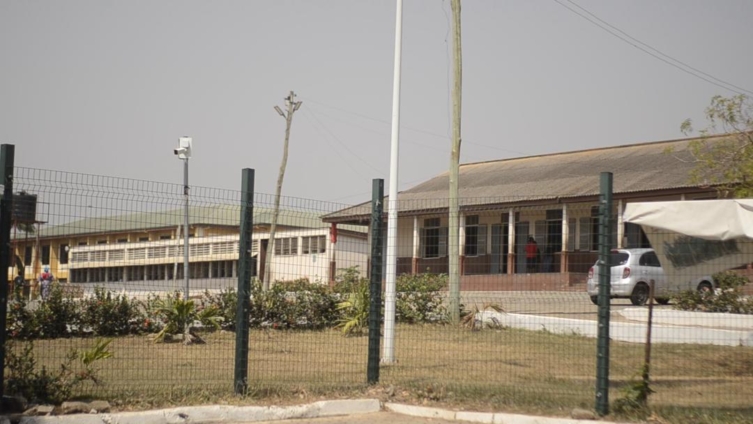
The Kwame Nkrumah University of Science and Technology (KNUST) has announced the closure of its basic schools in response to an ongoing industrial action by various unions within the educational sector.
The closure, effective from Tuesday, January 30, 2024, until further notice, comes in the wake of a declaration of industrial action by the Teachers and Educational Workers’ Union of the Trades Union Congress (TEWU-TUC), the Senior Staff Association – Universities of Ghana (SSA-UG), and the Ghana Association of University Administrators (GAUA).
In an official statement issued by the University Registrar, A. K. Boateng, the decision to shut down the KNUST Basic Schools was conveyed to the university community and the general public.
The closure is a proactive measure undertaken by the university administration amidst the ongoing labour dispute, aimed at ensuring the safety and well-being of students and staff.
The industrial action initiated by the aforementioned unions has created a state of uncertainty within the education sector, with demands ranging from improved working conditions to salary adjustments.
The impact of the strike has been felt across various educational institutions, including universities and basic schools.
The closure of the KNUST Basic Schools adds to the growing list of educational institutions affected by the labour dispute, further exacerbating concerns over the continuity of academic activities and the welfare of students.
Dr. Daniel Norris Bekoe, the University Relations Officer of KNUST, highlighted the detrimental impact of the strike declared by the TEWU-TUC and GAUA unions on the university’s workflow.
He emphasized the need for urgent engagement among relevant stakeholders to address the grievances outlined by these unions and find mutually beneficial solutions.
Such proactive measures are essential for maintaining the smooth functioning of the university and fostering a conducive environment for all stakeholders involved
Parents and guardians may have to make alternative arrangements for the education of their children during the period of closure.
As the standoff between the unions and government persists, stakeholders remain hopeful for a swift resolution to ensure the uninterrupted delivery of quality education across Ghana’s educational institutions.
Latest Stories
-
Mahama Ayariga urges banks to take responsibility for beautifying public spaces
30 minutes -
Abanga sets 4 million youth-vote target for Bawumia ahead of 2028 election
1 hour -
Gold edges lower with focus on Fed minutes, rate path clues
1 hour -
Oil prices rise as storms and air strikes threaten supply
2 hours -
Nigeria nears 2,000 repatriations from South Africa after latest evacuation flight
2 hours -
‘How can an office…close at 5pm?’ – Abanga questions 24-Hour Economy
2 hours -
‘4 million is possible’ – Abanga unveils NPP’s youth-vote battle plan
2 hours -
‘I never gave up’ – Abanga Fusani reflects on journey to NPP Youth Organiser victory
3 hours -
World Bank maintains Ghana’s growth rate forecast at 4.8% in 2026
3 hours -
Cedi was worst African currency in quarter 2, 2026 – World Bank
3 hours -
US death row inmate Christa Pike awake and speaking after failed execution, lawyers say
3 hours -
AI gains can lift three times as many people out of poverty in Ghana – World Bank
3 hours -
Scammers target ECG customers with fake meter sales and MoMo payment calls
5 hours -
Abanga Fusani credits hard work and consistency for NPP Youth Organiser victory
5 hours -
We did not take security issues seriously – Abanga Fusani reflects on NPP’s 2024 election loss
5 hours