

Audio By Carbonatix
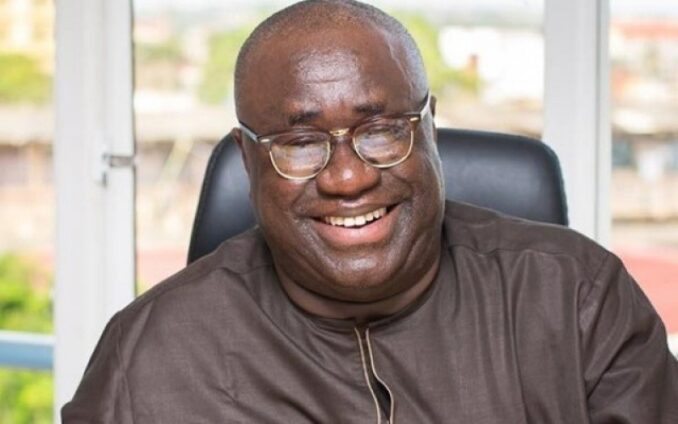
A distinguished scholar in African security and international politics, Professor Emmanuel KwesiA Aning, on November 22 made a compelling call for introspection during the "Beyond Electrocracy" webinar hosted by the Center for Alternative Politics and Security West Africa.
Speaking on the theme "Beyond Ghana’s 2024 Elections: Business as Usual or a New Pathway Towards People-Centered Politics?” Prof. Kwesi Aning emphasized the urgent need for active political participation to sustain Ghana’s democracy.
“Limited popular participation, as we see in Ghana, leads to a dangerous situation that undermines resilience, institutions, and sustainability,” he said, critiquing the growing apathy and exclusivity in the nation’s political processes.
The webinar, held via Zoom, marked the launch of the Center for Alternative Politics and Security, a think tank aiming to redefine the political landscape in Ghana and West Africa. Prof. Kwesi Aning praised the initiative, noting its alignment with the historical moment. “The very name captures the essence of what this centre seeks to do, we need a new type of politics necessary for Ghana and West Africa.”
Prof. Kwesi Aning underscored the role of political participation as the cornerstone of democratic governance. “Democracies depend on the active and informed involvement of citizen participation across the spectrum of political processes,” he said, adding that participation fosters credibility, engagement, and a sense of ownership among citizens.
However, he lamented the current state of citizen involvement, where political engagement often revolves around transactional relationships. “It is the voluntarism aspect that we seem to have lost in Ghana because everything now has a price,” he stated, criticizing the dominance of elitist groups who, under the guise of democracy, prioritize personal interests over the collective good.
Prof. Kwesi Aning called for a paradigm shift, urging Ghanaians to reflect on the broader implications of their democracy. “We’ve reached a divergent point where we need to consider whether this is the democracy that will take us to the next stage of our development,” he said.
The discussion also highlighted the need for sustained political engagement beyond election cycles. “Citizens must play this role over the four-year period,” Prof. Kweisi Aning asserted, emphasizing that participation should extend beyond voting to include active involvement in decision-making processes and advocacy for inclusive governance.
He concluded his presentation with a call for action indicating that Ghana must move beyond electoral formalities to create a participatory democracy that empowers its citizens and redefines the essence of governance.
Latest Stories
-
Ghana’s economy grows by 7.4% in July 2026
6 minutes -
NDC member challenges Dennis Yeboah Twumasi’s eligibility for Bono Regional Secretary elections
16 minutes -
Popular Nigerian gospel singer Toluwanisings dies
27 minutes -
Spio-Garbrah proposes debt swaps to fund reparative justice in Africa and Caribbean
34 minutes -
Alban Bagbin calls for governance reforms and coordinated action to address Africa’s debt crisis
37 minutes -
AAK Academy Ghana trains 22 chocolate and confectionery companies in production techniques
38 minutes -
Adwumawura Programme trains second cohort of young entrepreneurs in Bono East
40 minutes -
Destroying Jimi River for gold could cost us our lives – Asantehene
46 minutes -
Sammy Gyamfi didn’t say BoG has ceded its forex role to us – GoldBod
2 hours -
High Court sets November 4 for ruling on Wontumi’s bail application
2 hours -
Tetteh Kwetey files nomination for NDC Greater Accra Regional Chairmanship
2 hours -
Korle Bu appeals for more doctors, nurses as A&E Centre struggles under pressure
2 hours -
AFCON 2027Q: ‘I’m optimistic Black Stars can turn things around’ – Agyemang-Badu
2 hours -
Digital innovation could widen Africa’s inequalities if people are left out – Sam Jonah
2 hours -
Galamsey is an economic, health and moral problem – Sam Jonah
2 hours