

Audio By Carbonatix
A new World Bank has revealed that the debt burden of the world’s low-income countries rose by 12% to a record $860 billion in 2020.
This is due to the response to COVID-19 pandemic by governments with massive fiscal, monetary, and financial stimulus packages.
"While these measures were aimed at addressing the health emergency, cushioning the impact of the pandemic on the poor and vulnerable and putting countries on a path to recovery, the resulting debt burden of the world’s low-income countries rose 12% to a record $860 billion in 2020”, the report said.
Even prior to the pandemic, many low- and middle-income countries were in a vulnerable position, with slowing economic growth and public and external debt at elevated levels, the report said, adding, “external debt stocks of low- and middle-income countries combined rose 5.3% in 2020 to $8.7 trillion.
According to the new International Debt Statistics 2022 report, an encompassing approach to managing debt is needed to help low- and middle-income countries assess and curtail risks and achieve sustainable debt levels.
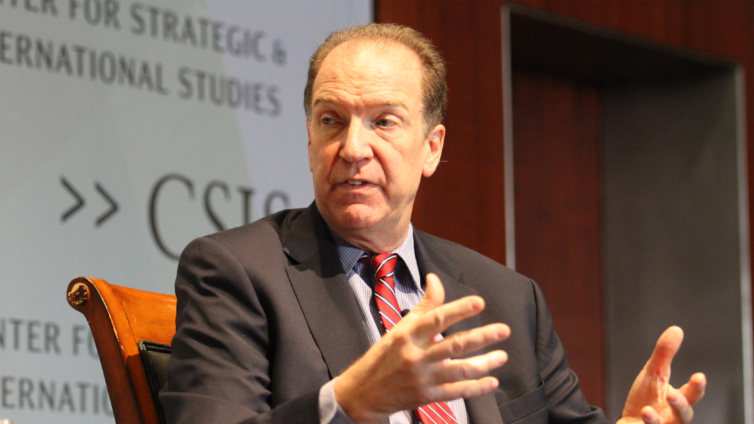
“We need a comprehensive approach to the debt problem, including debt reduction, swifter restructuring and improved transparency,” said World Bank Group President David Malpass, adding “sustainable debt levels are vital for economic recovery and poverty reduction.”
The report added that the deterioration in debt indicators was widespread and impacted countries in all regions. Across all low- and middle-income countries, the rise in external indebtedness outpaced Gross National Income (GNI) and export growth. Low- and middle-income countries’ external debt-to-GNI ratio (excluding China) rose to 42% in 2020 from 37% in 2019 while their debt-to-export ratio increased to 154% in 2020 from 126% in 2019.
In response to the unprecedented challenges posed by the pandemic and at the urging of the World Bank Group and the International Monetary Fund, in April 2020, the G20 launched the Debt Service Suspension Initiative (DSSI) to provide temporary liquidity support for low-income countries. The G-20 countries agreed to extend the deferral period through the end of 2021.
In November 2020, the G20 agreed on a Common Framework for Debt Treatments beyond the DSSI, an initiative to restructure unsustainable debt situations and protracted financing gaps in DSSI-eligible countries.
Overall, in 2020, net inflows from multilateral creditors to low- and middle-income countries rose to $117 billion, the highest level in a decade. Net debt inflows of external public debt to low-income countries rose 25% to $71 billion, also the highest level in a decade.
Multilateral creditors, including the IMF, provided $42 billion in net inflows while bilateral creditors accounted for an additional $10 billion.
“Economies across the globe face a daunting challenge posed by high and rapidly rising debt levels,” said Carmen Reinhart, Senior Vice President and Chief Economist of the World Bank Group.
“Policymakers need to prepare for the possibility of debt distress when financial market conditions turn less benign, particularly in emerging market and developing economies”, he added.
The report continued, saying, greater debt transparency is critical in addressing the risks posed by rising debt in many developing countries and therefore to facilitate transparency, International Debt Statistics 2022 was expanded to provide more detailed and disaggregated data on external debt than ever before.
The data now gives the breakdown of a borrowing country’s external debt stock to show the amount owed to each official and private creditor, the currency composition of this debt, and the terms on which loans were extended.
For DSSI-eligible countries the dataset was expanded to include the debt service deferred in 2020 by each bilateral creditor and the projected month-by-month debt-service payments owed to them through 2021.
Meanwhile, the World Bank will also publish soon a new Debt Transparency in Developing Economies report that takes stock of debt transparency challenges in low-income countries and lays out a detailed list of recommendations to address them.
International Debt Statistics (IDS) is a longstanding annual publication of the World Bank featuring external debt statistics and analysis for the 123 low- and middle-income countries that report to the World Bank Debt Reporting System (DRS).
Latest Stories
-
Kwaku Azar writes: A-G vs OSP
17 minutes -
Mfantsipim–Adisadel rivalry built excellence, not division – Sam Jonah
42 minutes -
Vice President launches Mfantsipim’s 150 years of shaping Ghana’s greatest mind
59 minutes -
I assure Otumfuo, Mahama will join him to commission KNUST Teaching Hospital by end of this year – Haruna Iddrisu
2 hours -
Barcelona dominate derby to extend La Liga lead
2 hours -
Gov’t to roll out free special education for persons with disabilities from July 1 – Education Minister
2 hours -
Importers and Exporters Association declares full support for Publican AI port system
2 hours -
“We used it to test our officiating officials’ readiness” – Bawah Fuseini after CAA Athletics event
2 hours -
Volleyball emerges as Ghana’s fastest rising sport
3 hours -
National Sports Fund needs strong leadership from the top – Administrator David Wuaku
3 hours -
JoySports Exclusive: Steve McLaren in talks with GFA after expressing interest in Black Stars job
3 hours -
Fire guts auto parts warehouse at Bubuashie, one fire officer injured
3 hours -
I owe my victory to coach Ofori Asare – Allotey after winning WBA Africa Gold Super Flyweight belt
3 hours -
Church of Pentecost supports over 2,000 BECE candidates in Obuasi with career guidance seminar
5 hours -
Brandon Asante and Coventry all but promoted to Premier League despite Sheffield Wednesday draw
5 hours