

Audio By Carbonatix
A public financial management expert has called on journalists and policymakers to actively manage public expectations on government spending, warning that ensuring macroeconomic stability demands hard fiscal trade-offs.
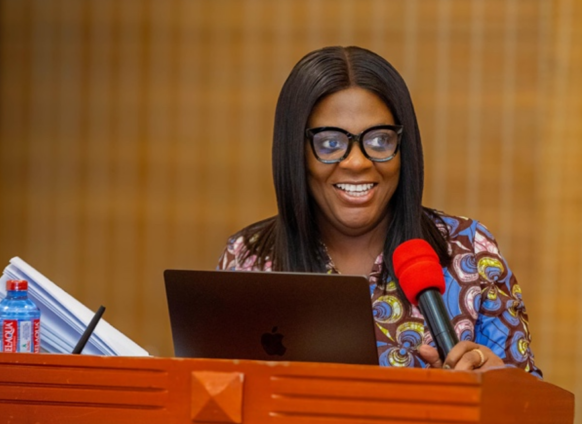
The Senior Expert in Public Financial Management at the Legon Leadership Academy of the University of Ghana, Eva Esselba Mends, made the remarks at a capacity-building workshop for members of the Parliamentary Press Corps in Koforidua.
Delivering a training workshop to parliamentary reporters, the former Chief Director at the Ministry of Finance, argued that demands for increased public expenditure must be weighed against the need to protect key macroeconomic indicators among them low inflation and a stable currency.
"Many people celebrate a stronger cedi or falling inflation but rarely reckon with the fiscal discipline that underpins those gains," she alluded to, cautioning that spending beyond government revenue widens the fiscal deficit and deepens dependence on public borrowing.
"If pressure mounts and government decides to increase the deficit and borrow more just to satisfy demands, all the indicators will shift," she warned, adding that excessive borrowing risks stoking inflation and driving up interest rates outcomes that erode the very stability citizens value.
Ms. Mends also flagged the fiscal risk posed by unplanned financial commitments from state-owned enterprises, noting that such liabilities routinely revert to the central government, disrupting budget projections and straining the public purse.
The workshop, organised by the Parliament of Ghana with support from the World Bank and the Foreign, Commonwealth & Development Office (FCDO), is aimed at deepening journalists' grasp of public financial management and sharpening reporting on national budgets and fiscal policy.
Director of Media Relations at Parliament, David Sebastian Damoah, said the training was designed to equip parliamentary reporters with the analytical tools to interpret fiscal data and translate complex financial matters for public consumption.
He stressed that parliamentary journalism must extend beyond chamber debates to encompass critical oversight functions including budget scrutiny, fiscal accountability and public financial management.
The two-day programme forms part of broader efforts to strengthen the media's role as a watchdog in Ghana's governance and public finance ecosystem.
Latest Stories
-
LA 2028: Black Queens hold final training session ahead of second leg against Mauritius
9 minutes -
Standards are not Seasonal: What the EC appointments teach both sides
23 minutes -
King Mohammed VI urges private sector to create youth jobs and spread benefits of growth
24 minutes -
KGL U17 Colts 2026: Greater Accra win title after penalties win over Western Region
24 minutes -
UK Investment Roadshow opens in London to advance UK-Ghana growth partnership
35 minutes -
Assemblies of God requires pastors to resign before entering partisan politics – Rev. Wengam
45 minutes -
Ghana targets 20% annual reduction in maternal deaths – Health Minister
50 minutes -
Cyber attacks in Africa grow faster than global rate, report finds
52 minutes -
Ghana signs UAE deal to create 5,000 overseas jobs
59 minutes -
One Million Coders Programme targets 100,000 digital jobs in two years – Sam George
1 hour -
John Jinapor, Italian Ambassador explore opportunities for energy sector investment
1 hour -
NHIA seeks legal reforms to support Free Primary Healthcare
1 hour -
Beatrice Annan defends Afi Agbenyo’s EC appointment, cites record of gender advocacy
1 hour -
Ghana seeks investment deals in Bangkok amid global economic crises
1 hour -
IMF raises Ghana’s 2026 growth forecast to 5.7%, sees inflation falling to 4.8%
1 hour