

Audio By Carbonatix
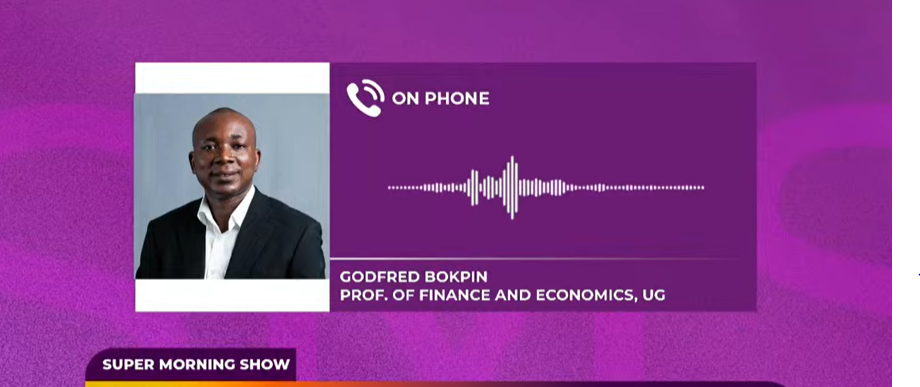
Economist and Finance Professor at the University of Ghana, Professor Godfred Bokpin, says Ghana’s return to the domestic bond market was long anticipated, insisting that government policies since 2025 deliberately positioned the economy for this moment.
His comments follow the announcement by the Ministry of Finance that restrictions on new domestic bond issuance have expired.
The way is therefore cleared for the government to reduce its dependence on Treasury bills and resume issuing longer-dated bonds.
According to Prof Bokpin, the move is not sudden but the result of a carefully sequenced fiscal and monetary strategy designed to restore investor confidence and stabilise the macroeconomic environment.
Speaking on the JoyFM Super Morning Show on Tuesday, March 3, he said the signals from the government over the past year pointed clearly to a planned re-entry into the bond market.
“The market is ready. You can see this has been long in the coming,” he said. “From government strategy in 2025, they have been preparing the market and investor sentiment towards this year.”
He explained that authorities shifted from a revenue-based fiscal consolidation approach to an expenditure-based one in 2025, cutting spending significantly to reduce financing pressures.
“In nominal terms, they shrunk expenditure in excess of GH¢10 billion,” he noted, describing the move as a form of “shock therapy” to compress spending and reduce gross financing needs.
Beyond expenditure cuts, he said government amended the Public Financial Management Act to introduce stricter fiscal rules, including a debt-to-GDP ceiling of 45% to be achieved by 2034 or earlier, as well as a targeted primary surplus of 1.5%.
These measures were reinforced by monetary tightening from the Bank of Ghana, including increased sterilisation of excess liquidity in the system. He also pointed to the central bank’s dollar interventions described as intermediation which strengthened the cedi and reduced the cedi value of Ghana’s external debt.
The combined effect, Prof Bokpin said, has been a significant drop in inflation as aggregate demand was compressed from both the fiscal and monetary sides.
“We are in a situation where inflation has come down significantly. End of January was 3.8%,” he stated.
He added that the Bank of Ghana, in its latest Monetary Policy Committee statement, acknowledged that the pace of disinflation has been faster than it had earlier projected.
With the policy rate at 15.5% and inflation at 3.8%, he said Ghana is now experiencing a wide positive real return a development likely to attract investors back into longer-term government securities.
The expiration of the bond issuance restrictions marks a key turning point in government’s debt management strategy, particularly after heavy reliance on short-term Treasury bills in recent years.
If sustained, Prof Bokpin believes the improved macroeconomic conditions could support a smoother and more sustainable return to the domestic bond market.
Latest Stories
-
I have supported highway authority financially to fix roads in my constituency – A Plus
52 minutes -
US, Iran fail to reach peace agreement after marathon talks in Pakistan
1 hour -
ECG kicks off Phase Two of transformer upgrades at Lashibi; brief outages expected
2 hours -
Port crises loom as 11,000 drivers threaten four-day strike
3 hours -
A source of excellence across generations – Vice President Opoku-Agyemang lauds Mfantsipim
4 hours -
(Photos) Mfantsipim School launches historic 150th anniversary
4 hours -
Knights and Ladies of Marshall group backs Catholic Bishops’ stance on anti-LGBTQ+
5 hours -
Bright Simons writes: All the Filla in the Ibrahim Mahama/E&P – Gold Fields Saga
5 hours -
Monetise Idiocy In Ghana
5 hours -
The Ghanaian prophet and the mysterious death of his scottish wife Charmain Speirs
6 hours -
Nearly 400 sentenced in Nigeria for links to militant Islamists
6 hours -
Ghana’s recovery supported by gold strength despite global oil price pressures – Standard Bank Research
7 hours -
Methodist Church hails Mfantsipim@150; calls for “fresh consecration” to excellence
7 hours -
‘Excellence is our inheritance’ – Nana Sam Brew-Butler hails Mfantsipim’s 150-year reign in leadership
7 hours -
Kwaku Azar writes: A-G vs OSP
7 hours