

Audio By Carbonatix
The Local Government Service Association of Physical Planners (LoGSAPP) has expressed strong opposition to proposals to merge Development Planning Units and Physical Planning Departments at the local government level, warning that the move could worsen Ghana’s urban development challenges.
According to the association, the proposal is based on the flawed assumption that development planning and physical planning are interchangeable. LoGSAPP insists the two are distinct professional disciplines with different mandates, skills, and outcomes, and treating them as one would undermine effective planning.
In a statement, the association explained that physical planning is a specialized, spatially driven profession focused on land-use planning, urban design, development control, and environmental management, while development planning is largely socio-economic, dealing with policy formulation, budgeting, and programme coordination.
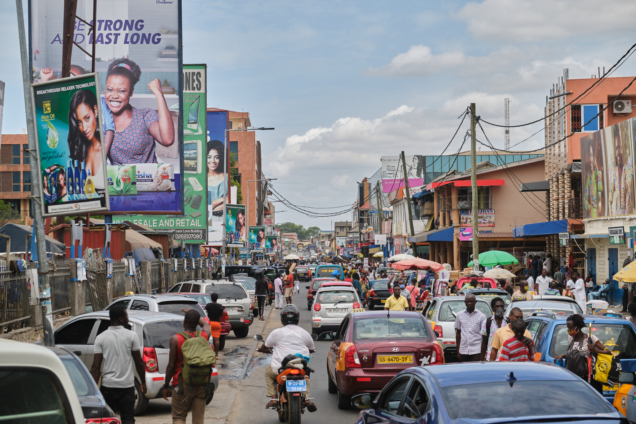
LoGSAPP argued that Ghana’s major urban problems—such as flooding, congestion, informal settlements, environmental degradation, and unsafe developments—are primarily spatial in nature and stem from weak spatial planning and poor development control rather than a lack of socio-economic policies.
The association also pointed to the longstanding neglect of Physical Planning Departments, which remain under-resourced, understaffed, and poorly equipped, with some districts having no physical planners at all. It warned that merging the departments would further marginalize spatial planning and weaken enforcement.
Citing staffing imbalances, LoGSAPP noted that there are about 400 spatial planners in Metropolitan, Municipal and District Assemblies (MMDAs) compared to over 1,000 socio-economic planners nationwide, making it likely that socio-economic planning would dominate in any merged department.
LoGSAPP is therefore calling for reforms that strengthen spatial planning rather than merge the two units, emphasizing investment in qualified physical planners, institutional authority, and enforcement capacity.
The association maintained that sustainable urban development in Ghana depends on protecting professional boundaries and strengthening spatial expertise—not merging fundamentally different planning disciplines.
Latest Stories
-
GRA welcomes Tribunal decision upholding US$393 million tax assessment
3 minutes -
COMAC says Uniform Fuel Pricing Fund should not be confused with fuel subsidy
12 minutes -
Mercy Ships targets over 2,000 surgeries, 3,500 dental treatments during Ghana mission
14 minutes -
NITA appoints ShaQ Express founder Anthony Owusu-Ansah as Acting Deputy DG
20 minutes -
Government moves to compel public institutions to buy food from Ghanaian farmers
26 minutes -
‘Baffour Awuah won’t die in EOCO’s detention, even if he dies there, that’s okay for us’ – John Boadu
30 minutes -
OccupyGhana calls for parliamentary scrutiny of EOCO, BNI powers
36 minutes -
Mahama calls for continued care for Mercy Ships patients after surgeries
41 minutes -
NDPC DG calls for stronger financing, accountability to improve nutrition outcomes
47 minutes -
Over 130 courts are without magistrates – JUSAG
56 minutes -
SWAG calls on GFA leadership to fix Ghana football or step aside
1 hour -
Gender Ministry launches breast cancer campaign, pushes support over stigma
1 hour -
Feed Ghana Programme cuts food import dependence
1 hour -
Mahama welcomes Global Mercy Hospital Ships back to Ghana
1 hour -
Tourism Minster calls for improved maintenance, consistent storytelling at tourist sites
1 hour