

Audio By Carbonatix
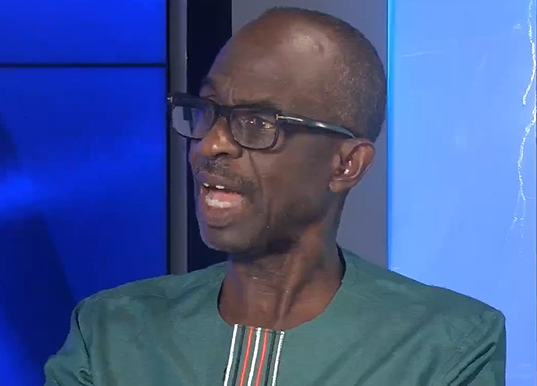
The General Secretary of the opposition National Democratic Congress (NDC) has reiterated the commitment of the party to resist the approval of the electronic transaction levy (e-levy) being proposed by government.
To attain this pledge, Johnson Asiedu Nketia at an NDC Forum on the 2022 Budget on Wednesday said the party’s representatives in Parliament have been advised not to boycott discussions on the 2022 financial estimates.
According to him, the approval of the Budget doesn’t mean the e-levy has also been approved since various Select Committees have to further assess the fiscal policy.
He explained that at these various committee meetings, the representatives of the NDC will thoroughly scrutinize details of the Budget and vote against the levy.
“Tax measures must come by way of bills. So it is at that stage that either the Finance Minister or Attorney-General will bring a bill that will provide for the collection of the e-levy. This will also be taken through the proper stages of law making, irrespective of what happens at the committee level, we still have an opportunity to vote against the e-levy.
“So we are at a stage where maybe from tomorrow, we will revisit the approval or non-approval of the budget. But whatever happens, we still stand by our position and we have agreed with our MPs that a boycott is not an option because if we boycott, what it means is that all these other stages will be a railroad. So we will be present and undertake our key responsibility of holding the elephant accountable,”
The incumbent Finance Minister, Ken Ofori-Atta while delivering the 2022 Budget on Wednesday, November 17, proposed a 1.75% levy on all electronic transactions effective January 1, 2022.
He described it as an innovative method to generate revenue after government scraped road tolls.
However, a section of Ghanaians including the Minority in Parliament and some economists have kicked against this proposal arguing that it will intensify the hardships of the average Ghanaian.
For Mr. Nketia, government should cut down on expenditure instead of increasing taxes.
The outspoken politician noted that government can achieve this by eliminating some privileges enjoyed by the Executive since these "frivolous" perks are the reason for the high public expenditure.
“We are talking about a shortage of revenue as against expenditure and we want to bridge the gap. Nobody is talking about cutting down expenditure.
“You want to continue taxing people, including those who are dying. But you are not prepared to cut down on your privileges,” he was categorical.
Latest Stories
-
World Cup visa scandal: Sports Ministry not shielding anyone – Sports Minister’s special aide
6 minutes -
World Cup visa scandal: Over 30 people misrepresented as GTA board members to US Embassy – Vincent Assafuah alleges
7 minutes -
Fire destroys wooden structure near Yesu Mo Villa at Bush Road
9 minutes -
NDC threatens sanctions over oversized campaign posters, gives aspirants 5 days to comply
1 hour -
Star Oil paid GH¢2.7bn in taxes, levies in nine months of 2026
1 hour -
Samson’s Take: The rule of law is cheaper before the bulldozer
1 hour -
GRA blames system failure for delay in issuing receipt over passenger’s customs duty
2 hours -
Livestream: Newsfile discusses World Cup visa scandal, beach demolitions, education strikes, BRICS bid
2 hours -
NC-PTAs welcomes end of teachers’ strike, urges parents to prepare children for Monday
2 hours -
Government procures over 2,000 transformers as Ghana’s electricity access hits 89.13% – Energy Minister
2 hours -
UTAG-UG threatens strike on October 19 over unpaid allowance
2 hours -
Let The Constitution direct Chieftaincy to deliver “All Development Is Local”
4 hours -
John Jinapor outlines renewable energy, nuclear power priorities for 2027
4 hours -
Ghana explores centre of excellence for hearing, communication and cochlear implant care
5 hours -
Schizophrenia-related disorders lead mental health cases recorded in Ghana
5 hours