

Audio By Carbonatix
As coronavirus began to spread around the world earlier this year and countries started locking down one by one, sheltering in place for some meant finding new forms of home entertainment.
For international streaming giant Netflix, that equated to nearly 16 million new paid subscribers in the first quarter of 2020 alone, followed by another 10 million during the second quarter.
With roughly 193 million total subscribers in over 190 countries, it is one of the world's largest entertainment empires.
But while subscriber numbers are up, filming of new content has halted due to the pandemic, a big blow to the entertainment industry from Hollywood to Bollywood.
One bright side, according to Netflix's chief content officer and newly appointed co-CEO Ted Sarandos during an April earnings call, is that the company's 2020 lineup is already "largely shot and in post-production remotely."
Netflix also has its eye on untapped market potential -- especially in Africa, where the streaming service has a presence in all 54 countries. In December 2019, the company brought on Kenyan entertainment veteran and film producer Dorothy Ghettuba as the head of African Original Programming.
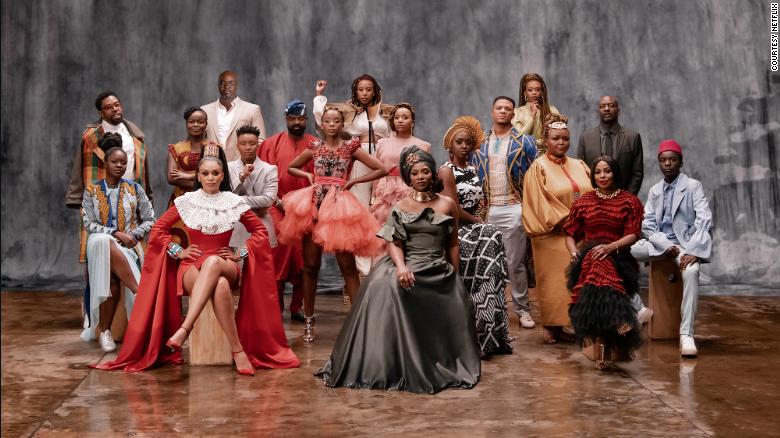
CNN's Eleni Giokos recently spoke with Ghettuba to to break down how Netflix has adapted its production during the pandemic, and find out what its expectations are for more Africa programming.
This interview has been edited and condensed for clarity.
Eleni Giokos: The pandemic has thrown a lot of your plans off-kilter. What are you doing right now, as we are kind of still sitting in a hibernation phase?
Dorothy Ghettuba: I am finding stories. This is the best time to find stories. What we are doing is we are betting forward. We haven't slowed down. It's been about me speaking to writers, looking at scripts, looking at stories and finding the best stories to tell out there.
EG: Give me a sense of the appetite that you've seen for Netflix from the [African] continent. Would you say the turning point was when you came up with something that Africans could really relate to through "Blood & Water" and "Queen Sono"?
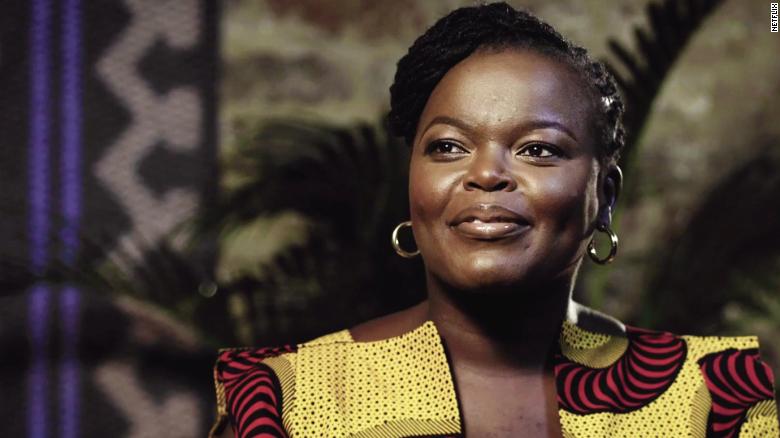
DG: The appetite is there. Africans are truly excited about the local content -- and not just local content, but best in class. There's a sense of pride and excitement in Africa. And when I say Africa, I truly mean it across the continent.
EG: Globally, you've seen demand for streaming services generally increasing. Have you seen a rise specifically now that we've experienced a lockdown, and is it a similar trend playing out in Africa?
DG: It's always going to be a reflection of the global pattern. We have seen an uptick of it and we are happy and we're excited that people are turning to us to entertain them when they're at home.
EG: How is Netflix approaching content production during times of lockdown and a health crisis?
DG: I think this crisis has made everybody pause and now we really have to relook at how we produce. Productions take place in pretty intimate, high-touch environments with hundreds of artists, people and creators all together in close quarters. So for us in the short term, these practices will have to be changed.
EG: What would you say has been your biggest challenge over this time?
DG: Can I say power cuts and load shedding and data? Those infrastructural challenges are the things that keep us up at night as an organization. And it is a big challenge across many African countries. So we're just trying to find solutions. We're trying to say, 'how can we make our services as data-effective as possible?'
EG: Netflix possesses a massive budget for international production. Does the company plan on licensing more deals? We know that you worked towards the creation of more original content. What is the balance there?
DG: We want to have this global catalog, so that all our members can watch our shows at the same time. That's why originals are very, very important to us. Our ultimate aim is that we want to be the home of the best-in-class African stories. We want you to know that if you're looking for the best African stories, then you will find them on Netflix. We are going to expand heavily to ensure that goal is met.
EG:If you look at the rest of the world, they're able to capitalize and monetize on talents. But the continent, as a whole, is not exporting a lot. Do you think that it could actually be a different type of commodity that we could export?
DG: Our shows are broadcasting in over 190 countries. Surely that is the fastest way to export our stories and our culture to the rest of the world. It's always been, "I have to go and I have to make it in Hollywood," but now you can be a superstar in your backyard. Netflix is that vehicle and if you look at the stories we are telling, our culture is there. We believe rich stories can come from anywhere and can be loved everywhere across the world. We want our African stories to be watched across the globe.
Latest Stories
-
Diaspora Nasara Caucus congratulates Mohammed Ali Suraj, new NPP executives
2 hours -
Dr Antwi-Boasiako’s cybersecurity book showcased at UN crime prevention congress
2 hours -
We will empower the grassroots and protect every vote – NPP’s 1st Vice Chair Kojo Bamba
2 hours -
I do not see myself as better than anyone – NPP’s 1st Vice Chair Kojo Bamba
2 hours -
Police blur the line between invitations and arrests – Reindorf Twumasi Ankrah
3 hours -
Turning invitations into arrests is making citizens reluctant to assist police – Twumasi Ankrah
3 hours -
The Traffitech-GH SMS spot-fine system: The good, the sad, and the funny – Bright Simons writes
4 hours -
Hawa Koomson pledges experienced and mature leadership of NPP women’s wing
5 hours -
Young woman found dead at Kasoa Peace Town
5 hours -
Playback: The Law examined lawful arrest in Ghana
6 hours -
Mahama urges African governments to treat healthcare as an investment, not budget cost
6 hours -
Bawumia congratulates John Boadu and new NPP executives, pledges support ahead of 2028
6 hours -
Aksa Energy delegation pays courtesy call on GRA Commissioner-General
6 hours -
‘No talent should be left out’ – Bawumia pledges inclusive NPP campaign for 2028
6 hours -
Prof. Mike Oquaye recounts how he blocked the Special Prosecutor’s attempt to arrest Bawku Central MP
7 hours