

Audio By Carbonatix
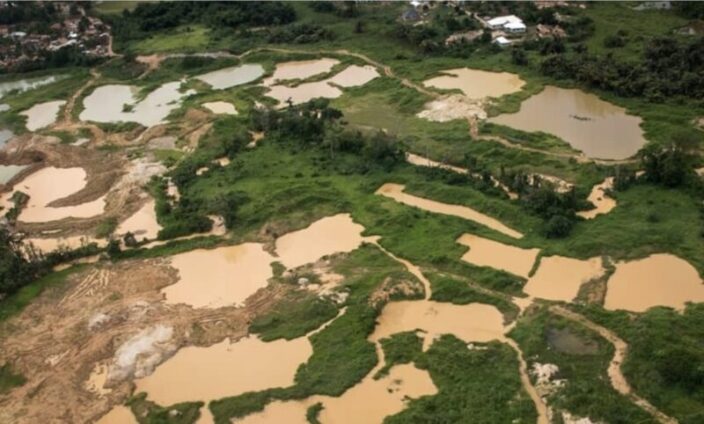
Kwaku Quansah, the Deputy Director at the Ministry of Sanitation and Water Resources, has stated that Ghana’s new water policy will help address the illegal mining ‘galamsey’ menace.
He said the nation could not continue to allow its water bodies to be polluted with heavy metals, and therefore, called on those involved to stop mining in these rivers, to save them for posterity and the future.
Mr Quansah stressed that if the current rate of pollution continued, the country would have no option but to import water, which would be very expensive for Ghanaians.
The Deputy Director disclosed this to the Ghana News Agency in Ho at the just-ended MOLE XXXV WASH conference.
The conference was organised by the Ghana Coalition of Non-Governmental Organisations (CONIWAS), on the theme: “Looking Back on SDG Six Implementation in Ghana: Progress, Challenges and the Way Forward”.
Mr Quansah said another important area the Ministry wanted the new water policy to work on was the increasing cost of water in rural areas.
“The critical challenge that we want the new policy to address is the fact that some Ghanaians who live in the rural areas are paying more for water than the urban areas.
“Since water is a public good there is the need to reverse it by increasing access to water for all,” he said.
The Ministry of Sanitation and Water Resources has outdoored the 2024 Water Policy which is a revised version of the 2007 document and sought to look at issues on sustainable financing to bring on board Small Water Enterprises.
He said this would help the enterprises to play their roles effectively and support the delivery of water for all Ghanaians.
Again, the 2007 Water Policy was able to achieve the Millennium Development Goals, (MDGs) far before the end of the MDG period.
Mr Quansah was of the view that with concerted efforts and with everyone on the table even amid all challenges facing the sector, they would implement the new water policy to be able to serve water to all.
Some topics that were discussed at the conference included; policy and sustainable financing for WASH building community resilience through water resources management and Leveraging Local Government -led partnerships to reach the last mile.
Others were looking back on the implementation of SDG six: progress, challenges and the way forward; the role of the Parliamentary Select Committee for WASH in accelerating the progress of institutional framework among others.
Latest Stories
-
Judges’ conference forces further adjournment of Salomey Baffoe case
8 minutes -
GRA assures Tullow of collaboration to settle $393m tax liability without disrupting its petroleum operations
38 minutes -
South Korea demands apology from Pyongyang for landmine blasts that injured three
41 minutes -
Carlos Queiroz not the sort of coach Black Stars need – Nii Lante Vanderpuye
1 hour -
AFCON 2027Q: ‘Our Black Stars team is gone’ – Former Sports Minister
2 hours -
Prof. Prempeh calls for public review of draft constitutional reform bills
2 hours -
AFCON 2027Q: ‘I have never seen a poor performance from Black Stars like against Gambia’ – Nii Lante Vanderpuye
2 hours -
Bawumia backs insurance sector reforms after engagement with IBAG
2 hours -
Nigeria set to launch National Digital Address System 9 years after Ghana showed the way
2 hours -
Policy rate decision takes time to reflect in lower lending rates – BoG
2 hours -
Western Regional Minister applauds Karpowership’s role in Ghana’s power sector
3 hours -
Playback: Road safety crises: Where are we getting it wrong?
3 hours -
Enterprise Life celebrates 25 years of protecting families and building trust
3 hours -
ICC London rules in favor of Ghana against Tullow over $400m tax charge
3 hours -
We are disappointed in ICC’s ruling over our corporate income tax assessment in Ghana – Tullow Oil
3 hours