

Audio By Carbonatix
The first full day in power of Nigeria's new president has seen people panic-buying fuel following his decision to scrap a decades-long subsidy on petroleum products.
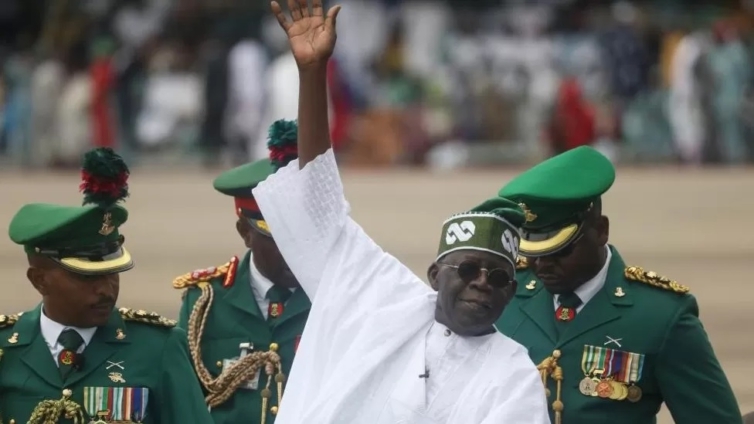
In Monday's inaugural address, Bola Tinubu said the subsidy was "gone".
But he gave no timeframe or any more details of this major policy move.
On Tuesday, his team clarified that he meant the end of June and that the panic buying was "needless", as the policy will not take immediate effect.
President Tinubu wants to ease pressure on government finances, but ending the subsidy will increase the cost of petrol and hit other prices too, at a time when inflation is already high.
In response to his comments on Monday, many filling stations hiked the petrol price, while others stopped selling altogether.
Nigeria's state-owned oil company, the sole importer of petroleum products, assured the public that it had enough supplies.
But this did not prevent the panic-buying, with most people fearing a drastic rise in the price of petrol, which should be sold at the regulated price of 185 naira per litre (32p, 40c).
Some people have posted videos online of filling stations already increasing prices, in some cases by more than 200%.
Some drivers of private buses, which many Nigerians rely on to get around, have also been unable to fill up their vehicles.
This has left people stranded at major bus stops in the capital, Abuja, and the country's biggest city, Lagos.
Despite its oil wealth, Nigeria is unable to refine enough crude to meet local demands, so it imports petroleum products, which are then sold at a government-set price.
But the subsidy is a huge drain on public finances. Last year, it gulped 4.3trn naira ($9.3bn; £7.5bn) and for the first half of this year, 3.36trn naira was budgeted for it.
On Monday, Mr Tinubu said It could no longer be justified and that the funds would instead be spent on public infrastructure and to improve the lives of people.
But the subsidy has long been seen by many Nigerians as one of the few perks they receive from the state.
The last attempt to remove it in 2012 led to nationwide protests and then President Goodluck Jonathan had to perform a policy U-turn.
So far, a powerful association of those who sell petroleum products has come out to say it does not support President Tinubu's plan. It said the new government should begin a dialogue before taking the decision.
The spokesman of the Independent Petroleum Marketers Association of Nigeria, Ukadike Chinedu, is quoted by Nigeria's Punch newspaper as saying that the move will cause "galloping inflation and inflict more hardship on the masses".
Latest Stories
-
Power restoration fault suspected in Kumasi Central Market fire
42 minutes -
The 7-foot giant of Ngleshie Amanfro: Seven-foot Ghanaian Ephraim Saawa dreams of joining the national basketball team
1 hour -
Government promises support for Kumasi Central Market fire victims
1 hour -
Vibes The Movie: Big Ghun’s Ghanaian film earns five nominations at 2026 REFFA
2 hours -
MamaCare CEO warns unresolved conflicts among health workers could undermine maternal and neonatal care
2 hours -
Health professionals urged to translate medical knowledge into practice to save mothers
2 hours -
Conflicts among care providers linked to maternal, neonatal deaths – Expert
4 hours -
GIS marks 10th TIME conference, champions improved teaching practices
4 hours -
BRICS Or Balance? What Ghana’s bid really means
5 hours -
GPRTU wants full TRAFFITECH-GH implementation to start in 2027
5 hours -
Mahama announces plans to import electric wheelchairs for PWDs
5 hours -
KGL U17 Colts 2026: Western beat Prempeh Elite Academy to set up final final with Greater Accra Region
5 hours -
Late Solanke strike salvages 10-man Spurs draw at Man United
5 hours -
Gender Ministry to monitor welfare of Nana Akua Addo’s children amid domestic violence case
6 hours -
Benedict Okyere Yeboah: Ghana’s football problem goes beyond sacking a coach
6 hours