

Audio By Carbonatix
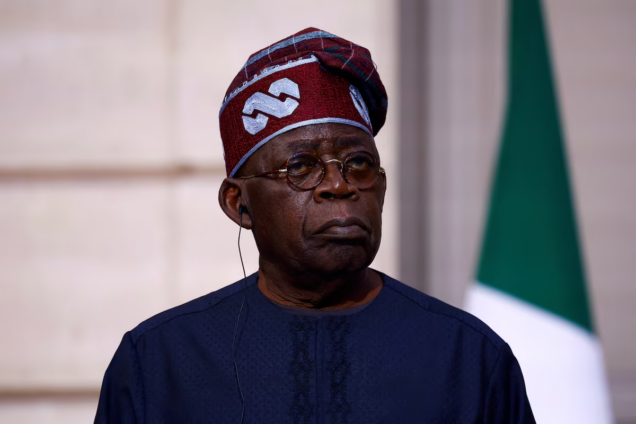
Nigeria's lower house of parliament passed four tax reform bills proposed by President Bola Tinubu on Thursday, marking progress in the government's efforts to overhaul the country's tax system, but several proposed measures were watered down.
Nigeria, Africa's most populous country, has one of the world's lowest tax-to-GDP ratios, at 10.8%, forcing the government to rely on borrowing to fund the budget.
After ending costly subsidies and twice devaluing the naira currency in his first year in office, Tinubu has shifted his focus to reforming the tax system to boost revenue and efficiency.
The new tax system seeks to raise value-added tax (VAT) to 12.5% by 2026, streamline tax collection, and overhaul revenue-sharing between federal and state governments.
But lawmakers retained VAT at 7.5%, rejecting the original proposal, and excluded minimum wage earners from income tax to ease the tax burden on lower-income earners.
Additionally, instead of a 60% VAT revenue allocation for high-revenue states, which drew backlash from northern states over inequality concerns, lawmakers passed a 30% cap. The remaining 70% is split, with 50% shared equally among all states and 20% based on population.
The provisions passed by lawmakers also replace the 85% petroleum profit tax with a 30% corporate tax rate on gains from oil industry operations.
Lawmakers included a global minimum tax on multinational companies with turnover of at least $970.80 million and more than doubled the minimum tax threshold for domestic businesses to 50 billion naira ($32.66 million).
Entities in free zones exporting 75% or more of their goods and services will be exempt from the minimum tax.
The bills are expected to be passed by the upper house of parliament next week. They will take effect as soon as Tinubu gives his assent.
Latest Stories
-
Bagbin adjourns Parliament indefinitely
18 minutes -
African Most Beautiful USA Queen to host Community Zumba Dance session in Accra
18 minutes -
Cocaine probe: Speaker got it wrong by blocking parliamentary inquiry – Minority Leader
31 minutes -
FoSCel foundation calls for end to stigma and stereotyping against people living with sickle cell disease
43 minutes -
Auditor-General to track audit recommendations as GH¢280.5m in surcharges remains unpaid
43 minutes -
Walewale MP withdraws ‘rude’ comment on Bagbin’s Parliament recall, apologises
60 minutes -
FoSCel founder urges curriculum reform to strengthen sickle cell education in Ghana
1 hour -
United States launches America.Gov for public services 5 years after Dr. Bawumia launched Ghana’s version Ghana.Gov
1 hour -
Cocaine probe: Majority used super majority with Speaker’s support to weaken Parliament – Afenyo-Markin
1 hour -
UGMC Research Director calls for deliberate pathway from research to patient care
2 hours -
IEAG calls on FDA to resolve delays in import code issuance
2 hours -
UGMC research must translate laboratory findings into healthcare solutions – Prof Evelyn Yayra Bonney
2 hours -
Court remands 3 over alleged gold concentrate robbery
2 hours -
Two bodies stuck at St. Anne’s mortuary after refrigeration engines break down
2 hours -
‘We will not let this matter rest’ – Afenyo-Markin after Bagbin rejects narcotics probe
2 hours