

Audio By Carbonatix
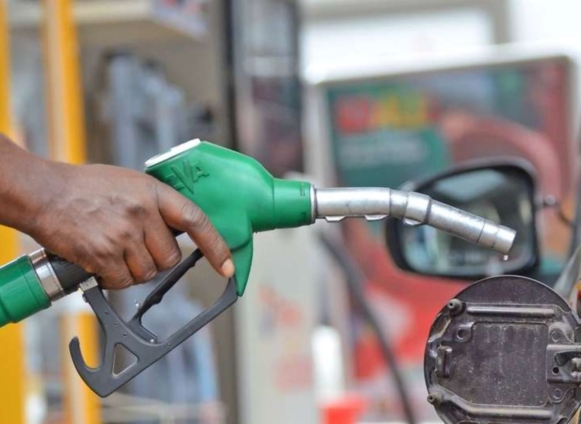
The National Petroleum Authority (NPA) has increased the minimum price levels for petroleum products for the second pricing window of February 2026.
The new price floor takes effect from February 16 to 28, 2026.
Under the directive, no Oil Marketing Company (OMC) is permitted to sell petrol below GH¢10.24 for the next two weeks.
This represents an increase over the first pricing window, during which the price floor was GH¢9.99.
Diesel has also been increased from GH¢10.95 in the previous window to GH¢11.34 for the February 16–28 period.
The price floor for LPG has also been raised to GH¢9.43 per kilogram.
Under the new thresholds, no OMC or LPG Marketing Company (LPGMC) may sell petroleum products below the approved price floors during the period.
The development means companies currently selling below these levels will be required to adjust pump prices upward to comply with the directive.
It could also force several OMCs to increase prices, including those that had initially planned to keep prices unchanged due to competition.
Chamber of Oil Marketing Companies on the new price floor
The Chamber of Oil Marketing Companies has reminded all OMCs and LPGMCs to comply with the established price floors under the Petroleum Products Pricing Guidelines.
The Chamber said the price floors exclude premiums charged by International Oil Trading Companies, operating margins of Bulk Import, Distribution and Export Companies (BIDECs), and the marketers’ and dealers’ margins of OMCs and LPGMCs.
According to the Chamber, these costs will be determined independently by the respective companies as stipulated under the Petroleum Products Pricing Guidelines.
It appealed to all OMCs and LPGMCs to strictly comply with the approved ex-pump price floors.
The Chamber said adherence to the directive is necessary to maintain market stability, protect consumers, and ensure fairness across the industry.
Background
In April 2024, the NPA implemented a price floor policy for petroleum products.
The directive requires OMCs and LPGMCs to comply strictly with the minimum prices set for fuel sales.
According to the NPA, the policy was introduced to prevent price distortions and promote market stability within the downstream petroleum sector.
The Authority said the initiative aligns with the Petroleum Pricing Guidelines and is intended to enhance transparency, sustainability, and fairness in the fuel market.
The NPA has also argued that the policy would create a more predictable and balanced pricing structure, benefiting consumers while ensuring fair business practices.
It added that the decision followed recommendations from industry players, citing non-compliance by some operators, including what it described as “serious price undercutting.”
Industry concerns on price floor
The latest adjustment comes amid an intense industry debate that has led market leader Star Oil to exit the Chamber of Oil Marketing Companies (COMAC).
Following an emergency board meeting, a majority of COMAC members voted to allow the NPA to proceed with implementing the price floor programme.
COMAC has argued that the policy is necessary to prevent the downstream petroleum industry from “collapsing.”
However, Star Oil has maintained that the price floor limits its ability to set competitive prices based on prevailing market conditions.
Latest Stories
-
SSNIT says La Beach clearance was to protect hotel investments, beaches to remain public
49 minutes -
APSU congratulates St Augustine’s College after back-to-back National Investment Quiz wins
54 minutes -
Renewed flood intervention at Mallam Junction raises hopes among residents, businesses
2 hours -
St Augustine’s College retain National Investment Quiz title after nail-biting grand finale
2 hours -
Education infrastructure investment will drive Banda’s development – Ahmed Ibrahim
2 hours -
Teacher unions strike: Gov’t presents fresh proposals as talks end inconclusively
3 hours -
51,000 teachers’ promotion arrears to be validated for October payment – Education Minister
3 hours -
Kwabena Boamah appointed Board Chair for Impact Investing Ghana
3 hours -
Striking teacher unions to meet Fair Wages and Salaries Commission on October 6
3 hours -
EOCO working with AG to arraign Nana Baffour Awuah before weekend court
3 hours -
Duraplast reassures customers after fire, announces October 5 reopening
4 hours -
Call off strike, gov’t will not renege on promotion arrears pledge – Haruna Iddrisu to teacher unions
4 hours -
Committee set up to validate teachers eligible for 20% deprived-area allowance – Education Minister
4 hours -
Five-member committee to search for new Black Stars coach after Sports Ministry-GFA meeting
4 hours -
Pinktober: Breast cancer survival exceeds 90% when detected early – Breast Society of Ghana
4 hours