

Audio By Carbonatix
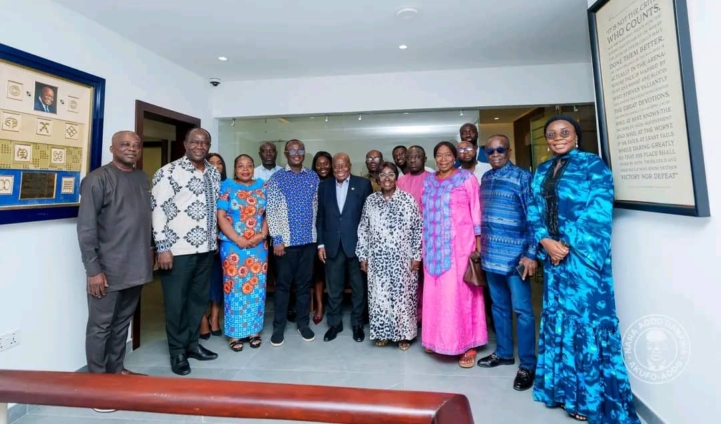
The New Patriotic Party (NPP) Presidential Elections Committee held a high-stakes consultative meeting with former President Nana Addo Dankwa Akufo-Addo at his private office in Labone on Friday, January 9, 2026.
The meeting forms part of a series of strategic engagements aimed at ensuring a seamless and transparent process as the party prepares to elect a successor to lead the NPP into the next general elections.

The committee, led by seasoned party stalwarts, briefed the former President on the current roadmap, logistical preparedness, and the vetting protocols established to maintain party unity.
The upcoming presidential primary is widely regarded as a watershed moment for the NPP.

Following the party's transition into opposition, the leadership is under immense pressure to present a candidate capable of reclaiming power.
Sources close to the committee indicate that the meeting at Labone focused on voter register integrity and conflict resolution mechanisms.
Former President Akufo-Addo, acting in his capacity as an elder of the party, reportedly emphasised the need for an even playing field to prevent internal fissures that could jeopardise the party’s chances in the national polls.

The engagement at the Labone office is seen as a move to secure the institutional blessing of the former President, whose influence remains significant within the party’s core base.
Insiders suggest that former President Akufo-Addo urged the committee to prioritise data-driven campaigning and to ensure that the eventual winner receives the total support of all losing candidates.
The Presidential Elections Committee is expected to release a final list of qualified candidates, following the conclusion of the appeals process for any disqualified aspirants.

The 2026 flagbearer race is expected to be one of the most contested in the party’s history.
Below are the critical details governing the process:
- Voter Base: Approximately 200,000 delegates are expected to cast their ballots across all 275 constituencies. This includes constituency executives, regional executives, members of parliament, and representatives from the party’s external branches.
- Vetting Standards: The Committee has introduced more stringent vetting criteria, focusing on the "marketability" and "untainted track record" of aspirants to withstand the rigours of a national campaign.
- Decentralized Voting: In a bid to enhance transparency and reduce the risk of centralising influence, the party will utilize a decentralised voting model, where delegates will vote simultaneously at designated centres across the country.
Latest Stories
-
Pope praises young people’s ‘energy and commitment’ at huge open-air Mass in Paris
48 seconds -
Nyankamam residents benefit from free medical screening, healthcare outreach
6 minutes -
Ghana, Boeing explore setting up regional aircraft maintenance hub
6 minutes -
Bangkok roads submerged as flood disaster declared
7 minutes -
Four killed in helicopter crash near Montreal
12 minutes -
Ghana could have national airline back in skies within 18 months – Boeing to Mahama
20 minutes -
NDC suspends vetting exercise in Krowor constituency, reschedules to September 29
37 minutes -
Extractive firms urged to strengthen cyber defences as digital risks grow
51 minutes -
Photos: Mahama engages Ghanaian diaspora in New York on Ghana’s economic recovery
53 minutes -
Man jailed 10 years for defiling 11-year-old girl at Kpandai
2 hours -
At least 27 people killed in two shootings in South African township
2 hours -
Iranian minister says only negotiation can end conflict after Trump rejects Hormuz deal
3 hours -
Some Ghanaians use free speech to destroy reputations – Bobby Banson
3 hours -
Crowds, deals and home solutions as Republic Bank-JoyNews Habitat Fair enters final day
6 hours -
Fire Service finds only five functional hydrants in Ministries enclave
6 hours