

Audio By Carbonatix
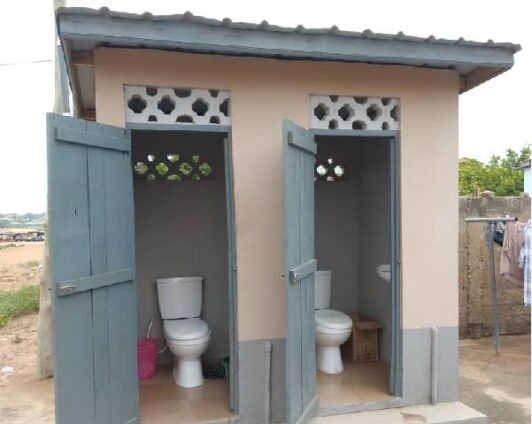
Only 59.3% of households in Ghana have access to improved toilet facilities, highlighting persistent gaps in sanitation despite progress in other areas of water and sanitation delivery.
The figure, cited by the Ministry of Local Government, Chieftaincy and Religious Affairs, means a significant proportion of households still lack access to improved sanitation facilities.
The Ministry said the situation remains a concern, particularly in underserved communities where access to safe and dignified sanitation services continues to lag.
The data forms part of the country's broader Water, Sanitation and Hygiene (WASH) picture highlighted as Ghana marked the 2026 African Day for Decentralisation and Local Development on Monday, August 10.
While 87.7% of Ghanaian households have access to basic drinking water services, sanitation outcomes remain a major challenge.
The Ministry also pointed to inequalities in access to improved household toilet facilities, alongside challenges with wastewater management and sustainable solid waste disposal.
“Addressing these challenges requires stronger local institutions, enhanced community participation and increased investments in sanitation infrastructure and services across the country,” the Ministry said.
Government says Metropolitan, Municipal and District Assemblies have a central role to play in addressing the sanitation deficit because they are responsible for planning and coordinating many essential services at the local level.
The Ministry said it is therefore working to strengthen MMDAs through improved institutional capacity, sustainable financing arrangements and stronger partnerships with other stakeholders.
These include Regional Coordinating Councils, Ghana Water Limited, the Community Water and Sanitation Agency, development partners, civil society organisations, traditional authorities and religious institutions.
The Ministry also stressed the role of traditional and religious leaders in mobilising communities and promoting behavioural change around sanitation and environmental protection.
The 2026 African Day for Decentralisation and Local Development was observed under the theme “Empowered Local Governments for Sustainable Water and Sanitation: Advancing Resilient, Inclusive and Sustainable Cities and Territories towards Agenda 2063.”
The Ministry said improving sanitation is critical not only to public health but also to building resilient and sustainable communities.
It called for stronger collaboration and increased investment to expand access to safe sanitation services, particularly among communities that remain underserved.
Latest Stories
-
Let The Constitution direct Chieftaincy to deliver “All Development Is Local”
32 minutes -
Ghana explores centre of excellence for hearing, communication and cochlear implant care
2 hours -
Schizophrenia-related disorders lead mental health cases recorded in Ghana
2 hours -
Dutch authorities enlist Ghana in hunt for fugitive drug lord Bolle Jos
3 hours -
Ghana housing finance conference adopts communiqué to improve affordable housing access
7 hours -
Special Initiatives Minister urges Wa Technical Institute to enrol more girls as EU-backed solar training lab opens
8 hours -
In the matter of my first year at the Bar
8 hours -
ActionAid Ghana calls for an end to child marriage, greater investment in girls’ rights
8 hours -
Newsfile to tackle World Cup visa scandal, beach demolitions, education strikes, BRICS bid
8 hours -
UK-Ghana Trade & Investment Summit: Trade Resource Centre to help businesses maximise UK-Ghana trade opportunities
8 hours -
Embassy of Denmark celebrates World Maritime Day
9 hours -
Linking LEAP to productive inclusion could cut extreme poverty by 2030 – UNICEF
10 hours -
Trade Ministry backs use of creative arts to rehabilitate prison inmates
10 hours -
Negotiations with government to continue despite strike suspension – GNAT
10 hours -
‘Ghana cannot afford to waste public resources; every cedi has a job’ – Ato Forson
10 hours